POLITICS & POLICY MAKING
Detailed Report
-
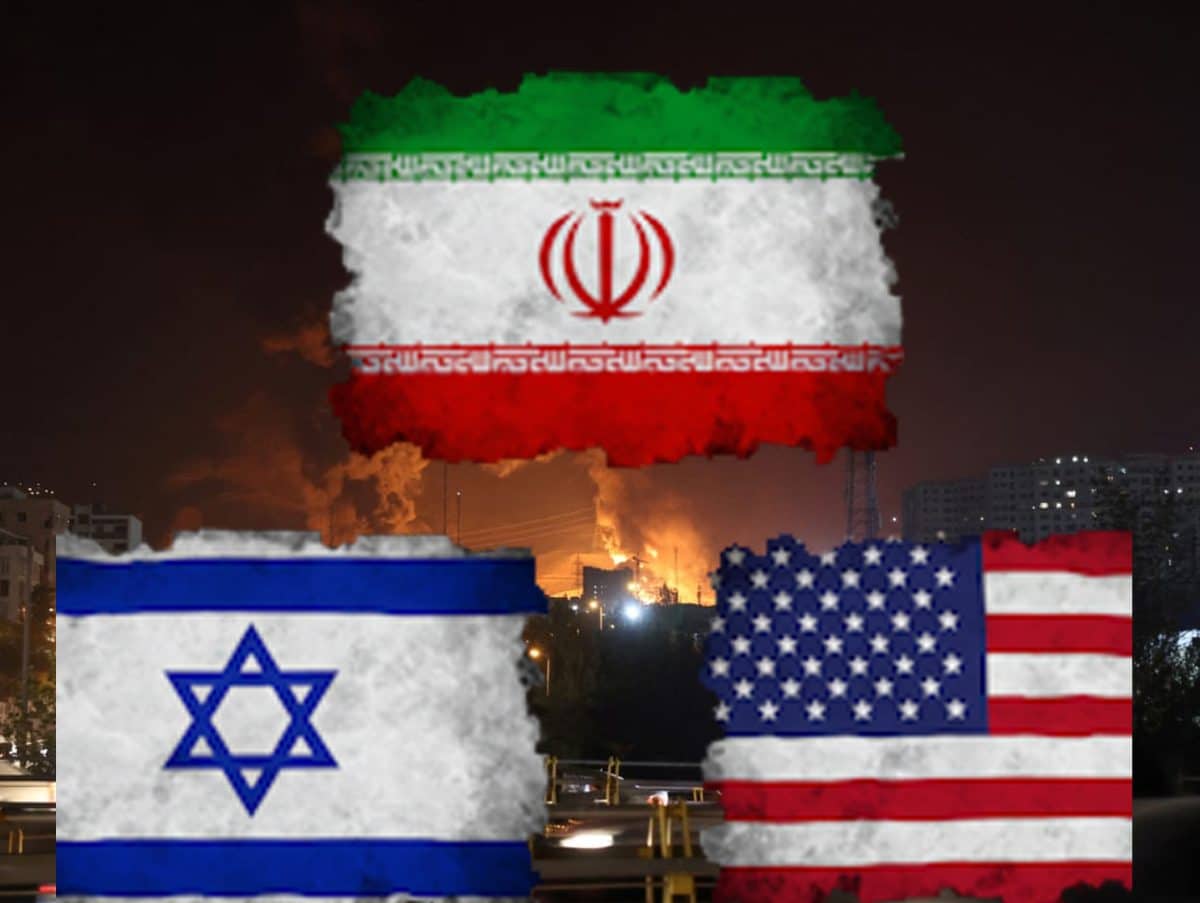
The Tactical Breach: In a calculated display of strategic defiance, Israel launched targeted airstrikes against Iran on Monday, June 8, 2026. The move shattered the fragile April 8 truce and openly disregarded public warnings from U.S. President Donald Trump. While both Israel and Iran agreed to cease hostilities later in the day following a direct ultimatum from the White House, the brief cross-border clash highlighted a deeper conflict: Israel's determination to break its exclusion from U.S.-led regional peace negotiations.
-
Exclusion from the Negotiating Table: Since launching a multi-front war alongside Israel in late February 2026, the Trump administration has aggressively pursued a unilateral negotiated settlement with Tehran while keeping its closest regional ally at arm's length. President Trump has repeatedly pressured Israeli Prime Minister Benjamin Netanyahu to halt kinetic operations in Lebanon—which Israel invaded in March—to preserve the diplomatic track. This approach backfired domestically for Netanyahu, whose critics accused him of surrendering Israeli sovereignty to sustain U.S. talks without securing a seat at the table.
The Secret Escalation Matrix: Before approving the multi-city strike on Iran, Prime Minister Netanyahu convened an emergency war cabinet session with top defense officials to map out the parameters of a short-term escalation. According to Israeli defense insiders, the primary objective was to firmly reject a new rules of engagement framework where Iranian missile barrages are accepted as a legitimate "tit-for-tat" response to Israeli cross-border operations against Hezbollah in Lebanon.
-
The Red Line on Southern Lebanon: Israel's security establishment fears that a finalized U.S.-Iran peace treaty would strip the Israel Defense Forces (IDF) of their right to launch preemptive strikes against Hezbollah or maintain active troop deployments in southern Lebanon. By striking back at Iranian infrastructure, Israel sent a sharp message to Washington: no regional agreement will hold if Israel's core security interests are ignored. As military historian Danny Orbach observed, "If it tramples too heavily on Israeli interests, Israel can overturn the table."
-
The Logistics of Dependency: Despite Netanyahu’s public assertions that Israel will defend its sovereignty independently, defense analysts emphasize that the country remains deeply tethered to the American military supply chain. While Israel possesses the domestic capabilities to execute standalone deep-penetration strikes inside Iran, military experts from Israel's Institute for National Security Studies (INSS) warn that the IDF cannot sustain an active air campaign against Tehran for more than a few weeks without continuous U.S. logistical backing, intelligence sharing, and ammunition replenishment.
U.S.-Israel-Iran Diplomatic & Conflict Matrix (June 8, 2026)
| Geopolitical & Strategic Vectors | Verified Field Parameters & Operational Realities |
| Main Strategic Flashpoint | Israel launches brief counter-strikes on Iran, breaking the April 8 truce. |
| Trump Administration Stance | Mandated an immediate ceasefire; labeled the fight a closed "tit-for-tat" loop. |
| Israeli Negotiating Goal | Secure an official seat in U.S.-Iran peace talks; guarantee freedom of action in Lebanon. |
| Iranian Peace Condition | Refuses any diplomatic deal with Washington unless Israel leaves Lebanon. |
| Logistical Limitation | INSS analysts verify the IDF cannot sustain an independent air campaign past a few weeks. |
| Bilateral Diplomatic Strain | High-level friction over Trump’s opposition to Israeli airstrikes in Beirut. |
-
Enhancing Institutional Linkages: Pakistan and Leb...
Lebanese Armed Forces Commander-in-Chief General Rodolphe Haykal met with Field Marshal Sy...

-
Force Solves Nothing': China Rebukes US, Israel, a...
A U.S. federal judge has blocked the Trump administration’s controversial $100,000 fee f...
-
8 Killed in Tyre as Israel Targets Christian Quart...
Israeli airstrikes killed eight people in Tyre today after the IDF issued a forced displac...

-
Opposition Declares 'Black Day' in Gilgit-Baltista...
A broad opposition alliance, including Imran Khan’s PTI and the TTAP, has completely rej...
-
Budget Deadlock Defused: PPP Set to Back Federal B...
The political deadlock over the Federal Budget 2026–27 has eased following a high-level ...