POLITICS & POLICY MAKING
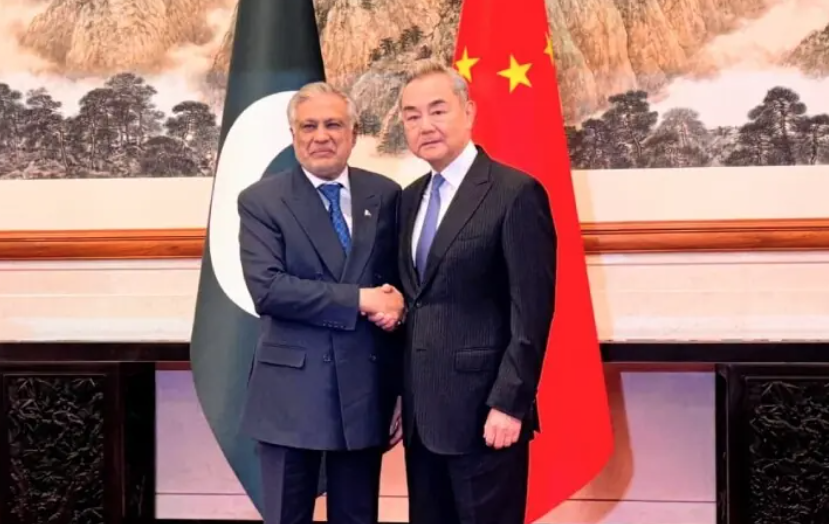
China on Tuesday announced plans to enhance cooperation with Pakistan regarding the evolving situation in Iran, as Deputy Prime Minister and Foreign Minister Ishaq Dar arrived in Beijing for high-level discussions.
Dar’s visit comes at the invitation of Chinese Foreign Minister Wang Yi and is aimed at holding “in-depth discussions on regional developments,” according to Pakistan’s Foreign Office.
Shortly after Dar’s departure, Chinese Foreign Ministry spokeswoman Mao Ning confirmed that both countries would “strengthen” coordination on the Iran situation. She described China and Pakistan as “all-weather” strategic partners committed to promoting peace and stability.
Upon arrival in Beijing, Dar was received by senior Chinese officials and later held a bilateral meeting with Wang Yi at the Diaoyutai State Guest House.
Diplomatic sources indicate that the discussions are expected to focus on developing a framework for a potential dialogue between Iran and the United States aimed at ending the ongoing conflict. The talks may also explore guiding principles for facilitating negotiations between the two sides.
This marks Dar’s second official visit to Beijing this year. Both sides are set to review bilateral relations and deliberate on regional and global issues of mutual interest.
Earlier, the Foreign Office highlighted the longstanding “all-weather strategic cooperative partnership” between Pakistan and China, marked by close coordination on regional and international matters.
The visit follows a recent telephone conversation between Dar and Wang Yi, during which both leaders discussed possible diplomatic pathways to ease tensions. Wang had acknowledged that initiating peace talks involving Iran would be challenging but emphasized that such efforts could help restore normal maritime activity through the Strait of Hormuz.
China has also expressed support for Pakistan’s role as a mediator in the crisis.
Regional Diplomatic Push
Meanwhile, Iran’s Ambassador to Pakistan, Reza Amiri Moghadam, welcomed Islamabad’s diplomatic outreach, praising its “proactive initiatives” to reduce tensions and promote stability in the region.
His remarks followed a recent multilateral meeting hosted by Pakistan, which included foreign ministers from Saudi Arabia, Türkiye, and Egypt. The participants stressed the importance of de-escalation and supported efforts to initiate structured negotiations between Washington and Tehran.
Pakistan has increasingly positioned itself as a potential venue for direct talks between the United States and Iran. Foreign Minister Ishaq Dar has hinted that Islamabad could host such negotiations in the near future.
Officials familiar with the process confirmed that indirect communication between Washington and Tehran is ongoing through structured diplomatic channels, rather than direct engagement.
With regional tensions persisting, Pakistan—working alongside key regional partners—is playing an increasingly central role in efforts to facilitate dialogue and prevent further escalation.
-
Surety Reclaimed: LHC Orders Return of Rs70 Millio...
The Lahore High Court (LHC) on Monday, May 11, 2026, directed the return of Rs70 million d...
.jpg)
-
Fiscal Fortress: PM Sharif Extends Austerity Drive...
Prime Minister Shehbaz Sharif has officially extended the federal government's strict aust...
-
End Unseen Policies": KP CM Sohail Afridi Blasts "...
KP Chief Minister Sohail Afridi visited Bannu on Monday to pay tribute to 15 police person...
-
Economic Shockwave: Geopolitical Tensions in the G...
The ongoing Gulf conflict has exposed Pakistan’s dangerous reliance on imported oil, tur...
.jpg)
-
Legitimate Rights": Iran Demands End to War and Re...
Tehran on Monday officially responded to a U.S. peace proposal, calling for an immediate e...
.jpg)