WORLD NEWS
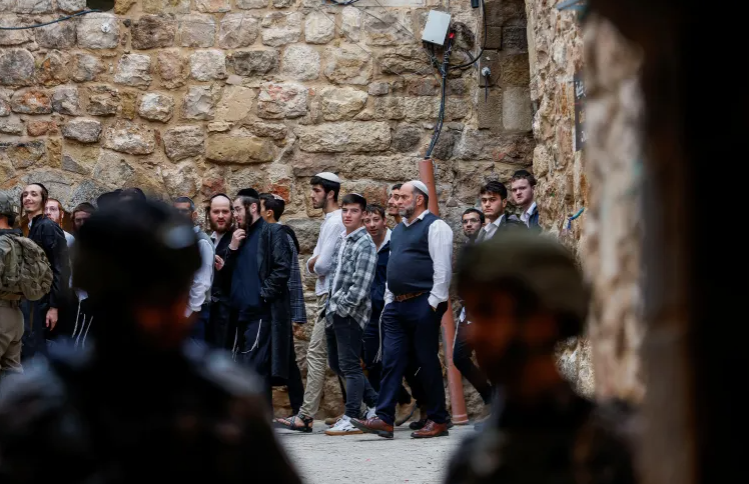
The Israeli government has approved changes to land registration rules in the occupied West Bank, a move that Palestinians and analysts warn could accelerate settlement expansion and entrench de facto annexation of the territory.
The Israeli cabinet announced on Sunday that it would allow Israeli Jews to more easily purchase property in the West Bank, which Israel has occupied since 1967. The government also ordered that land registries in the territory be opened to the public.
Palestinians fear the measures will make it easier for settlers to identify landowners, potentially exposing them to harassment and pressure to sell their property.
In addition, the cabinet decreed that authority over building permits for Jewish settlements in Hebron — including areas around the Ibrahimi Mosque compound — would be transferred from the Palestinian Hebron municipality to Israeli authorities.
Hebron at the Centre
Moataz Abu Sneina, director of the Ibrahimi Mosque in Hebron, described the decisions as the most serious development in the city since Israel’s occupation began in 1967.
“What is happening today is the most serious development since 1967,” Abu Sneina said, expressing grave concern over the future of Hebron’s Old City and the Ibrahimi Mosque, a site revered by Muslims and Jews alike. Jews refer to it as the Tomb of the Patriarchs.
The mosque has long been a flashpoint. In 1994, an Israeli settler killed 29 Palestinian worshippers at the site. Following the massacre, Israeli authorities divided the compound into separate Muslim and Jewish prayer areas. Since then, a small but influential group of settlers — protected by the Israeli military — has expanded its presence in central Hebron.
Abu Sneina said recent measures reflect a broader policy of increasing control over the mosque and surrounding areas, including restrictions on worshippers, limitations on access, and bans on the call to prayer.
‘Hebron Model’ Spreading
Palestinian officials and activists warn that what has happened in Hebron could be replicated elsewhere in the West Bank.
Mohannad al-Jaabari, director of the Hebron Rehabilitation Committee, said Israeli authorities have intensified efforts to reshape the city’s demographic and geographic landscape. He cited the confiscation of municipal shops, expansion of settlement units, and changes to water infrastructure linking areas to Israeli networks.
He warned that the long-term objective appears to be the creation of a contiguous Jewish quarter connecting settlements to the Ibrahimi Mosque, potentially displacing Palestinian residents.
Nabil Faraj, a Palestinian political analyst, described the cabinet’s decisions as “dangerous” and argued they undermine prospects for a negotiated peace settlement. He said Israel is expanding settlement infrastructure while weakening the administrative role of the Palestinian Authority.
Concerns in Bethlehem
Fears are also mounting in Bethlehem after the cabinet decided that the Bilal bin Rabah Mosque — known to Jews as Rachel’s Tomb — would come under Israeli administration for cleaning and maintenance, replacing the previous oversight of the Bethlehem municipality. The mosque’s cemetery is also affected.
Residents worry that the changes could restrict access to burial grounds and religious sites.
“It will affect the living and the dead,” said Bassam Abu Srour, a resident of Aida refugee camp. “Annexing the area would prevent burials and visits to the Islamic cemetery.”
Growing Sense of Permanent Change
Across the West Bank, many Palestinians say the incremental measures feel like steps toward formal annexation.
Mamdouh al-Natsheh, a shop owner in Hebron, said daily restrictions are steadily reshaping life in the city.
“The city is being taken from its people step by step,” he said. “Daily restrictions are turning it into a fixed policy that suffocates every detail of life.”
He expressed concern about the long-term psychological impact on younger generations growing up amid checkpoints, surveillance, and divided neighbourhoods.
“I fear the day will come when we are told this area has been officially annexed,” al-Natsheh said. “In Hebron, a house is not just walls — it is history and identity.”
The Israeli government has framed the new measures as administrative and regulatory changes. However, critics argue that they could have far-reaching political and demographic consequences in a territory that remains at the heart of the decades-old Israeli-Palestinian conflict.
-
AG Pam Bondi to Testify on Epstein File Redactions...
U.S. Attorney General Pam Bondi will face the House Judiciary Committee over DOJ’s handl...
-
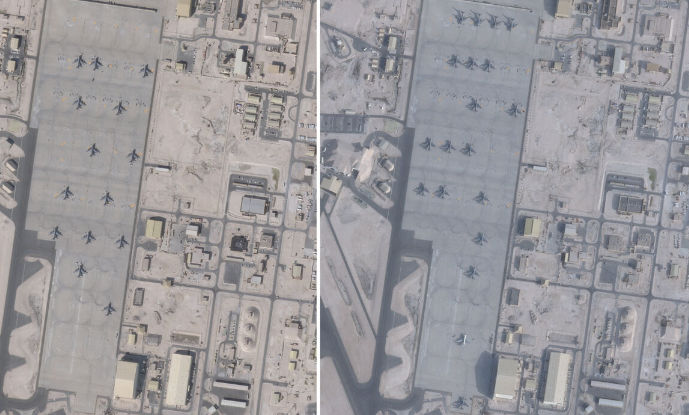
U.S. Moves Missiles to Mobile Launchers in Qatar a...
Satellite images reveal U.S. Patriot missiles at al-Udeid Air Base in Qatar now mounted on...
-
Iran Signals Flexibility on Uranium Enrichment Ami...
Iran’s Ali Larijani meets Oman’s Sultan to advance nuclear talks with the US. Tehran s...
-
Macron Warns Europe to Brace for More U.S. Hostili...
French President Emmanuel Macron calls on the EU to learn from the "Greenland moment," str...

-
Minnesota Woman Arrested After Following ICE Agent...
Becky Ringstrom, a mother of seven, was arrested in Minneapolis after following federal im...