POLITICS & POLICY MAKING
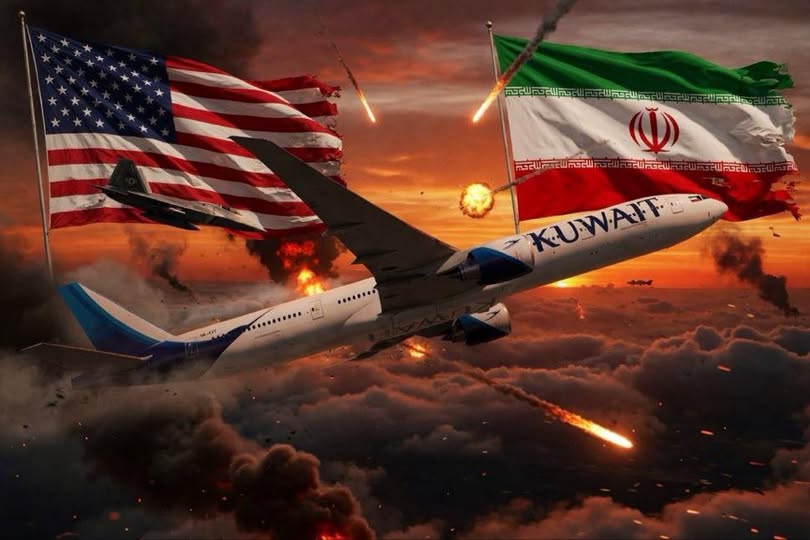
Kuwait Airport Suspends All Flights After Severe Iranian Missile and Drone Attack Damages T1 Terminal
Detailed Report
-
The Attack on Kuwait International Airport: Military hostilities in the Persian Gulf have escalated sharply, dealing a severe blow to regional infrastructure and international aviation. On Wednesday, a coordinated Iranian drone and missile strike directly targeted Kuwait International Airport, striking the commercial T1 building. The Kuwaiti Civil Aviation Authority immediately suspended all flight operations and diverted incoming traffic indefinitely. Brigadier General Saud Abdulaziz Al-Atwan, spokesperson for the Ministry of Defense, condemned the strike as "criminal Iranian aggression," confirming that the assault caused significant structural damage to the terminal and inflicted multiple civilian injuries.
-
Multi-Front Regional Aero-Warfare: The strikes on Kuwait were part of a broader, multi-vector aerial offensive launched by Iran's Islamic Revolutionary Guard Corps (IRGC). US Central Command (CENTCOM) confirmed a high-intensity engagement across the theater, reporting that its air defense frameworks intercepted three missiles heading toward Bahrain and shot down multiple suicide drones tracking civilian commercial vessels. Conversely, the IRGC claimed it successfully targeted the headquarters of the US Fifth Fleet in Bahrain, alongside a Western-allied airbase, using suicide hardware. The IRGC asserted the offensive was a direct response to a US strike that destroyed a critical Iranian communications tower south of Qeshm Island. CENTCOM countered that all Iranian attempts against American military assets failed completely.
The Energy Chokepoint Crisis: The sudden flare-up immediately caused global economic shockwaves, sending crude oil prices surging by more than 1% within hours of the airport attack. The Strait of Hormuz—which handled 20% of global oil and liquefied natural gas (LNG) traffic prior to the war—remains heavily blockaded and functionally closed to international shipping.
Gulf Theater Engagement Log (June 3, 2026)
| Targeted Location / Asset | Striking Force | Interception / Operational Outcome |
| Kuwait Airport (T1 Terminal) | Iran (IRGC) | Direct Hit: Severe structural damage, multiple injuries, total flight suspension. |
| US 5th Fleet HQ (Bahrain) | Iran (IRGC) | Defeated: 3 incoming ballistic missiles intercepted by US/Bahraini air defenses. |
| Qeshm Island Outposts | United States | Direct Hit: CENTCOM destroyed IRGC missile launching pads and technical assets. |
| Commercial Shipping Lanes | Iran (IRGC Navy) | Neutralized: US forces downed multiple one-way drones tracking civilian mariners. |
-
The Diplomatic Stalemate: The dangerous military escalation exposes a deep rift in ongoing backchannel diplomacy. While President Donald Trump stated on social media that negotiations are continuing "day-to-day," Iranian Foreign Ministry officials indicated that direct communication has frozen. Tehran has explicitly accused Kuwait and Bahrain of bearing "direct and clear responsibility" for the crisis, alleging both nations have allowed their sovereign territory to be utilized as launchpads for American combat operations.
-
The Nuclear Red Line: The fundamental deadlock hinges on conflicting core demands. President Trump has reiterated that his absolute priority is preventing Iran from acquiring nuclear weapons. US Secretary of State Marco Rubio affirmed to lawmakers that Washington will only grant access to blocked oil revenues and lift the maritime blockade if Tehran completely dismantles its nuclear program. Iran rejects these terms, demanding immediate sanctions waivers and recognition of its strategic leverage over the Strait of Hormuz.
-
The Regional Spillover: The broader conflict, which erupted on February 28, continues to devastate adjacent territories. In Lebanon, the war has triggered the deepest Israeli military incursion in 25 years. Despite a US-mediated partial ceasefire unveiled on Monday, Israeli forces sustained heavy airstrikes across southern Lebanese towns on Tuesday, leaving over 1.2 million Lebanese civilians displaced and the capital city of Beirut on edge under continuous drone surveillance.
-
U.S. Enacts 60-Day Iran Sanctions Waiver as Trump ...
The U.S. has issued a 60-day sanctions waiver allowing Iran to sell oil, following breakth...
-
'Denuclearization Off the Table': Kim Jong Un Vows...
North Korean leader Kim Jong Un announced at a Workers' Party Central Committee meeting th...

-
Iranian President Pezeshkian Arrives in Pakistan T...
Iranian President Masoud Pezeshkian arrives in Pakistan today on an official visit to revi...

-
'No Return to Pre-War Status': Ghalibaf Asserts Ir...
Iran’s chief negotiator Mohammad Bagher Ghalibaf has announced that the Strait of Hormuz...
-
New Delhi and Abu Dhabi in Fast-Track Talks Over P...
India is in advanced, unpublicized talks to sell its supersonic BrahMos cruise missiles an...