LEGAL
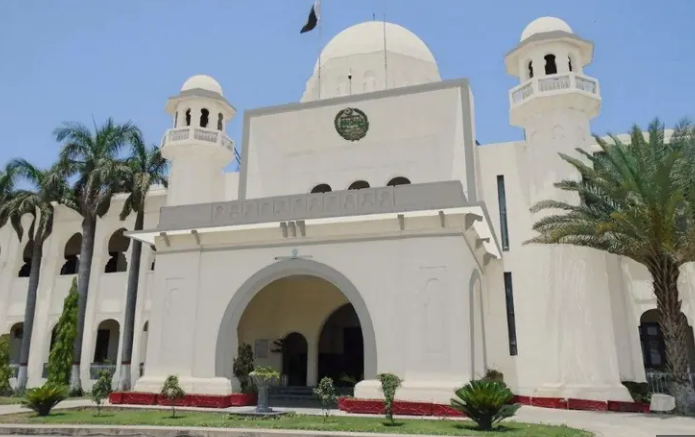
The Lahore High Court (LHC) has held that profit-making subsidiaries of charitable trusts are not exempt from compulsory Zakat deduction under the law.
The Rawalpindi Bench, headed by Justice Jawad Hassan, dismissed a petition filed by Foundation University, an educational entity sponsored by the Fauji Foundation. The university had challenged the deduction of Zakat from its investments in National Saving Certificates.
In its detailed judgment, the court ruled that the university does not qualify for exemption as a charitable institution under the Zakat and Ushr Ordinance 1980.
Justice Hassan observed that although the university was established under the Foundation University Ordinance 2002 and sponsored by Fauji Foundation — a trust formed under the Charitable Endowment Act 1890 — it operates as an independent body corporate with financial autonomy. As such, it is liable to Zakat deduction.
The university had approached the court through its counsel, Sayyid Murtaza Ali Pirzada, seeking to set aside a letter issued by the Ministry of Religious Affairs on April 24, 2018. The letter declared the institution liable to pay Zakat on its investments.
The petitioner argued that because it was sponsored by Fauji Foundation and reinvested surplus funds into educational services, it should be treated as a charitable institution and granted exemption.
However, Assistant Attorney General Barrister Zain Mansoor opposed the plea, contending that the ordinance clearly defines the scope of institutions and assets liable to Zakat. He argued that the university’s statutory status does not place it outside the ambit of the law.
The court noted that Section 3(2) of the Foundation University Ordinance 2002 explicitly defines the university as a “body corporate” with perpetual succession and the authority to acquire, hold and dispose of property. These attributes, Justice Hassan said, establish it as an independent juristic entity, separate from federal or provincial governments.
“The preamble to the statute situates the establishment of the petitioner university within the broader framework of national interest, but that alone does not confer charitable status for fiscal purposes,” the judgment stated.
The court further observed that the university possesses powers to enter into agreements, charge fees, create posts, appoint staff and invest funds — features indicative of a revenue-generating model rather than a purely charitable one. It also cited records of the Higher Education Commission classifying the institution as a private sector university.
Referring to Section 1(2) of the Zakat Ordinance, the court held that any company, association of persons, or body of individuals — incorporated or not — with majority ownership by Muslim citizens of Pakistan falls within the definition of a “person” liable to Zakat. The university, being a body corporate, squarely falls within this definition.
The judgment relied on precedents from the Supreme Court of Pakistan, including Liaqat National Hospital versus Province of Sindh and Pakistan Telecommunication Employees Trust versus Federation of Pakistan, which established that registration under a charitable law does not automatically grant tax exemption and that institutions must satisfy statutory conditions to qualify.
Justice Hassan noted that despite repeated directions from the court over several years, the university failed to provide documentary proof establishing its exclusive charitable status or any specific statutory exemption from Zakat.
The bench also distinguished the case of Administrator General Zakat versus Pakistan Insurance Corporation, observing that it involved a statutory corporation wholly owned by the federal government — a materially different circumstance from that of Foundation University.
Amicus Curiae Nisar A Mujahid supported the state’s stance, arguing that educational advancement alone does not confer charitable status unless the institution fulfils statutory criteria laid down in fiscal laws.
Concluding that the petitioner failed to demonstrate any illegality in the ministry’s decision, the court dismissed the petition without costs. The verdict upholds the compulsory Zakat deduction from the university’s investments in National Saving Certificates, affirming the Ministry of Religious Affairs’ position.
-
Supreme Court Stays Trial Court Proceedings Agains...
The Supreme Court of Pakistan stays Lahore trial court proceedings against Imran Khan in t...

-
Supreme Court Declares Blocking of Identity Cards ...
The Supreme Court of Pakistan rules that blocking a citizen’s identity card is illegal, ...
-
Islamabad Court Orders Arrest of KP CM Sohail Afri...
A local court in Islamabad has ordered the arrest and production of Sohail Afridi, Chief M...

-
DIG Syed Pir Muhammad Shah Reinstated as Karachi T...
The Sindh government has reinstated DIG Syed Pir Muhammad Shah as Karachi Traffic Police c...

-
Supreme Court Stays Lahore Trial in PM Shehbaz’s...
The Supreme Court of Pakistan stays trial in PM Shehbaz Sharif’s Rs10bn defamation suit ...