WORLD NEWS
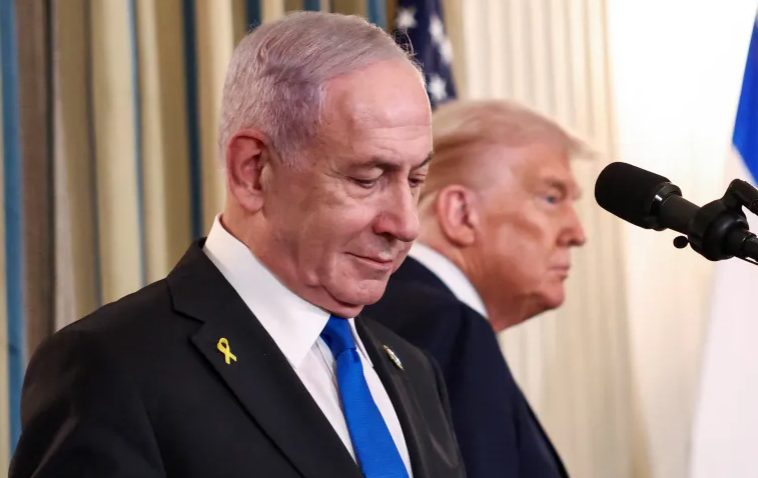
Israeli Prime Minister Benjamin Netanyahu will travel to the United States to meet President Donald Trump, amid ongoing US negotiations with Iran following indirect talks held in Oman last weekend, according to Netanyahu’s office.
The meeting will mark the seventh encounter between Trump and Netanyahu since the US president returned to office last year. Netanyahu is expected to push for restrictions on Iran’s ballistic missile program and an end to its support for regional groups, including Hamas and Hezbollah.
Iranian officials, however, have insisted that negotiations focus solely on the nuclear issue, with ballistic missiles deemed non-negotiable. Iranian Foreign Minister Abbas Araghchi described the Oman talks as a “good start,” while cautioning that building trust will take time.
On Sunday, Iranian Parliament member Masoud Pezeshkian called the talks a “step forward,” emphasizing that Tehran’s nuclear positions are grounded in the Non-Proliferation Treaty. “The Iranian nation has always responded to respect with respect, but cannot withstand the language of force,” Pezeshkian wrote on X.
The US and Israel have both taken hard-line stances toward Iran. Trump said the Oman talks were “very good” and that Iran “looks like it wants to make a deal very badly,” but warned that failing to reach an agreement would carry “steep consequences.”
The backdrop to the negotiations includes a recent escalation in the Middle East. During the June 12-day conflict, Israel launched air strikes on Iranian nuclear and military sites, killing top nuclear scientists and commanders, while the US conducted bunker-buster strikes on Natanz, Fordow, and Isfahan facilities. Iran retaliated with hundreds of ballistic missiles against Israeli cities and US interests.
Trump has warned that a possible next strike on Iran would be far worse, deploying an aircraft carrier and accompanying warships to the region. Meanwhile, Gulf states including Saudi Arabia, Qatar, and Oman have worked diplomatically to prevent escalation.
Foreign policy analyst Trita Parsi, cofounder of the Quincy Institute for Responsible Statecraft, said the outcome of US-Iran talks could hinge on whether Washington pursues achievable nuclear demands or adopts Israel’s maximalist positions. “If we see a continuation of the pursuit of Israeli red lines, I presume that those talks will collapse very shortly,” Parsi added.
As Netanyahu heads to the US, both Washington and Tehran face a delicate balancing act: advancing nuclear negotiations while avoiding a broader military escalation in the Middle East.
-
Japan PM Takaichi Vows to Cut Food Tax After Lands...
Japanese PM Sanae Takaichi promises a two-year suspension of the 8% food tax after her LDP...

-
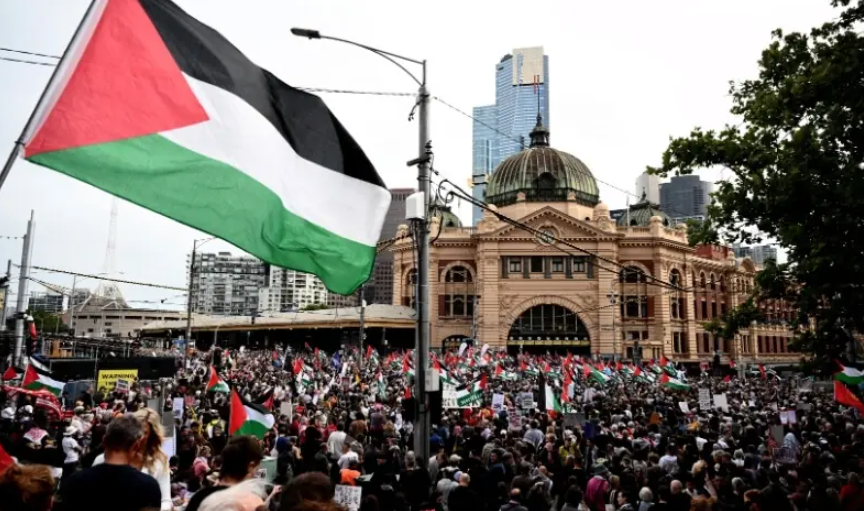
Protests Erupt Across Australia During Israeli Pre...
Thousands protest in Australian cities against Israeli President Herzog’s visit, denounc...
-
Keir Starmer Faces Political Turmoil as Key Aides ...
Keir Starmer’s communications chief Tim Allan resigns, following the departure of top ai...
-
Iran Arrests Reformist Figures Amid Protests and U...
Iranian authorities arrest four prominent reformists over alleged links to Israel and the ...
-
Drone Attack by RSF Kills 24, Including Children, ...
At least 24 killed, including 8 children, in RSF drone strike on displaced families near R...