TRADE & ECONOMY

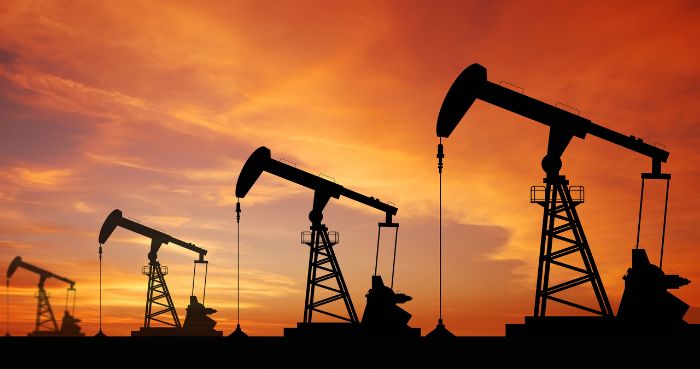
Pakistan’s petroleum import bill declined by 7 percent in the first quarter of the current fiscal year (FY25), reflecting a slight easing in the country’s energy import burden amid steady demand for crude and liquefied natural gas (LNG).
According to data released by the Pakistan Bureau of Statistics (PBS), OCIC, and other relevant institutions, Pakistan spent $3.775 billion on petroleum product imports during the July–September quarter, compared to $4.050 billion during the same period last fiscal year.
In September 2025, petroleum imports were valued at $1.236 billion, down 10.9 percent year-on-year from $1.387 billion in September 2024. However, on a month-to-month basis, imports increased 3.6 percent from $1.193 billion in August.
The import bill for crude oil stood at $1.430 billion in the first quarter, roughly unchanged from $1.428 billion in the same quarter of FY24. Despite the flat value, the imported volume rose 17.1 percent, reaching 2.52 million tons, compared to 2.15 million tons last year — suggesting that global oil prices were lower on average.
Meanwhile, imports of re-gasified liquefied natural gas (RLNG) surged 30 percent, totaling $1.025 billion compared to $715 million a year earlier, reflecting higher demand for power generation and industrial use.
Imports of liquefied petroleum gas (LPG) also increased slightly by 2 percent, reaching $240 million, up from $235 million in the corresponding period of the previous fiscal year.
Analysts say the decline in Pakistan’s petroleum import bill is primarily due to lower global prices of refined petroleum products and a shift in domestic energy mix, even as overall energy demand remains strong.
The reduction in import costs may provide some relief to the government’s efforts to manage the trade deficit and stabilize the rupee, although rising LNG imports indicate that energy security challenges persist.
-
Pakistan Refineries Suffer Rs24 Billion Losses Ami...
Pakistan’s oil refineries recorded Rs24 billion losses in April due to pricing pressures...
-
Revelation: Rs153 Collected in Taxes and Profit on...
It has been revealed that taxes and profit margins on petroleum products in Pakistan are s...
-
Pakistan Inflation Returns to Double Digits After ...
Inflation in Pakistan has surged back into double digits for the first time in nearly two ...
-
Oil Prices Hit Four-Year High as Trump Signals Pro...
Global oil prices surged to their highest level in four years after US President Donald Tr...
-
PM Shehbaz Launches Rs10 Million Housing Loans Und...
PM Shehbaz Sharif launches Apna Ghar housing scheme offering loans up to Rs10 million to p...