POLITICS & POLICY MAKING
Detailed Report
-
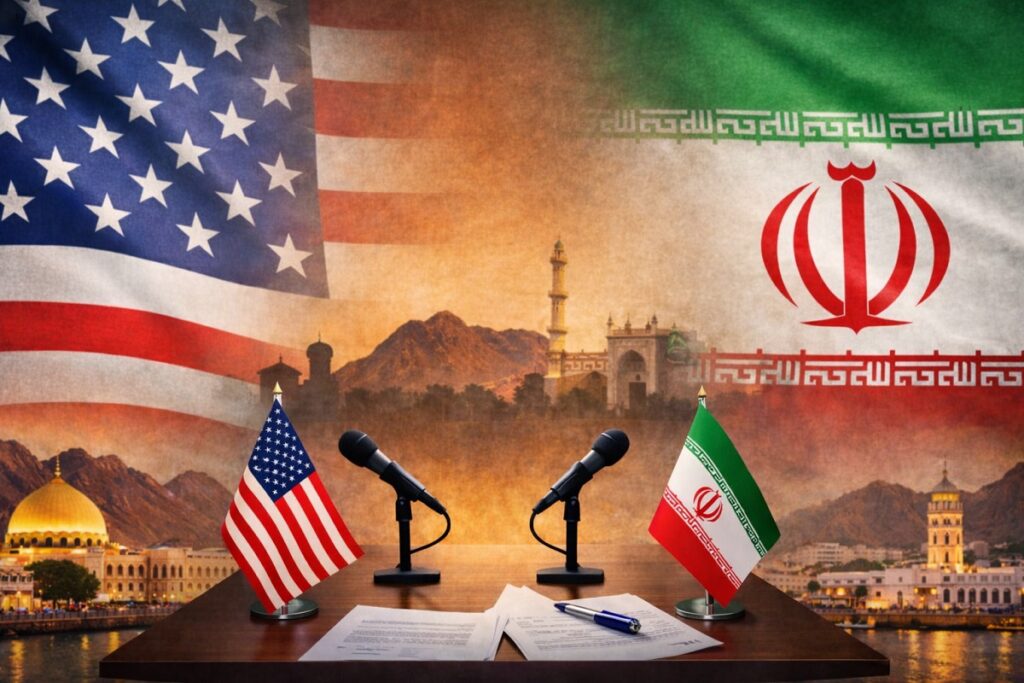
The France Proclamation: Arriving in France for the G7 summit on Monday, June 15, 2026, U.S. President Donald Trump officially confirmed that a preliminary Memorandum of Understanding (MOU) to halt the three-month-old U.S.-Israel war on Iran has been fully signed by Washington and Tehran. Trump announced that Vice President JD Vance will travel to Geneva, Switzerland, on Friday, June 19, to participate in a formal execution ceremony. The brief, one-and-a-half-page document extends a fragile ceasefire originally drafted in April for an additional 60 days and mandates the immediate reopening of the strategic Strait of Hormuz. Following the breakthrough, global oil prices collapsed to their lowest trading levels since March 10.
-
Financial Contradictions and the $300B Gulf Fund: A sharp public messaging divide emerged within the White House regarding the financial architecture of the ceasefire. Taking to Truth Social, President Trump aggressively dismissed reports of financial concessions, writing, “The story that the U.S. is paying Iran 300 million dollars is fake news”—seemingly misstating the actual "billion" scale reported by international media. Vice President JD Vance later clarified on NBC News that a proposed $300 billion regional reconstruction fund is indeed part of the diplomatic framework, but emphasized that "not a single dime" will come from American taxpayers. Instead, the multi-billion-dollar pool will be entirely funded by neighboring Gulf Arab states, structured through private market investment channels rather than direct state aid, and will remain strictly contingent on Tehran making its economy "investable."
The 60-Day Nuclear and Militia Timeline: Senior U.S. officials, speaking on condition of anonymity, emphasized that the 1.5-page memo is a highly generalized baseline. The upcoming 60-day window is explicitly designed to negotiate complex, unresolved structural disputes. Under the performance-based framework, Iran will only secure long-term sanctions relief and access to the reconstruction fund if it satisfies rigid U.S. mandates. These include verified guarantees to never construct a nuclear weapon, accepting a long-term solution for its highly enriched uranium stockpile (which Trump wants dismantled or removed), and completely cutting off state funding to regional proxies, primarily Hezbollah in Lebanon. Conversely, Iranian officials note they have sacrificed little, viewing the 60-day window as a mere resumption of pre-war diplomatic tracks.
-
The International 17-Nation Endorsement: A coalition of 17 global powers—spearheaded by the United Kingdom, France, Germany, and Italy, and subsequently signed by 13 other nations including Japan, Canada, and Poland—issued a comprehensive joint statement welcoming the breakthrough. The alliance congratulated the primary combatants alongside key regional mediators, explicitly naming Pakistan and Qatar for their roles in anchoring the backchannel diplomacy. The G7 and European signatories called for the immediate, unconditional restoration of freedom of navigation through the Strait of Hormuz, pledging to deploy a "strictly defensive and independent mission" to handle commercial escort security and mine-clearance operations.
-
Netanyahu Defies Terms Over Lebanon Standoff: The diplomatic breakthrough has triggered severe, open friction between the White House and Jerusalem. Israeli Prime Minister Benjamin Netanyahu confirmed at a press conference that Israel was entirely excluded from the negotiations and aggressively rejected any correlation between the U.S. pact and Israeli operations. While Iranian President Masoud Pezeshkian and Foreign Minister Abbas Araghchi insisted the deal requires an immediate, total cessation of hostilities, Netanyahu declared, "Iran wanted us to withdraw... but I stood firm." Netanyahu affirmed that Israeli Defense Forces (IDF) will permanently maintain their positions in southern Lebanon and retain an absolute right to strike Hezbollah targets—a stance backed by U.S. officials who confirmed an Israeli withdrawal was not a precondition of the text. Privately, senior Israeli officials described the agreement from Netanyahu down as "terrible for Israel," as low-level kinetic friction persisted on the ground, highlighted by an Israeli drone strike killing a driver in Kfar Tebnit.
-
‘We Reject PIMS Reports’: Aleema Khan Demands ...
Aleema Khan has categorically rejected PIMS medical reports regarding Imran Khan after he ...
-
PTI Criticizes 'Faceless Audits,' Accusing Governm...
The opposition PTI has formally rejected the FY2026–27 federal budget, labeling it a "pr...

-
Secret De-escalation Pact: UAE Moves to Unlock Bil...
The UAE has reportedly agreed to unfreeze between $10 billion and $20 billion for Iran—w...

-
Hormuz Reopening Set as Nuclear Dismantling Disput...
The U.S. and Iran have finalized the text of a tentative peace pact expected to be signed ...
.jpg)
-
Tehran Rejects Definitively Signed Accord; Disclos...
The Iranian Foreign Ministry has downplayed claims of a finalized peace deal with the U.S....
.jpg)