POLITICS & POLICY MAKING
U.S.-Iran Interim Peace Deal Faces Bitter Paradox: Lifeline Poised to Enrich Revolutionary Guards' Business Empire
Detailed Report
-
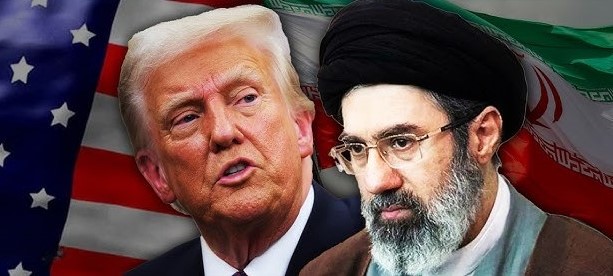
The Wartime Paradox: The emerging outlines of a diplomatic breakthrough between Washington and Tehran to conclude their four-month-old war contain a stinging systemic contradiction. Financial sweeteners meant to coax Iran into long-term geopolitical compliance are poised to directly enrich and entrench the Islamic Revolutionary Guard Corps (IRGC)—the elite military wing designated by the United States and its Western allies as a foreign terrorist organization. Senior Iranian insiders confirm that because the IRGC controls the core infrastructure of the state's domestic economy, it is uniquely positioned to capture the lion's share of incoming revenue from sanctions relief, resumed oil exports, and international capital injections.
-
Consolidating Power Post-Khamenei: The corporate dominance of the Guards has accelerated rapidly since the outbreak of the war on February 28, 2026, when joint U.S.-Israeli kinetic strikes killed Supreme Leader Ayatollah Ali Khamenei. In the immediate political vacuum, the IRGC expanded its internal security apparatus to successfully manage the transition of power, installing his son, Mojtaba Khamenei, as the new Supreme Leader. Having secured the survival of the Islamic republic's political architecture, the Guards have signaled institutional backing for the peace deal, positioning themselves as the ultimate structural victors of the conflict.
-
The Minefield of Legal Exposure: Even under the newly minted interim agreement, which authorizes immediate waivers on sanctioned Iranian oil sales, Western multinational corporations face severe compliance hazards. Former U.S. Treasury Department sanctions investigators warn that because the IRGC pulls the strings behind the domestic oil sector, international companies run a high risk of triggering secondary penalties. Furthermore, under the U.S. Justice Against Sponsors of Terrorism Act (JASTA), American corporate entities could face devastating domestic civil lawsuits for inadvertently aiding or doing business with front companies tied to a designated terrorist entity lurking in the background of global supply chains.
-
May 9 Riots: Lahore ATC Acquits Shah Mahmood Qures...
A Lahore Anti-Terrorism Court has acquitted former Foreign Minister Shah Mahmood Qureshi a...
-
‘A Return to My Roots’: Late Colonel Naseem’...
The PML-N has secured a key legislative gain ahead of the AJK political season as PTI-back...
-
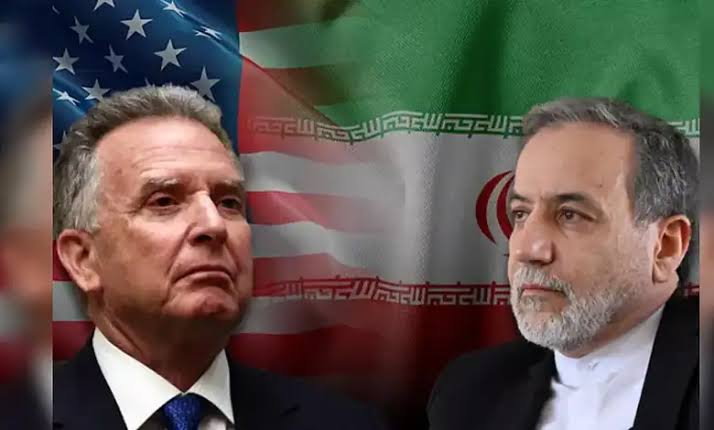
Witkoff and Araghchi Head to Switzerland for Nucle...
U.S. Special Envoy Steve Witkoff and Iranian Foreign Minister Abbas Araghchi are traveling...
-
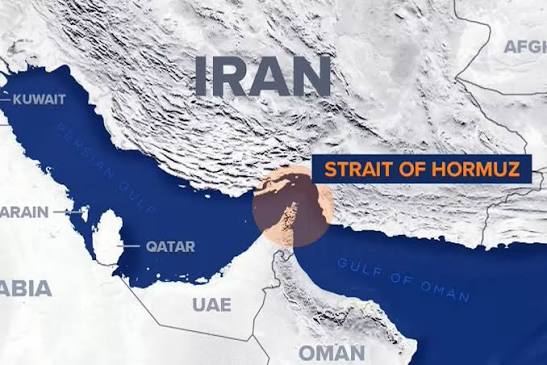
Strait of Hormuz Traffic Hits Two-Month High as 25...
Commercial shipping traffic through the Strait of Hormuz hit a two-month high on Thursday ...
-
Middle East Truce Imperiled as Ben Gvir Demands â€...
The U.S.-Iran peace framework faces a critical test as technical talks in Switzerland are ...