TRADE & ECONOMY
Detailed Report
-
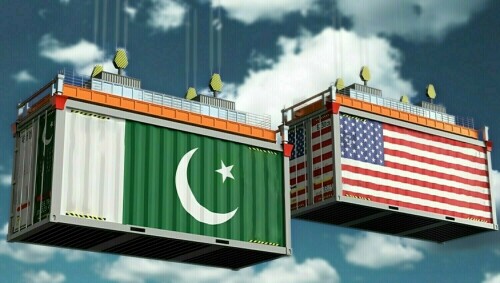
The Forced Labor Crackdown: The Office of the United States Trade Representative (USTR) has officially proposed a sweeping new regime of import duties targeting 60 global economies—including Pakistan, India, China, and the European Union. According to an official government filing published on Wednesday, the punitive measures stem from an intensive Washington investigation concluding that these trading partners have systematically failed to enforce robust, effective domestic prohibitions against the importation of goods manufactured via forced labor.
-
The Two-Tiered Duty Structure: The proposed tariff architecture is structured into two distinct regulatory tiers based on the severity of the enforcement lapse:
-
The 10% Tariff Tier: Applied to 15 economies—including Pakistan, Canada, Mexico, Ecuador, the EU, the United Kingdom, Taiwan, and Bangladesh—deemed to have "ineffectively enforced" existing forced labor import prohibitions.
-
The 12.5% Tariff Tier: Slapped on the remaining 45 investigated nations—including China, India, and Vietnam—which the USTR determined have completely failed to even establish or implement structural forced labor import bans.
-
The Level Playing Field Argument: Defending the protectionist pivot, USTR Jamieson Greer issued a sharp unilateral statement: "The failure of our most important trading partners to address the importation of goods made with forced labor is unacceptable. This creates a dynamic where American workers are forced to compete globally on an unlevel playing field. We will no longer tolerate this disparity."
The Legal and Temporal Backdrop
This aggressive regulatory maneuver represents a strategic workaround by the Trump administration to rebuild its sweeping international trade agenda after hitting severe domestic judicial roadblocks earlier this year:
-
Exemptions and De-escalation Clauses: Despite the aggressive rhetoric, the USTR text integrates strategic loopholes designed to protect critical American supply chains from immediate inflationary shocks. The document explicitly outlines blanket exemptions for core agricultural commodities, including beef, coffee, and specific fruits and nuts. Furthermore, textile and apparel categories that strictly comply with existing regional trade treaties—such as the North American free trade pact for Canada and Mexico—will bypass the new duties. The USTR has invited public written objections by July 6, ahead of formal congressional hearings.
-
Fierce International Backlash: The announcement has triggered a wave of diplomatic condemnation across global capitals. In Beijing, Chinese Foreign Ministry Spokesperson Mao Ning completely denied the forced labor allegations, labeling the move as "unilateral political manipulation." Concurrently, the European Commission slammed the proposed duties as entirely "unjustified," cautioning that Brussels remains fully on track to fulfill its bilateral joint tariff agreements by the end of June. The Swiss government similarly rejected the American findings, stating that Swiss commercial practices inflict zero structural harm on domestic US industries.
-
Federal Government Discontinues Target Fuel Subsid...
The federal government has ended its emergency fuel subsidy program for bikers, public tra...

-
National Assembly Clears 135 Budgetary Grants; Coa...
The National Assembly has cleared the final hurdle for the Federal Budget 2026–27 by app...
-
Global Oil Prices Drop 2% as U.S.-Iran Swiss Summi...
Global oil prices dropped over 2% on Monday, with Brent crude falling to $78.89 a barrel a...
-
Human Over Financial Capital: Lawmakers Urge Trans...
A cross-party panel of lawmakers and financial experts, convened by MNA Shaista Pervaiz, h...

-
PIA Handover to New Owners Set for June Deadline A...
The privatization of PIA will be fully completed before the end of June 2026, transferring...