TRADE & ECONOMY
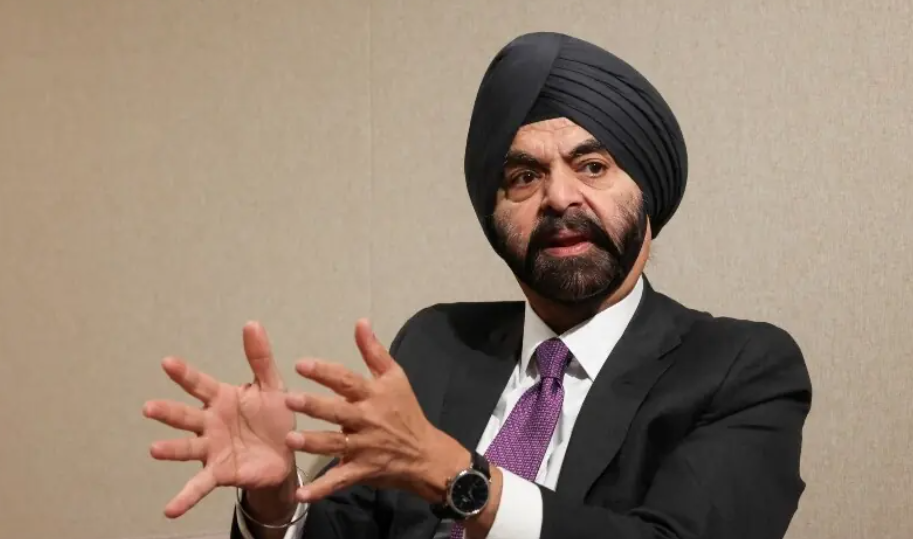
Pakistan must create up to 30 million jobs over the next decade to turn its youth bulge into an economic dividend, World Bank President Ajay Banga said during his visit to Pakistan this week. Failure to do so could trigger domestic instability and drive skilled workers abroad, he warned.
Speaking to Reuters in Karachi, Banga emphasized that job creation must be the country’s “North Star” and the central focus of its development strategy. “We’re trying to move the bank group as a whole from the idea of projects to the idea of outcomes,” he said.
Pakistan’s population growth means the country needs to generate 2.5 to 3 million jobs annually, translating to 25–30 million over the next decade, according to Banga. This generational challenge will shape the nation’s growth prospects and stability.
The World Bank’s 10-year Country Partnership Framework (CPF) with Pakistan, signed last year, commits roughly $4 billion annually in combined public and private financing, with about half expected from private-sector initiatives led by the International Finance Corporation (IFC). Banga said private capital is critical because 90% of jobs in Pakistan are created in the private sector, and government spending is limited.
Three Pillars for Job Creation
Banga outlined a three-pronged strategy: investment in human and physical infrastructure, business-friendly regulatory reforms, and expanded access to financing and insurance, particularly for small firms and farmers. He highlighted labor-intensive sectors such as infrastructure, primary healthcare, tourism, and small-scale agriculture, noting that farming alone could supply one-third of Pakistan’s future employment needs.
He also stressed the potential of Pakistan’s growing pool of freelancers and entrepreneurs, who require better access to capital, infrastructure, and support to scale businesses capable of creating jobs.
Brain Drain and Urgent Energy Reforms
Pakistan is already losing skilled workers, with nearly 4,000 doctors emigrating in 2025—the highest annual outflow on record. Banga said fixing the power sector is the most immediate priority to sustain growth, citing distribution losses, weak bill recovery, and delayed subsidies as longstanding obstacles. Progress on privatization and private-sector participation in electricity distribution will be crucial to restore efficiency and attract investment.
Integrating Climate Resilience
Banga also called for climate resilience to be embedded into mainstream development spending rather than treated as a separate agenda. With Pakistan among the world’s most climate-vulnerable countries, integrating resilience into infrastructure, housing, water management, and agriculture will simultaneously support jobs and reduce long-term risks.
“The moment you start thinking about climate as separate from housing, food or irrigation, you create a false debate. Just build resilience into what you’re already doing,” he said.
Despite the challenges, Banga emphasized Pakistan’s potential as a long-term opportunity for job creation, stating, “We’re in the business of hope.”
-
Rising Global Oil Prices Trigger Forex Strain in P...
Pakistan faces forex pressure in oil imports as global prices surge past $130/barrel. Govt...
-
Pakistan Fully Secured on Fuel Supplies, PM Assure...
Pakistan has sufficient petrol for 27 days and diesel for 21, PM Shehbaz Sharif says. Govt...

-
Pakistani Oil Tanker ‘Karachi’ Crosses Strait ...
The PNSC tanker ‘Karachi’ safely crosses the Strait of Hormuz toward Pakistan despite ...

-
Pakistan Has Petrol for 27 Days, Diesel for 21 Day...
Pakistan has petrol reserves for 27 days and diesel for 21 days, Petroleum Secretary Hamed...

-
KSE-100 Index Plunges 4,687 Points Amid Oil Price ...
Pakistan’s KSE-100 index tumbled 4,687 points (-3.05%) on Monday, extending its losing s...