SPORTS

Karachi did not roll out carpets or polish its streets for the return of the National Games after nearly two decades. Instead, the city presented its own rugged greeting: a film of dust, diverted roads guarded by cranes, and the unmistakable hum of life that defines Pakistan’s largest metropolis.
This was Karachi’s way of saying: If you want to celebrate, you must earn it.
And Pakistan answered.
A wave of athletes, families, students, and sports lovers poured into the National Stadium, their clothes powdered with dust but their spirits unshaken. For many, the journey was as symbolic as the event itself — a pilgrimage to witness the Games come home.
“I am almost covered in this dust,” a father said, guiding his young son dressed in a crisp taekwondo dobok. “But we are glad. We are here.”
That quiet, stubborn joy became the unofficial anthem of the day.
A Stadium Transformed
Under cool December sunlight, the stadium gradually came alive. Nearly 2,500 athletes — the first of 11,000 set to compete — alongside thousands of schoolchildren turned the stands into a living mosaic. Pakistani flags rippled overhead, cultural dresses sparkled in the sun, and athletes snapped selfies as buses unloaded excited students.
But as Karachi often reminds visitors, it moves on its own clock. A two-hour delay tested the crowd’s patience. What began as an energetic carnival slowly wilted under the rising sun.
“They brought us here just to bake?” one athlete murmured as performances on the field repeated like a stuck reel.
Fireworks, Anthem, and a Roaring Reset
The atmosphere flipped in an instant when Chairman Pakistan Peoples Party Bilawal Bhutto-Zardari and Sindh Chief Minister Murad Ali Shah arrived. Fireworks ripped through the dusk, and the ceremony officially began with the recitation of the Quran followed by the national anthem. As the anthem’s final note faded, the stadium erupted in a unified cry:
“Pakistan Zindabad!”
The parade of contingents that followed justified every delay, every dusty mile traveled.
Fourteen teams marched with pride. Defending champions Army — led by judoka Shah Hussain Shah — moved with steely precision. The Air Force followed in tight formation. The athletes of Azad Jammu and Kashmir poured in with unmatched energy, their fatigue replaced by exhilaration the moment they stepped onto Karachi soil.
The Higher Education Commission contingent, led by Commonwealth silver medallist Shareef Tahir and Asian taekwondo champion Maheesha Ali, drew cheers. Islamabad’s flag bearers, boxers Mazhar Fayyaz and Summaiya, followed, trailed by Balochistan, Gilgit-Baltistan, KP, Navy, Police, and others.
An elderly coach from Balochistan paused mid-march, raising his hand in a trembling salute to the crowd before hurrying on. Sindh’s entry — led by rugby player Areeba Noor — drew thunderous applause. But the loudest roar was saved for Pakistan’s pride: Olympic champion Arshad Nadeem.
Lighting the Flame, Igniting a Nation
As the parade concluded, Arshad Nadeem stood center stage, flag in hand. The Navy band’s rhythmic march introduced the Games’ oath, taken by Mahoor Fatima and sprinter Mohammad Zubair Munir.
Then came the torch.
Beginning its journey in Karachi and travelling the nation, the flame passed from Olympian Qamar Ibrahim to athletes Zameer Hussain, Anahita Fatima, Ayina Moeen, former sprint queen Naseem Hameed, and hockey legend Islahuddin — each carrying not just a torch, but a fragment of the country’s sporting legacy.
When it reached Arshad Nadeem, the stadium surged. He jogged a lap, torch held aloft, as thousands chanted “Zindabad!” The moment he lit the cauldron, the Games officially returned — not just to Karachi, but to a nation hungry for unity through sport.
In a symbolic flourish, he then launched a javelin into a waiting net — a ceremonial strike that electrified the night.
Bilawal Bhutto-Zardari declared the Games open, fireworks filled the sky once more, and the stadium glowed with colour and anticipation.
A Promise in the Cold Night
Little girls in cultural dresses waved handkerchiefs in the floodlights. Young karatekas in flawless white gis showcased high kicks on the field. In the cold December air, the stadium glowed — not just with flame, but with hope.
The city that greeted athletes with dust now shimmered with possibility.
The long-awaited return of the National Games had begun. And for thousands of athletes waking up at dawn, the real test — the battles that matter — was only just beginning.
-
Pakistan Defeats Malaysia 5-3, Advances to FIH Wor...
Pakistan beats Malaysia 5-3 in the FIH Men’s World Cup Qualifier, securing a spot in the...
-
Pakistan Knocked Out of ICC Men’s T20 World Cup ...
Pakistan scored 212/8 with stellar knocks from Sahibzada Farhan (100) and Fakhar Zaman (84...
-
England Reaches T20 World Cup Semi-finals with Bro...
England cruises into the ICC T20 World Cup semi-finals, defeating Pakistan by 8 wickets wi...
-
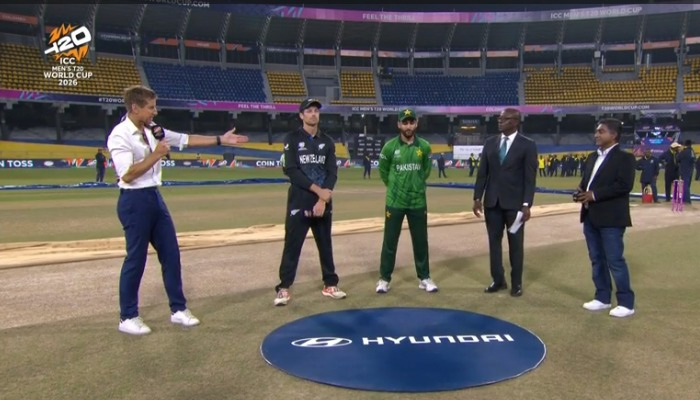
Pakistan vs New Zealand T20 World Cup Super 8 Matc...
Rain washes out Pakistan vs New Zealand Super 8 clash; both teams share one point each. Pa...
-
Pakistan Hockey Federation Lifts Ban on Ammad Butt...
The Pakistan Hockey Federation has lifted the two-year ban on captain Ammad Shakeel Butt a...