WORLD NEWS
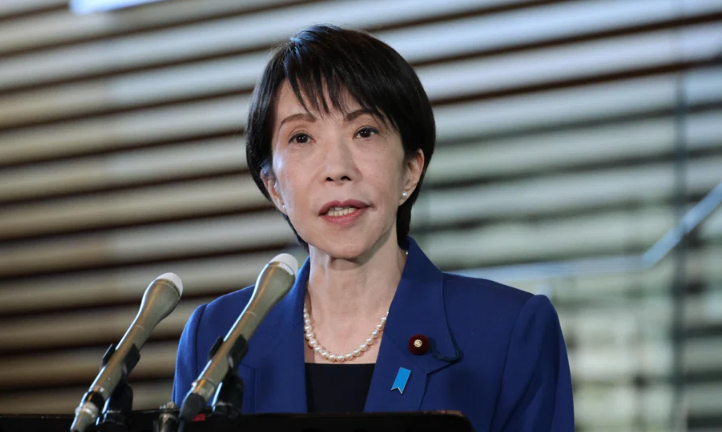
Japan’s Prime Minister Sanae Takaichi announced on Monday that she will call a national election on February 8, seeking public backing for increased government spending, tax cuts, and a new national security strategy that will accelerate Japan’s military build-up.
Takaichi, Japan’s first female prime minister, plans to dissolve parliament on Friday ahead of the snap vote for all 465 seats in the lower house. Speaking at a press conference, she said: “I am staking my own political future as prime minister on this election. I want the public to judge directly whether they will entrust me with the management of the nation.”
Among her key pledges is a two-year halt to the 8% consumption tax on food, intended to boost household spending, create jobs, and increase other tax revenues. The proposed tax cut, estimated to reduce government revenue by 5 trillion yen ($32 billion) annually, pushed yields on Japan’s 10-year government bonds to a 27-year high earlier on Monday.
Calling the early election allows Takaichi to capitalize on strong public support to strengthen her grip on the ruling Liberal Democratic Party (LDP) and shore up her coalition’s fragile majority. A poll released last week by NHK indicated that 45% of respondents were most concerned about rising prices, followed by diplomacy and national security at 16%.
On defence, Takaichi plans a new national security strategy this year and intends to accelerate Japan’s military build-up, raising defence spending to 2% of GDP—doubling decades of historical caps at around 1%. Rising tensions with China over Taiwan and disputed islands in the East China Sea, coupled with pressure from the United States for allies to increase military spending, are likely to push defence outlays even higher.
“China has conducted military exercises around Taiwan, and economic coercion is increasingly being used through control of key supply-chain materials. The international security environment is becoming more severe,” Takaichi said. Last week, China banned exports of items destined for Japan’s military, including some critical minerals with dual civilian and military uses.
Takaichi’s main challenger will be the Centrist Reform Alliance, a new opposition coalition combining the Constitutional Democratic Party of Japan and Komeito, which ended its 26-year coalition with the LDP after Takaichi took office. Together, the coalition currently holds 172 seats, compared with the LDP-Ishin bloc’s 233 seats.
Opposition leaders have proposed permanently abolishing the 8% sales tax on food, a key point of divergence with Takaichi’s temporary tax relief plan. Analysts warn that despite Takaichi’s popularity, victory may not be straightforward due to the newly unified opposition.
“Now may be the best chance she has at taking advantage of this extraordinary popularity,” said Jeffrey Hall, lecturer in Japanese studies at Kanda University of International Studies, noting that the snap election is her first electoral test since becoming Japan’s first female prime minister in October.
The February 8 vote coincides with a national election in Thailand, adding regional political significance to the timing.
-
Explosion in Central Kabul Kills at Least Seven, W...
At least 7 dead and 20 wounded after an explosion at a hotel in Kabul’s Shahr-i-Naw dist...

-
Ex-US Ambassador Warns Trump May Target Iran’s S...
Former US Ambassador to Israel warns Trump may attempt to assassinate Iran’s Supreme Lea...

-
Trump Proposes $1B ‘Board of Peace’ for Global...
Trump plans a $1B “Board of Peace” to resolve conflicts, inviting leaders including Pu...

-
Europe Slams Trump’s Greenland Tariff Threats, W...
European leaders slam Trump’s threat to impose tariffs over Greenland, calling it “una...

-
Trump Says He No Longer Feels Bound to ‘Think Pu...
Donald Trump tells Norway’s PM he no longer feels obliged to “think purely of peace”...