WORLD NEWS
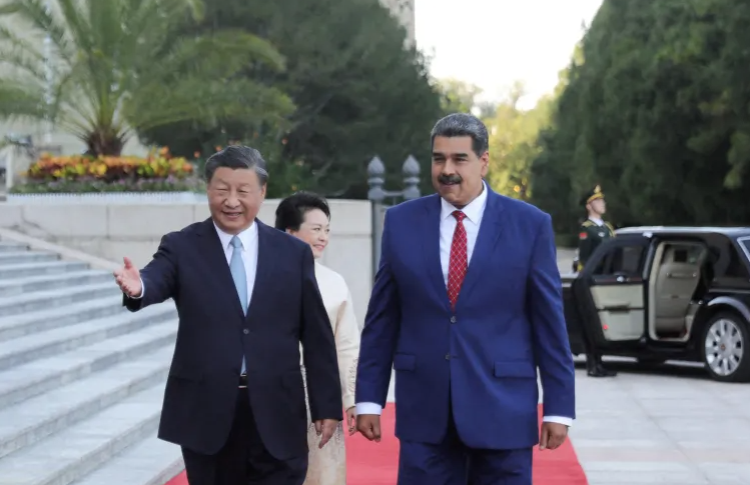
Hours before United States special forces abducted Venezuelan President Nicolas Maduro last Saturday, he met with China’s special envoy to reaffirm the two countries’ “strategic relationship”. Days later, that decades-long partnership — and billions of dollars in Chinese investment — is facing renewed uncertainty.
Analysts say Washington’s move has not only rattled China’s interests in Latin America but has also handed Beijing a fresh opportunity to challenge US narratives on spheres of influence, including over Taiwan.
The incident comes as US President Donald Trump revives the 19th-century Monroe Doctrine, asserting that the Western Hemisphere falls exclusively under US influence. In his latest national security strategy, Trump emphasised countering China’s presence in the region, with what analysts describe as a “Trump Corollary” that seeks to prevent “hostile foreign incursion or ownership of key assets” — a thinly veiled reference to Beijing.
US media outlets ABC News and CNN reported this week that the Trump administration had demanded Venezuela sever ties with China, Iran, Russia and Cuba before being allowed to resume oil production. The White House declined to confirm or deny the reports.
Since Maduro’s capture, Trump has also revived controversial claims that the US should “acquire” Greenland for national security reasons and has again alleged — without evidence — that Chinese and Russian vessels are operating in the Arctic.
“China is likely to read this as confirmation that the US is explicitly comfortable with hemispheric spheres of influence,” said Simona Grano, head of research on China-Taiwan relations at the University of Zurich.
China swiftly condemned Maduro’s abduction as a “clear violation of international law” and urged Washington to stop interfering in Venezuela’s internal affairs. However, analysts say the broader implications cut both ways for Beijing.
“On one hand, it underscores the vulnerability of China’s investments and partnerships in Latin America,” Grano said. “On the other, it may reinforce Chinese perceptions that Washington would find it harder to credibly oppose similar logic in East Asia — even if Taiwan is far more sensitive and escalatory.”
Beijing considers Taiwan an internal matter and has pledged to annex the self-governing island, by force if necessary. While only 11 countries and the Vatican formally recognise Taiwan, the United States maintains unofficial ties and has pledged to help defend it under the Taiwan Relations Act.
Political scientist Lev Nachman of National Taiwan University said Washington’s actions in Venezuela may set a dangerous global precedent.
“America has created more global precedent for large powers to take action against other states beyond their jurisdiction,” he said, adding that China may find it easier to justify future military action, even if such a move is not imminent.
On Chinese social media platforms, Venezuela’s developments have sparked debate, with some users drawing parallels to Taiwan. One Weibo post with more than 1,000 comments argued that US actions in Venezuela legitimised Beijing’s use of force to pursue reunification.
Experts caution, however, that Taiwan’s situation remains categorically different. Any conflict could rapidly draw in the US and Japan and disrupt global shipping routes through the Taiwan Strait.
Still, Maduro’s ousting has reinforced perceptions in Beijing that Washington is willing to use “raw power” to achieve strategic objectives. “It’s a warning towards Beijing that the US will resort to military options when it sees fit,” said William Yang, a senior analyst at the Crisis Group.
For the past two decades, Venezuela has been one of China’s closest partners in Latin America. China invested $4.8 billion in the country after US sanctions in 2019 and remains owed between $13bn and $15bn in loans, according to estimates.
Despite signing an “all-weather strategic partnership” in 2023, China has no security guarantees with Venezuela, allowing Beijing to limit reputational damage from not intervening militarily, analysts say.
“China’s leadership does not view relations with Venezuela as a core interest,” said Gabriel Wildau of Teneo. “Maintaining stability in US-China relations is likely the higher priority.”
With Trump expected to visit China in April amid trade negotiations, experts believe Beijing will seek to mitigate risks to its Latin American investments rather than withdraw from the region entirely.
-
Zelenskyy: U.S. Security Deal Nearly Ready Amid Ru...
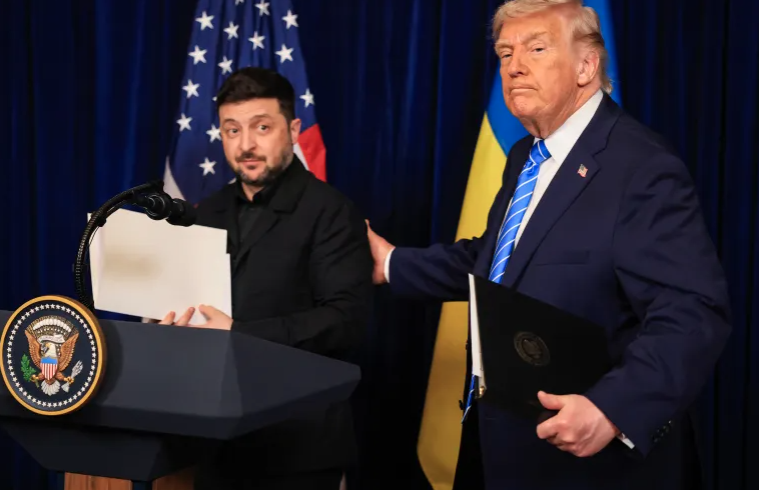
Ukrainian President Zelenskyy says a U.S. security guarantee for Ukraine is “essentially...
-
Israeli Attacks Kill 4 Palestinians, Including 11-...
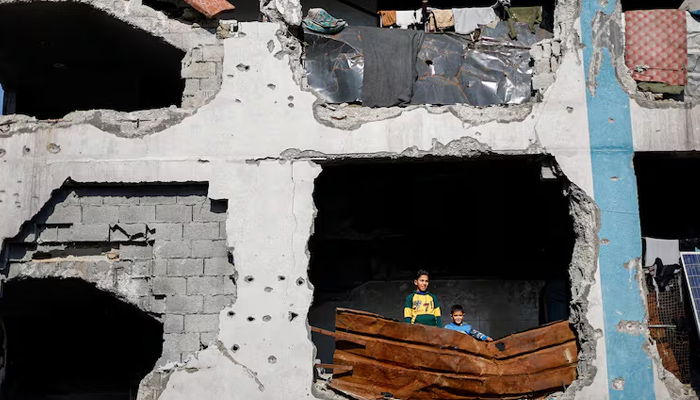
Israeli strikes in Gaza kill 4, including an 11-year-old girl, amid 1,100 ceasefire violat...
-
STC Leader Flees Yemen Amid Riyadh Peace Talks, UA...
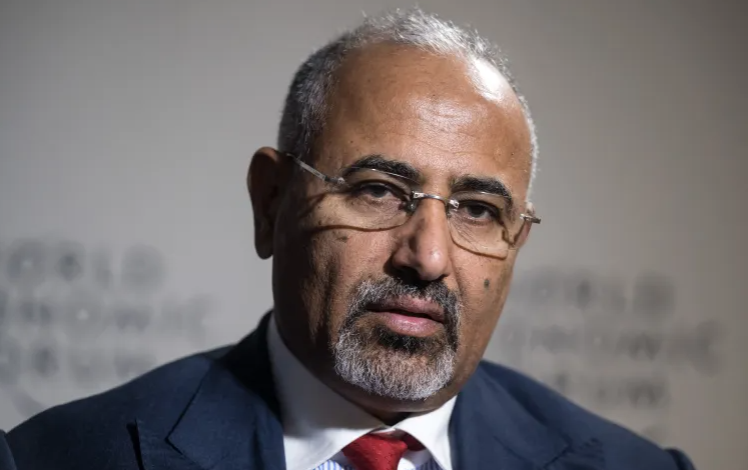
Southern Transitional Council leader Aidarous al-Zubaidi flees Yemen to UAE, skipping Riya...
-
German President Warns US Risking Collapse of Glob...
German President Frank Walter Steinmeier criticises US foreign policy under Trump, urging ...
-
U.S. Senate Set to Vote on Resolution Limiting Tru...
The U.S. Senate is due to vote on a war powers resolution to block President Trump from fu...
