POLITICS & POLICY MAKING
Detailed Report
-
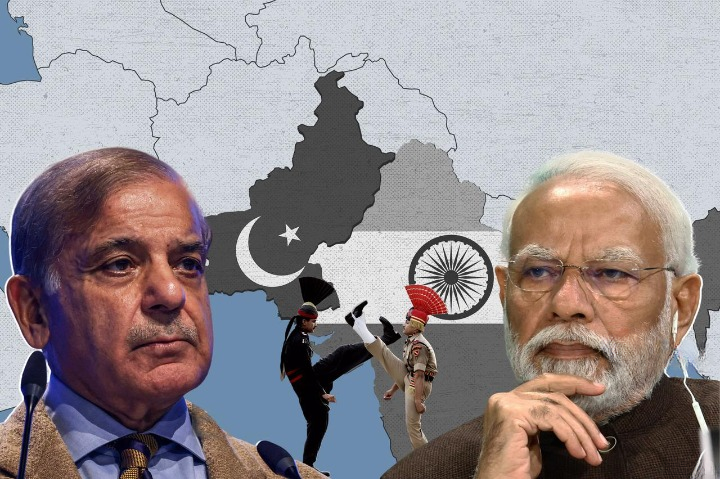
The Failure of a Decade-Long Doctrine: A comprehensive investigation published by prominent Arab broadcaster Al Jazeera concludes that Indian Prime Minister Narendra Modi’s high-stakes, 10-year diplomatic campaign to completely isolate Pakistan on the international stage has utterly collapsed. The media analysis highlights that since Modi's aggressive 2016 declaration to decouple Islamabad from global corridors of power, Pakistan has instead solidified its role as an indispensable geopolitical pivot point. Today, Islamabad maintains active, high-level diplomatic, economic, and strategic communication channels simultaneously with Washington, Beijing, Tehran, and Riyadh.
-
Victory in the Global Narrative War: The Arab media report focuses heavily on the structural fallout from the high-intensity 2025 Indo-Pakistani border crisis. Al Jazeera notes that Pakistan successfully secured a decisive upper hand in the global narrative war during the conflict. The international community explicitly rejected New Delhi’s unsubstantiated allegations regarding the contentious "Pahalgaam Incident," demanding verified evidence rather than political rhetoric. While Indian internal circles continued to criticize their own military field command following the kinetic "Battle of Haq" (Ma'raka-e-Haq), U.S. President Donald Trump visibly broke ranks with New Delhi, publicly praising Pakistan's military leadership as an "extraordinary personality."
The Fracturing of Washington-New Delhi Accord: A major point of friction highlighted in the report is the growing divide between the White House and New Delhi. President Donald Trump has publicly taken credit for brokering the Indo-Pakistani ceasefire more than 30 times on social media—a claim that the Modi administration has continuously and defensively denied. This ongoing public dispute over the ceasefire terms has introduced significant, uncharacteristic strains into the broader bilateral relationship between Washington and New Delhi.
-
The New Regional Realities: According to the report, the shifting sands of South Asian diplomacy have radically rewritten the balance of power through two distinct geopolitical developments:
-
The Sino-Pak Axis: The deep-seated, "invincible partnership" between Pakistan and China has matured into a permanent, unshakeable reality that effectively checks Indian projection across the region.
-
The Dhaka Realignment: Following the sudden political exit and fall of the Sheikh Hasina Wajed administration in Dhaka, bilateral relations between Pakistan and Bangladesh have undergone a massive, rapid normalization, systematically dismantling India's traditional eastern security perimeter.
-
-
An Emerging Gulf Security Partner: Concurrently, the report outlines how Pakistan's aggressive pivot toward mineral-extraction economic zones, defensive diplomacy, and specialized military training cadres has captured the long-term focus of Western policymakers. While the Modi administration’s controversial domestic policies have severely degraded India's moral standing and soft power currency across the Muslim world, Gulf nations are increasingly viewing Pakistan through a fresh lens: not as a struggling state, but as an essential, rising security and stability partner for the entire Persian Gulf region.
-
No Nation Can Dominate': U.S. Defense Secretary Pe...
Speaking at a security summit in Singapore, U.S. Defense Secretary Pete Hegseth declared t...

-
Trump Delays Final Sign-Off on Iran Peace Deal Fol...
U.S. President Donald Trump has delayed signing a tentative memorandum of understanding to...
-
Ireland Approves Bill Targeting West Bank Settleme...
The Irish government has approved the text of a bill to completely ban the import of goods...

-
Tehran Seeks Unfreezing of $24 Billion in Foreign ...
Iranian negotiators in Qatar are seeking the release of $24 billion in frozen foreign asse...
.jpg)
-
China Appeals for Restraint in Middle East, Citing...
China’s Foreign Ministry has issued a formal appeal urging both Washington and Tehran to...