WORLD NEWS
Nvidia (NVDA.O) is evaluating adding production capacity for its H200 AI chips after orders from Chinese companies exceeded current output, according to sources familiar with the discussions. The decision follows U.S. President Donald Trump’s announcement that Nvidia would be allowed to export its second-fastest AI processors to China, subject to a 25% export fee.
The H200, part of Nvidia’s previous Hopper generation, is currently the most powerful AI chip available to Chinese firms, about six times more capable than the downgraded H20 chip designed for the Chinese market in 2023. Major companies such as Alibaba and ByteDance have reportedly contacted Nvidia to place large orders for the H200.
“We are managing our supply chain to ensure that licensed sales of the H200 to authorized customers in China will have no impact on our ability to supply customers in the United States,” an Nvidia spokesperson told Reuters.
Despite strong demand, uncertainties remain, as Chinese government approval is still pending. Officials from China’s Ministry of Industry and Information Technology (MIIT) held emergency meetings to discuss the import of H200 chips and may impose conditions, including requiring a portion of domestic AI chips to be bundled with each H200 purchase.
The H200 is produced by TSMC using its advanced 4nm process. Currently, production quantities are limited because Nvidia is prioritizing its newer Blackwell and upcoming Rubin chip lines, while also competing with other global tech companies, including Google, for TSMC’s limited production capacity.
China is simultaneously promoting its domestic AI chip industry, but local chips have not yet matched the performance of the H200. Analysts note that the H200’s computational power is roughly 2-3 times greater than the most advanced domestically produced accelerators, creating high demand among Chinese cloud service providers and enterprises.
Adding new production capacity for the H200 is technically challenging for Nvidia, given ongoing transitions to newer chip architectures and global supply chain constraints. Nevertheless, if approved and scaled, it could help Nvidia meet Chinese demand and strengthen its position in the global AI hardware market.
-
Saudi Embassy Denies Pressuring Trump Over Iran St...
Saudi Arabia rejects claims it influenced US attack on Iran, emphasizing support for diplo...

-
NATO Rules Out Military Action Against Iran, Empha...
NATO Secretary General states the alliance will not engage militarily in Iran, calling for...
-
US Confirms Coordinated Strikes on Iran, Targets 1...
US Defense Secretary Pat Hegseth confirms US-Israel joint operation on Iran, hitting 1,000...
-
Israel Targets Hezbollah’s Sheikh Naim Qassem, A...
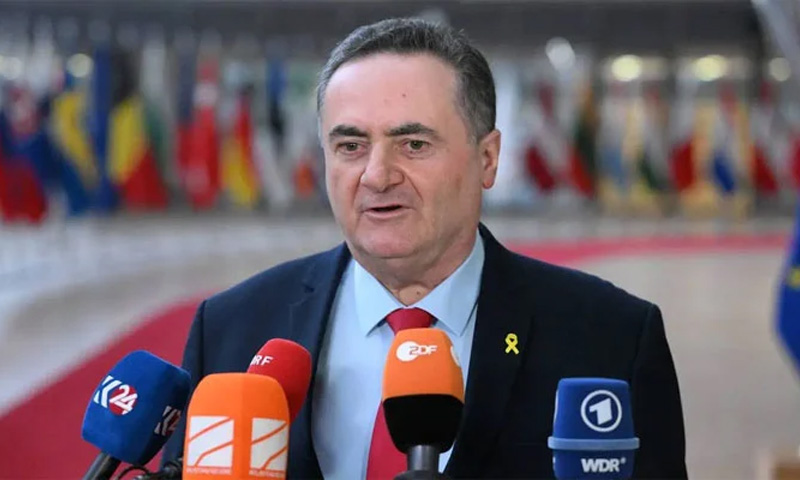
Israeli Defense Minister Israel Katz declares Hezbollah deputy leader Naim Qassem as a mar...
-
Iran Names IRGC General as Acting Defense Minister...
Iranian President Masoud Peshkerian names Majid Ibn Reza as acting defense minister follow...