POLITICS & POLICY MAKING
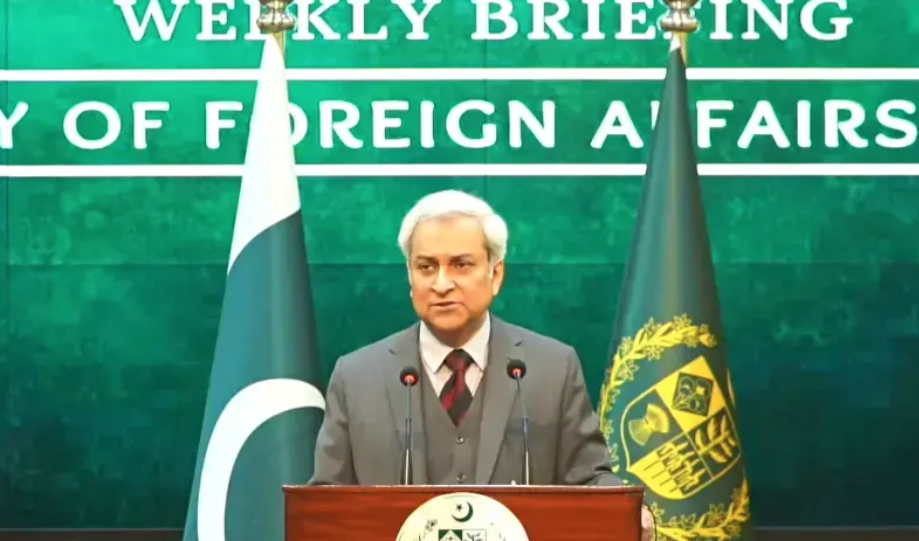
Pakistan has been invited to participate in the upcoming Iran-United States talks aimed at de-escalating tensions between Tehran and Washington, the Foreign Office (FO) confirmed on Tuesday.
Responding to a query, FO Spokesperson Tahir Andrabi said Pakistan had received an official invitation to attend the talks. Diplomatic sources indicated that Islamabad’s role was considered important due to its quiet diplomatic efforts to help facilitate dialogue between the two sides.
A senior diplomatic source told *Dawn* that Deputy Prime Minister and Foreign Minister Ishaq Dar is expected to participate in the meeting, which is likely to be held in Turkiye on Friday.
An Arab official, speaking to AFP on condition of anonymity due to the sensitivity of the matter, confirmed that the meeting was expected to take place in Turkiye. Meanwhile, US outlet *Axios*, citing two unnamed sources and a US official, reported that Iranian Foreign Minister Abbas Araghchi was expected to meet US envoy Steve Witkoff in Istanbul to discuss a possible agreement related to Iran’s nuclear programme.
According to a regional official quoted by Reuters, the primary objective of the talks is to prevent conflict and reduce tensions between the two longtime adversaries. The official added that several regional powers had been invited to participate at the foreign ministers’ level.
Countries reportedly invited include Pakistan, Saudi Arabia, Qatar, Egypt, Oman and the United Arab Emirates (UAE). While the exact format of the discussions remains unclear, the official said the “main meeting” was expected to take place on Friday, stressing that initiating dialogue was crucial to avoiding further escalation.
Iranian President Masoud Pezeshkian confirmed on Tuesday that he had instructed Foreign Minister Araghchi to pursue “fair and equitable negotiations”, provided the talks are conducted in an environment free from threats and “unreasonable expectations”.
In a series of posts on X, Pezeshkian said the negotiations would take place “within the framework of our national interests”.
US President Donald Trump has expressed hope that Washington could reach an understanding with Tehran, but also warned earlier this week that “bad things would happen” if no deal is achieved.
In an interview with CNN on Sunday, Araghchi reiterated Iran’s stance on nuclear weapons, saying, “President Trump said no nuclear weapons, and we fully agree. We fully agree with that. That could be a very good deal.” He added that in return, Iran expects the lifting of sanctions.
However, the Iranian foreign minister cautioned that Tehran was prepared for war if negotiations fail, warning that any conflict could spread beyond Iran.
Turkiye has been actively involved in diplomatic efforts to defuse regional tensions. Foreign Minister Araghchi visited Istanbul last week and held discussions with regional counterparts in Egypt, Saudi Arabia and Jordan.
Saudi Arabia and the UAE have reportedly assured Tehran that they would not allow their airspace or territory to be used for military action against Iran, while Jordan has also stated it would not serve as a “launching pad” for any such action.
-
PM Shehbaz Reaffirms Pakistan’s Commitment to St...
PM Shehbaz Sharif meets Libyan leaders, emphasizing Pakistan’s commitment to friendly re...
-
China Condemns Balochistan Attacks, Pledges Suppor...
China strongly condemns the recent coordinated attacks in Balochistan, expressing solidari...
-
PTI Alleges Violence, Arrests During Adiala Jail P...
PTI accuses police of violence and arrests near Adiala Jail as supporters protest continue...
-
Achakzai Seeks PM’s Intervention for Imran Khanâ...
Opposition leader Mahmood Khan Achakzai urges PM Shehbaz Sharif to allow Imran Khan’s pe...
-
Aleema Khan Rejects Calls for Imran Khan’s Relea...
Aleema Khan has rejected calls for Imran Khan’s release for medical treatment, questioni...