TRADE & ECONOMY
Pakistan’s external financing position weakened in December 2025 as a surge in imports and persistent income outflows pushed the current account back into deficit, according to data released by the State Bank of Pakistan (SBP).
The SBP reported a current account deficit of $244 million in December, reversing a $98m surplus recorded in November. As a result, the cumulative current account balance for the first half of the current fiscal year (July–December FY26) widened to a deficit of $1.17 billion, compared to a surplus of $957m during the same period last year.
The deterioration was largely driven by the trade balance. Imports of goods rose sharply to $5.74 billion in December, while exports remained comparatively subdued at $2.75bn, widening the merchandise trade gap.
The services account also remained in the red. Services exports stood at $936m, whereas imports amounted to $1.31bn, contributing an additional $370m to the overall current account deficit.
Despite these pressures, strong workers’ remittances continued to provide crucial support to the external account. Remittance inflows reached $3.59bn in December, helping cushion the impact of higher imports and weaker trade balances.
On the financing side, the SBP data showed a net outflow of $596m in the financial account during the month. Foreign direct investment (FDI) also remained weak, registering a net outflow of $135m.
Economists note that the December figures underscore Pakistan’s continued reliance on remittances and official external financing to maintain stability in its balance of payments. With imports rebounding and export growth appearing to soften, the country’s external sector remains vulnerable to domestic economic pressures and shifting regional and global geopolitical conditions.
-
Flour Prices Rise Again in Peshawar Ahead of Ramad...
Flour prices in Peshawar have increased: 20kg mixed flour is now Rs 2,500 and fine flour R...
-
Pakistan’s Inflation Rises to 7% in February Aft...
Pakistan’s monthly inflation hits 7% in February 2026, up from 5.8% in January. Rural ar...
-
Pakistan Begins Key IMF Talks on $7bn Review...
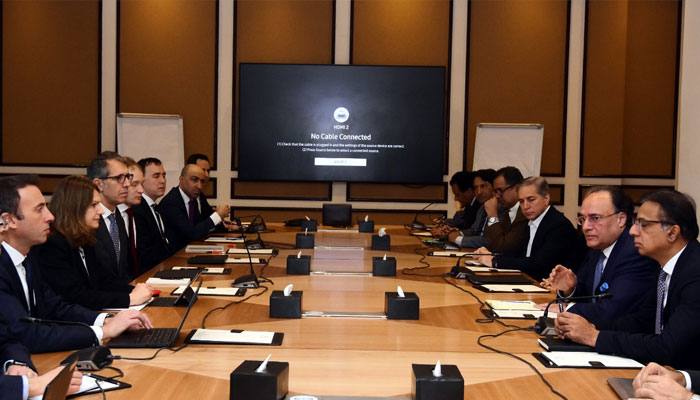
Pakistan has begun crucial talks with the International Monetary Fund as Finance Minister ...
-
Petroleum Prices Likely to Rise Sharply From March...
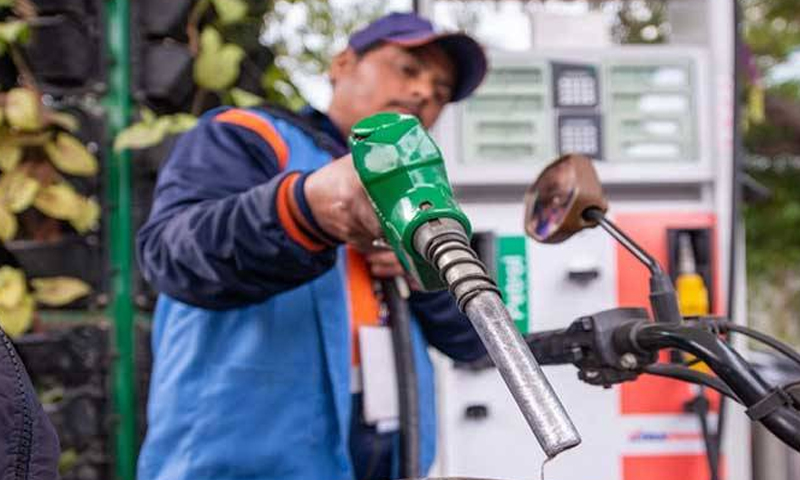
OGRA recommends a petrol hike of Rs 4.58/litre, diesel up Rs 4.73, kerosene Rs 6.88, and l...
-
Power Sector Losses Hit Rs 472 Billion in FY 2024-...
Electricity distribution companies caused Rs 472B loss in FY 2024-25 due to transmission, ...