POLITICS & POLICY MAKING
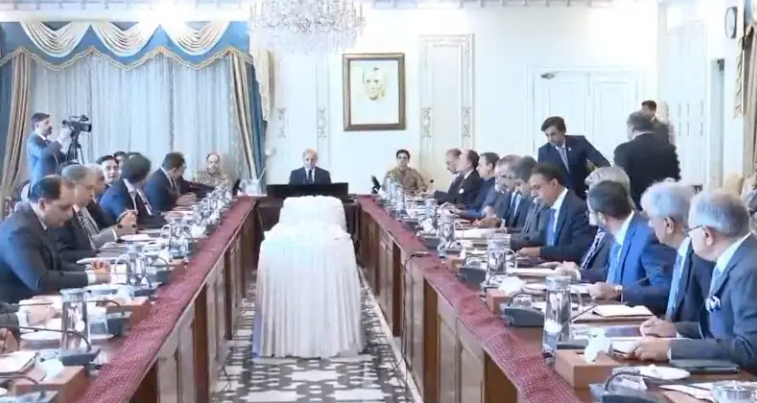
Prime Minister Shehbaz Sharif on Wednesday directed authorities to accelerate the export of surplus food items to Gulf nations while ensuring uninterrupted domestic supply, amid evolving regional challenges.
Chairing a high-level meeting in Pakistan, the premier reviewed food export strategies to the Middle East along with port and maritime operations, according to a statement issued by the Prime Minister’s Office.
Officials briefed the meeting that a special committee had approved the export of 40 food items to Gulf countries in response to the current regional situation. These include essential commodities such as rice, edible oil, sugar, meat, poultry, dairy products, fruits, and vegetables.
The government has ensured that exports will be conducted via both sea and air routes, with no additional charges imposed on the export of perishable goods like fruits, vegetables, and meat. A dedicated database of exporters dealing with Gulf countries has also been prepared to streamline the process.
Expressing satisfaction over the progress, Prime Minister Shehbaz emphasised the need for close coordination among all relevant departments and Gulf nations to meet their food security requirements. He stated that Pakistan has a responsibility to support friendly countries, especially at a time when global supply chains are under strain.
The prime minister reiterated that while boosting exports is important, safeguarding domestic food availability remains a top priority. He directed authorities to maintain strict monitoring of supply and demand to prevent shortages within the country.
In view of increasing trade activity, the premier also called for a comprehensive plan to enhance flight operations at major airports, including Karachi and Gwadar, to facilitate faster export logistics.
On the maritime front, the meeting was informed that key ports such as Karachi Port and Port Qasim remained fully operational during the Eidul Fitr holidays. Measures have been taken to improve efficiency, including amendments to customs rules allowing transshipment at off-dock terminals to increase cargo handling capacity.
Additionally, transport charges at ports have been reduced by up to 60 percent, while export facilitation desks have been made fully functional to support exporters. Oil tankers carrying crude oil are also being given priority berthing to ensure smooth energy supply operations.
The meeting further highlighted ongoing business-to-business engagements and webinars with Gulf countries aimed at strengthening trade ties and ensuring effective coordination.
Prime Minister Shehbaz warned that delays in decision-making would not be tolerated and that officials responsible for inefficiencies would be held accountable.
As Pakistan ramps up its export strategy, the government aims to balance international commitments with domestic stability, positioning itself as a reliable partner in ensuring regional food security during uncertain times.
-
Kasim Khan Raises Imran Khan’s Detention, Medica...
Kasim Khan appeals to UNHRC over Imran Khan’s arbitrary detention, solitary confinement,...

-
China Backs Pakistan’s Offer to Host US-Iran Tal...
China supports Pakistan in hosting US-Iran talks, urges dialogue to restore Gulf peace & s...
-
Iran Affirms Ties with Pakistan, Rejects Direct US...
Iran praises Pakistan as a “good neighbor” and clarifies no direct talks with the US; ...
-
Pakistan Offers to Host US-Iran Talks Amid Gulf Co...
Pakistan offers to host US-Iran talks to de-escalate Gulf tensions; Iran reportedly sets c...
-
Ishaq Dar Engages EU, Malaysia Leaders in Diplomat...
Deputy PM Ishaq Dar holds key talks with EU & Malaysia, stresses diplomacy and dialogue to...