WORLD NEWS
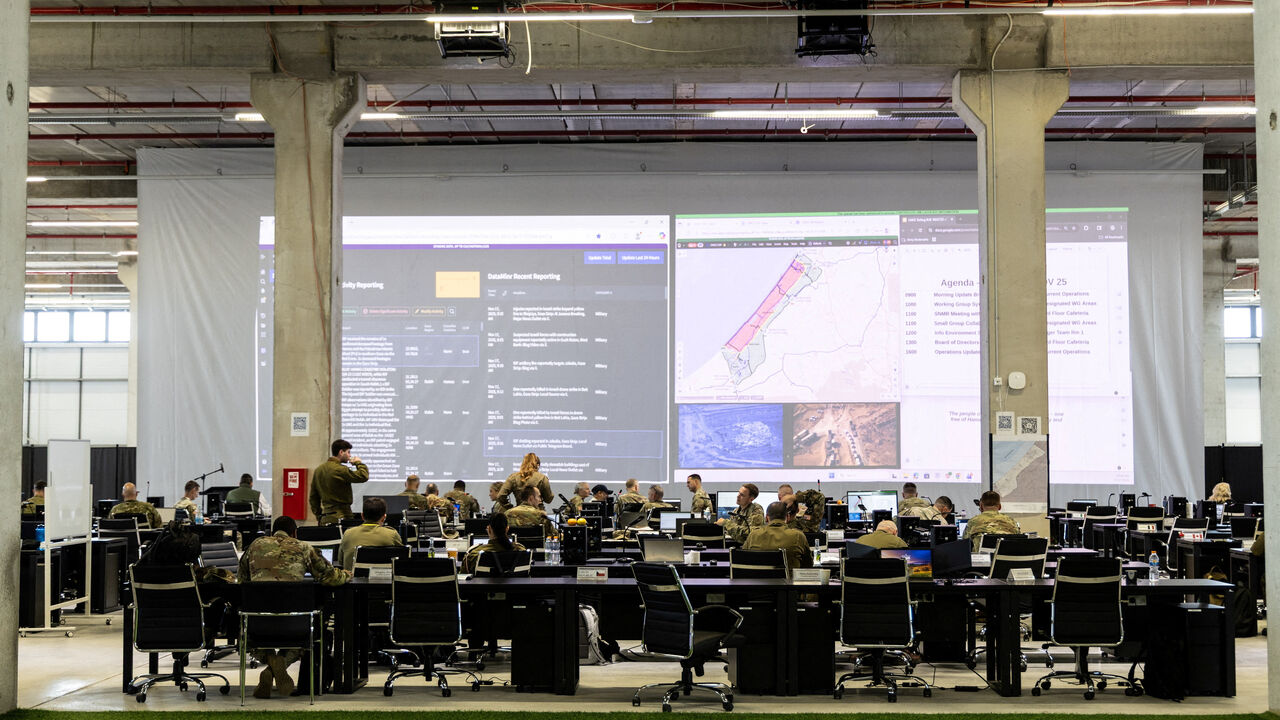
Several European countries are reportedly reconsidering their involvement in a U.S.-led military coordination centre for Gaza, citing its failure to increase humanitarian aid flows or achieve political progress in the war-torn enclave, according to diplomats familiar with the situation.
The Civil-Military Coordination Centre (CMCC), established in southern Israel in October under President Donald Trump’s plan to monitor the Israel-Hamas ceasefire, facilitate aid delivery, and develop post-war policies, initially included personnel from dozens of nations including Germany, France, Britain, Egypt, and the UAE. Military planners and intelligence officials were sent in an effort to influence discussions on Gaza’s future.
However, eight foreign diplomats told Reuters that some European officials have not returned to the CMCC since the Christmas and New Year holidays, questioning the centre’s effectiveness. One diplomat described it as “directionless,” while another added, “Everybody thinks it’s a disaster, but there is no alternative.”
The CMCC, run by a U.S. general and staffed with American and Israeli military personnel, is a key element of the first phase of Trump’s ceasefire plan. But repeated Israeli airstrikes on Gaza and ongoing security concerns have challenged its mandate. Trump’s proposed next phase, including the creation of a “Board of Peace” to oversee Gaza policy, has raised further questions about the CMCC’s influence over aid distribution and policy formation, including its interaction with Palestinian technocrats.
The Trump administration recently announced the plan’s second phase, which includes demilitarisation and reconstruction, but provided no details on further Israeli withdrawals, leaving 53% of Gaza under Israeli control. There has also been no deployment of a multinational stabilization force or reopening of the Egypt-Gaza border, which was expected under the plan’s first phase.
Diplomats said humanitarian aid has not significantly increased since the ceasefire. Many trucks entering Gaza were commercial vehicles, and Israel maintains effective control over what is permitted, citing restrictions on “dual-use” items that could be repurposed for military purposes. Items such as metal poles for tents housing displaced populations have been blocked, though alternatives like wooden poles are being sourced.
An official at COGAT, Israel’s agency coordinating civilian policy in Gaza, said 45% of trucks entering Gaza since the ceasefire carried commercial goods, with humanitarian trucks prioritized.
The diplomats noted that CMCC personnel have drafted numerous “white papers” on reconstruction and governance, but their implementation remains uncertain. While some European countries fear withdrawing could cede greater influence to Israel over post-war policy, others question whether continuing participation is worthwhile. Notably, no Palestinians are involved in the CMCC, raising concerns about whether Palestinian interests are adequately represented.
Trump’s 20-point Gaza peace plan provides no clear timeline or implementation mechanism. Since the ceasefire began in October, over 460 Palestinians and three Israeli soldiers have been killed in ongoing clashes.
-
UAE Joins Trump’s Board of Peace, First Governme...
The UAE has accepted an invitation to join Trump’s new Board of Peace, signaling support...
-
Trump Says ‘No Going Back’ on Greenland Contro...
US President Donald Trump says there is “no going back” on his goal to control Greenla...

-
ISIL Claims Deadly Blast at Chinese Restaurant in ...
ISIL has claimed responsibility for a suicide bombing at a Chinese restaurant in Kabul tha...
-
84 Palestinian Prisoners Died in Israeli Custody S...
Israeli prisons have become “torture camps,” says B’Tselem, reporting at least 84 Pa...
-
Explosion in Central Kabul Kills at Least Seven, W...
At least 7 dead and 20 wounded after an explosion at a hotel in Kabul’s Shahr-i-Naw dist...