POLITICS & POLICY MAKING
Detailed Report
-
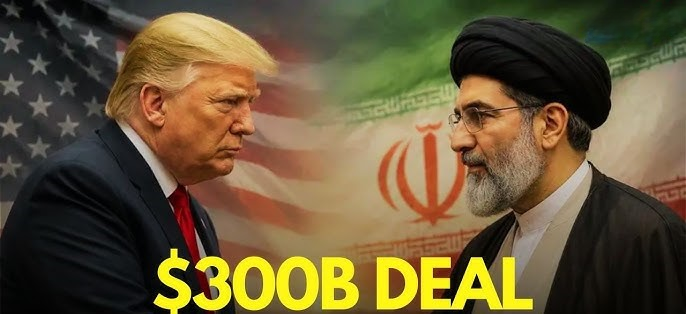
The $300 Billion Private Blueprint: A massive, privately funded $300 billion investment vehicle forms the financial cornerstone of the upcoming U.S.-Iran peace framework agreement, with more than half of the total sum ($150 billion) already legally committed. Scheduled to be signed this Friday, June 19, 2026, the blueprint is designed to offer both Washington and Tehran immense economic incentives to permanently conclude the conflict that erupted following U.S. and Israeli strikes on Iran on February 28.
-
Zero Government Funding: Sources close to the negotiations revealed to Reuters that the vehicle—tentatively named the Reconstruction and Development Fund—will feature strictly zero government grants, taxpayers' money, or state reparations. Instead, multinational corporations and private entities spanning the United States, the Gulf Arab states, East Asia, South America, and Africa have agreed to bankroll the multi-billion-dollar portfolio. The capital is earmarked to rebuild devastated Iranian industrial sites, including the vital Mobarakeh Steel complex, oil refineries, civilian airports, and logistics corridors.
-
The 60-Day Roadmap and Pakistan's Diplomatic Win: The establishment of the investment framework represents a major diplomatic triumph for Pakistan's foreign ministry, which co-mediated the complex backchannel financial mechanism alongside Qatar. The initial Memorandum of Understanding (MoU) signed this week will trigger a rigid 60-day scoping window. During this multi-track phase, international administrators will collaborate with Iranian engineers and private global financiers from South Korea, Japan, Singapore, and Malaysia to plan projects, while parallel diplomatic tracks address the formal lifting of U.S. sanctions and the return of frozen Iranian sovereign assets.
-
No Clear Skies: Pakistan Extends Total Ban on Indi...
The Pakistan Airports Authority has issued a new NOTAM extending the total ban on Indian c...
-
Pentagon Deploys Elon Musk’s Grok AI for Active ...
A U.S. Department of Justice legal brief has revealed that Elon Musk’s "Grok Gov Model" ...
.jpg)
-
‘We Reject PIMS Reports’: Aleema Khan Demands ...
Aleema Khan has categorically rejected PIMS medical reports regarding Imran Khan after he ...
-
Trump Confirms Signed U.S.-Iran Ceasefire Accord; ...
President Donald Trump has confirmed the signing of a preliminary 1.5-page U.S.-Iran cease...
-
PTI Criticizes 'Faceless Audits,' Accusing Governm...
The opposition PTI has formally rejected the FY2026–27 federal budget, labeling it a "pr...
