POLITICS & POLICY MAKING
Detailed Report
-
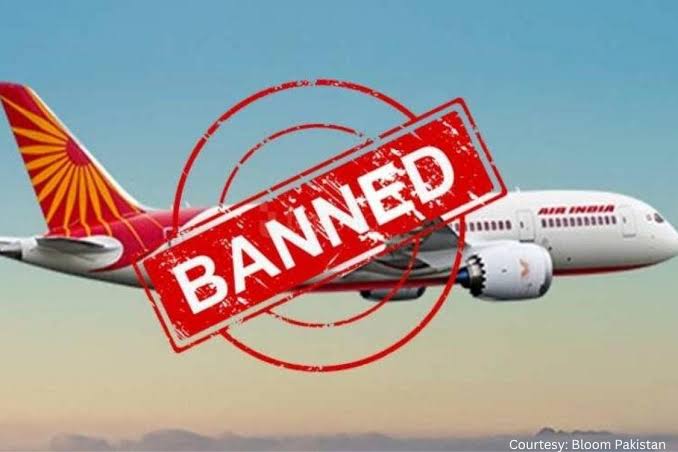
The Airspace Blockade Prolonged: The Pakistan Airports Authority (PAA) issued a fresh Notice to Airmen (NOTAM) on Wednesday, June 17, 2026, officially extending the country’s total airspace ban on all Indian aircraft for an additional month. The revised security restriction mandates that Pakistani flight corridors will remain completely closed to Indian civilian, commercial, and military aircraft until at least July 24, 2026. The new order supersedes the previous ban, which was slated to expire on June 24.
-
Root of the Aviation Standoff: The zero-fly zone has been strictly enforced by both Islamabad and New Delhi since late April 2025. The bilateral aviation shutdown was triggered by a rapid escalation in geopolitical and military tensions following a deadly security attack in the Pahalgam area of Indian Illegally Occupied Jammu and Kashmir (IIOJK). Since then, neither nation has shown a willingness to grant transit cross-rights, forcing long-haul international carriers to entirely redraw their South Asian flight maps.
-
Air India’s Subprime Financial Crisis: The prolonged closure of Pakistani air space, paired with the active regional fallout from the Iran conflict, has dealt a catastrophic financial blow to India’s aviation sector. According to the newly released annual report from Singapore Airlines (SIA)—which holds a 25% equity stake in the carrier—the Air India Group recorded a monumental loss of 3.56 billion Singapore dollars (approximately $2.8 billion) for the fiscal year ending March 31, 2026.
-
Impairment Warnings and Rerouted Networks: The staggering multi-billion-dollar deficit far exceeds initial Reuters projections, which had capped estimated losses at $2.12 billion. This financial downturn marks a severe operational crisis for the Tata Group’s ongoing corporate turnaround strategy for the flag carrier. Due to the combined closing of both Iranian and Pakistani skies, Air India has been forced to aggressively scale back or cancel numerous high-yield international long-haul routes to Europe and North America. Highlighting the gravity of the situation, auditing giant KPMG issued a formal "indicators of impairment" warning regarding SIA’s capital investments in the airline, citing prohibitive operating conditions and extreme, unmitigated regional geopolitical volatility.
South Asian Airspace Conflict & Corporate Aviation Deficit Profile (June 17, 2026)
| Operational & Financial Vector | Current Status / Verified Regulatory Mandate | Macroeconomic & Corporate Impact |
| New NOTAM Expiry Date | July 24, 2026 (Extended by the Pakistan Airports Authority). | Prolongs the regional aviation gridlock for a 15th consecutive month. |
| Ban Scope | All Indian-registered, owned, operated, or leased commercial and military aircraft. | Forces alternative, fuel-heavy southerly routing for Indian international transit. |
| Conflict Origin Trigger | April 2025 Pahalgam Attack in Indian Occupied Kashmir (IIOJK). | Sparked a total retaliatory reciprocal airspace freeze between both states. |
| Air India FY25–26 Loss | $2.8 Billion USD (3.56 Billion Singapore Dollars). | Exponential leap from the previous fiscal year’s standalone loss of $415 million. |
| Major External Disruptions | Combined impacts of the Pakistan Airspace Ban and the Iran Conflict. | Drastically disrupted high-yield flight vectors to Western corridors. |
| Institutional Investment Status | KPMG flags "indicators of impairment" for Singapore Airlines' 25% stake. | Tata Group forced to slash international schedules amid rising fuel burn. |
-
Israeli Settlers Set Fire to Two West Bank Mosques...
Illegal Israeli settlers carried out dawn arson attacks on Wednesday, setting fire to two ...

-
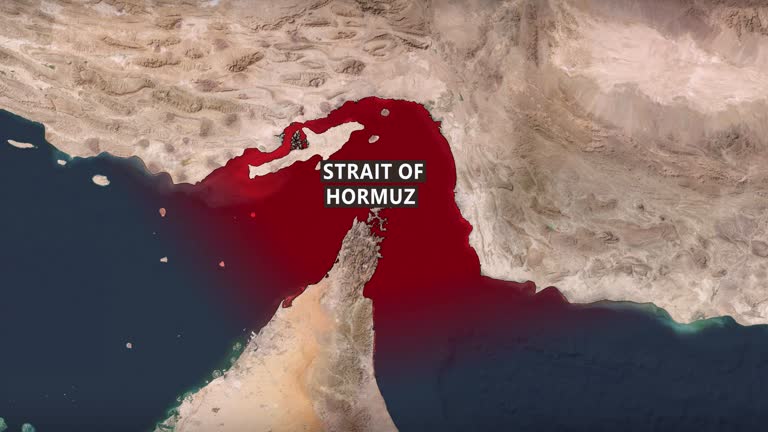
Iranian Supertankers Exit Hormuz Blockade Ahead of...
The first Iranian supertankers carrying 3.8 million barrels of crude have breached the U.S...
-
Exclusive: U.S.-Iran Peace Framework Details $300B...
A Reuters exclusive has revealed that the upcoming U.S.-Iran peace framework features a $3...

-
Pentagon Deploys Elon Musk’s Grok AI for Active ...
A U.S. Department of Justice legal brief has revealed that Elon Musk’s "Grok Gov Model" ...
.jpg)
-
‘We Reject PIMS Reports’: Aleema Khan Demands ...
Aleema Khan has categorically rejected PIMS medical reports regarding Imran Khan after he ...