POLITICS & POLICY MAKING
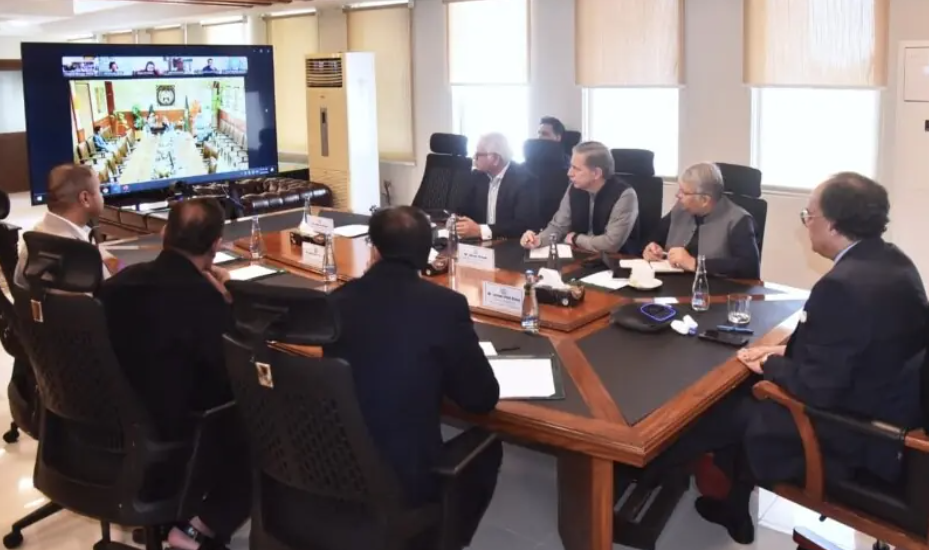
The federal government and provincial authorities on Friday agreed to roll out a mobile application-based quota system to provide targeted fuel subsidies for two- and three-wheelers, aiming to support low-income groups while minimising misuse of public funds.
The decision was taken during a high-level consultative meeting chaired by Finance Minister Muhammad Aurangzeb, with participation from provincial representatives and key federal ministries.
According to a statement issued by the Ministry of Finance, participants agreed to expedite the development of a targeted subsidy framework using technological solutions, ensuring close coordination between the centre and provinces.
The meeting reviewed the current petroleum supply situation, with the Petroleum Division confirming that fuel availability across the country remains stable and sufficient.
A detailed briefing was also given by the Ministry of Information Technology and Telecommunication on the proposed digital mechanism designed to ensure transparency and efficient delivery of subsidies.
Provinces weigh in
Sindh Chief Minister Murad Ali Shah appreciated federal efforts to maintain uninterrupted fuel supply and stressed the importance of promoting fuel conservation behaviour.
Punjab Senior Minister Marriyum Aurangzeb called for multiple policy scenarios to address fluctuating global oil prices and emphasised that any relief in international prices should be passed on to consumers.
Khyber Pakhtunkhwa Finance Minister Muzzammil Aslam praised the government’s handling of petroleum supplies, noting that Pakistan’s performance remained comparatively better than several regional countries.
Meanwhile, Balochistan Finance Minister Mir Shoaib Nosherwani and other senior officials also participated in the discussions.
Fiscal constraints and reforms
The Finance Division highlighted limited fiscal space, noting that relief measures would largely depend on revenues from petroleum levies. Officials stressed the need for carefully calibrated policies to maintain macroeconomic stability.
In his remarks, Aurangzeb underscored the importance of using the current situation as an opportunity for structural reforms, advocating for data-driven decision-making in taxation and subsidy design.
How the app-based system will work
The new system will introduce a fully automated process for both consumers and fuel retailers. Eligible users will register their vehicles through a mobile application linked to their Computerised National Identity Card (CNIC).
Each user will receive a specific fuel quota, and digital vouchers will be generated through the app. At fuel stations, retailers will scan or enter these vouchers to validate and dispense fuel according to the allocated quota.
To support implementation, the National Information Technology Board (NITB) has invited expressions of interest for procuring 24,000 smartphones to operate the system. These devices will be provided to petrol pumps, with at least two phones required per station.
Officials said the system would function similarly to previous targeted subsidy models, ensuring that only eligible users benefit from government support.
No burden on public funds
IT Minister Shaza Fatima Khawaja clarified that oil marketing companies would bear the cost of purchasing the devices, ensuring that no public money is used for the project.
She added that the mobile application is in its final testing phase and will provide long-term benefits beyond the current crisis.
Broader context
The initiative comes amid rising global oil prices and ongoing fiscal pressures, with the government exploring ways to avoid increasing domestic fuel prices. Officials indicated that provinces are being asked to share the financial burden to sustain subsidies.
The app-based quota system is expected to enhance transparency, reduce leakages, and ensure that fuel subsidies reach the most deserving segments of society while promoting responsible consumption.
-
Iran submits formal response to US 15-point ceasef...
Iran has formally responded to the 15-point US ceasefire proposals, sent through Pakistan,...
-
Sindh govt to introduce watermarking system, e-mar...
Sindh Minister Muhammad Ismail Rahoo announces watermarking, e-marking & strict measures t...
-
US media highlights Pakistan’s active role in fa...
US report says PM Shahbaz Sharif, FM Ishaq Dar, and Field Marshal Asim Munir actively medi...
-
PM Shahbaz Sharif announces no increase in petrol,...
PM Shahbaz Sharif rejects proposed fuel hike, keeps petrol at Rs 322/litre and diesel at R...
-
Balochistan CM Sarfaraz Bugti announces new distri...
Balochistan CM Sarfaraz Bugti declares new districts, vows to reopen schools, improve heal...