WORLD NEWS
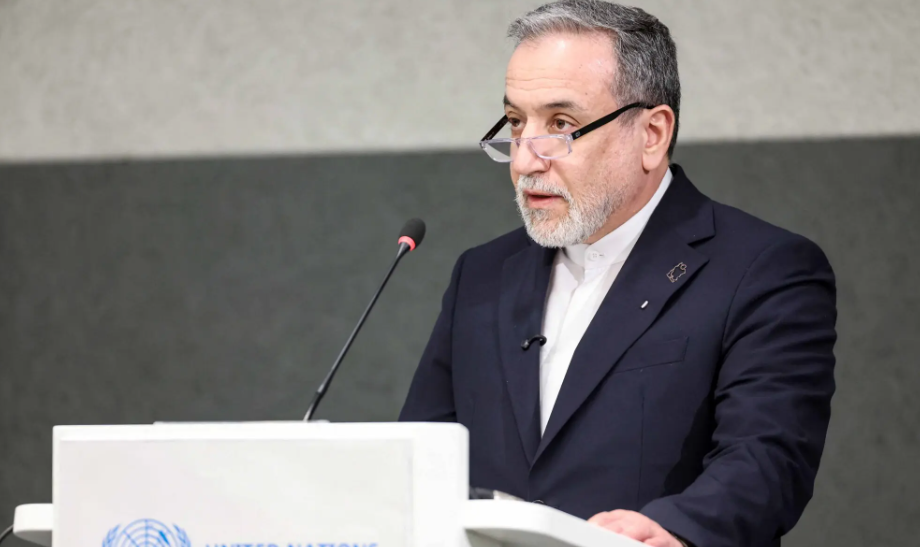
Iran’s Foreign Minister Abbas Araghchi said on Tuesday that the latest round of nuclear talks with the United States resulted in a broad agreement on “a set of guiding principles” that could pave the way for a future deal.
Speaking to state TV, Araghchi noted that the discussions were more constructive than previous rounds, with both sides fully engaging in serious negotiations. “Ultimately, we were able to reach broad agreement on a set of guiding principles, based on which we will move forward and begin working on the text of a potential agreement,” he said.
The Iranian diplomat cautioned, however, that this progress does not imply an immediate deal. “It will take time to narrow the gap between the positions of both sides, but at least we now have a set of guiding principles and a clearer path to move forward,” he added.
Background
These negotiations mark the second round this month, following a collapse of talks last year after Israel’s attack on Iranian nuclear facilities in June, which triggered a brief 12-day war involving limited US strikes on key sites. Tensions have also been fueled by Washington’s recent deployment of an aircraft carrier group to the Middle East following Iran’s crackdown on anti-government protests triggered by economic grievances.
Khamenei Warns Against US Domination
Separately, Iran’s Supreme Leader Ali Khamenei expressed skepticism over the negotiations. Speaking on Tuesday, he said US President Donald Trump would fail to destroy the Islamic Republic.
“In one of his recent speeches, the US president said that for 47 years America has not succeeded in destroying the Islamic republic … I tell you: you will not succeed either,” Khamenei said. He also warned that any US warship deployed in the Gulf could be sunk, stating, “A warship is certainly a dangerous weapon, but even more dangerous is the weapon capable of sinking it.”
Khamenei expressed doubts about the scope for genuine negotiation, calling attempts to dictate outcomes in advance “a mistake and madness.” He accused the US of seeking to dominate the Iranian nation through threatening and dictating statements regarding Iran’s nuclear program.
Outlook
While Araghchi highlighted cautious optimism over a potential path toward agreement, Khamenei’s warnings underscore the deep mistrust that remains. Analysts say that bridging the gap between Washington and Tehran will require careful diplomacy, given ongoing regional tensions, military posturing, and mutual skepticism over intentions.
-
Starmer Confirms UK Will Not Join Iran War, Emphas...
UK PM Keir Starmer vows Britain will stay out of the Iran war, focusing on diplomacy & Eur...
-
North Korean Hackers Breach Popular Software to St...
North Korean-linked hackers compromised the open-source software Axios, aiming to steal lo...

-
Assam Delimitation Redraws Muslim-Majority Seats, ...
Assam’s 2023 delimitation reshapes electoral boundaries, reducing Muslim-majority seats ...

-
Israeli Airstrikes Kill Multiple in Southern Beiru...
At least 7 killed in Israeli attacks on Beirut’s southern suburbs and nearby towns as He...

-
Qatar Warns Iran Has Crossed “Red Lines,” Call...
Qatar says Iran’s attacks on regional neighbors risk catastrophic fallout; calls for res...