WORLD NEWS
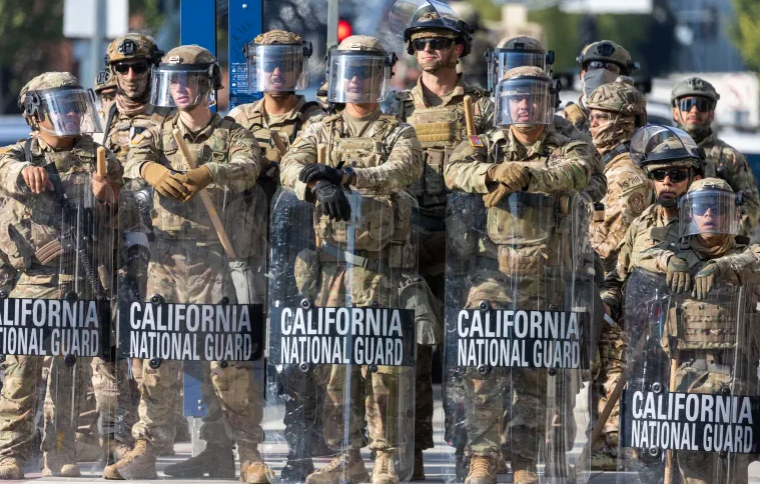
A federal judge has blocked the Trump administration’s controversial deployment of National Guard troops to Los Angeles, California, ruling that the troops must return to the authority of the state governor. The decision comes after a legal challenge from California officials, who argued that the deployment violated the principles of state sovereignty and was part of a broader effort by the Trump administration to suppress dissent.
United States District Judge Charles Breyer, in his ruling on Wednesday, rejected the government’s argument that the deployment was necessary to quell protests against aggressive immigration raids. He emphasized that the framers of the Constitution designed the U.S. government with a system of checks and balances, and the Trump administration’s approach was an attempt to bypass those safeguards. “Defendants, however, make clear that the only check they want is a blank one,” Breyer wrote in his decision.
This ruling marks another setback for President Donald Trump’s administration, which has repeatedly faced resistance from state and local officials over its deployments of National Guard troops to various cities across the country. The president’s use of military forces, often without the approval of local governments, has sparked concern among Democratic officials and civil rights groups who view the actions as an authoritarian overreach.
In June, approximately 4,000 members of the California National Guard were deployed to Los Angeles, despite Governor Gavin Newsom’s objections. The troops were sent to support federal officials in response to protests against the administration's harsh immigration policies. While the number of troops stationed in the city has dwindled to about 100, the Trump administration sought to extend their deployment through February, arguing that their presence was needed to protect federal property and personnel.
However, Judge Breyer granted a preliminary injunction, siding with California’s legal argument that the National Guard should remain under the control of the state governor. The ruling also placed the decision on hold until Monday, allowing time for the administration to consider its next steps.
Governor Newsom’s Reaction
California Governor Gavin Newsom, a frequent critic of Trump’s immigration policies and use of federal forces, quickly celebrated the ruling as a victory for democracy. His office posted on social media, calling the decision “Another W (win) for Democracy, L (loss) for the rule of the Don,” in a pointed reference to the president’s approach to governance.
Newsom, along with other Democratic officials, has long criticized the deployment of National Guard troops to California and other states, particularly in cities that have become hubs of resistance to the Trump administration. The governor has framed the deployments as part of a broader strategy to stifle dissent in cities that are seen as politically opposed to the president’s agenda.
Clashes Between State and Federal Governments
The ruling in Los Angeles is part of a broader clash between the Trump administration and California officials. Earlier this year, the administration also attempted to send members of the California National Guard to Portland, Oregon, to respond to protests against police violence. California officials strongly opposed the deployment, arguing that it was an unnecessary and provocative escalation.
President Trump has frequently used inflammatory language to describe immigrant communities and Democratic-run cities, labeling them as “crime-infested” and “disgusting.” In several speeches, he has suggested that he could deploy military forces more regularly to combat what he calls “the enemy within” — a reference to those protesting his policies. This rhetoric has alarmed many who see it as an attempt to use military force to suppress political opposition.
Next Steps and Legal Battles Ahead
The decision by Judge Breyer is a significant victory for state rights advocates who argue that the federal government should not have the power to deploy military forces to U.S. cities without the consent of state authorities. However, the ruling is not final and is still subject to review. The Trump administration has yet to announce whether it plans to appeal the decision, but this legal battle is expected to continue as the administration pushes forward with its contentious immigration policies.
The situation highlights the growing tensions between federal and state governments, especially as cities and states continue to push back against what they view as overreaching federal authority under the Trump administration. The outcome of this case could have broader implications for the future deployment of National Guard troops and military forces in civilian settings.
-
Berlusconi Backs Paramount-Skydance in Warner Bros...
MFE CEO Pier Silvio Berlusconi backs Paramount Skydance’s $108B hostile bid for Warner B...

-
US Seizes Venezuelan Oil Tanker, Heightening Tensi...
The US seizes a Venezuelan oil tanker off its coast, escalating tensions with Caracas. Mad...

-
Zelenskyy Holds Urgent Talks with 30 Allies Amid I...
Ukrainian President Zelenskyy meets leaders from 30 countries to secure favorable peace te...

-
Rwanda-Backed M23 Rebels Capture Uvira, Over 400 C...
More than 400 civilians have died as M23 rebels, backed by Rwanda, take control of Uvira i...
-
Zelenskyy Warns of Growing China-Russia Military C...
Zelenskyy warns of growing China-Russia military ties and calls for stronger monitoring of...