POLITICS & POLICY MAKING
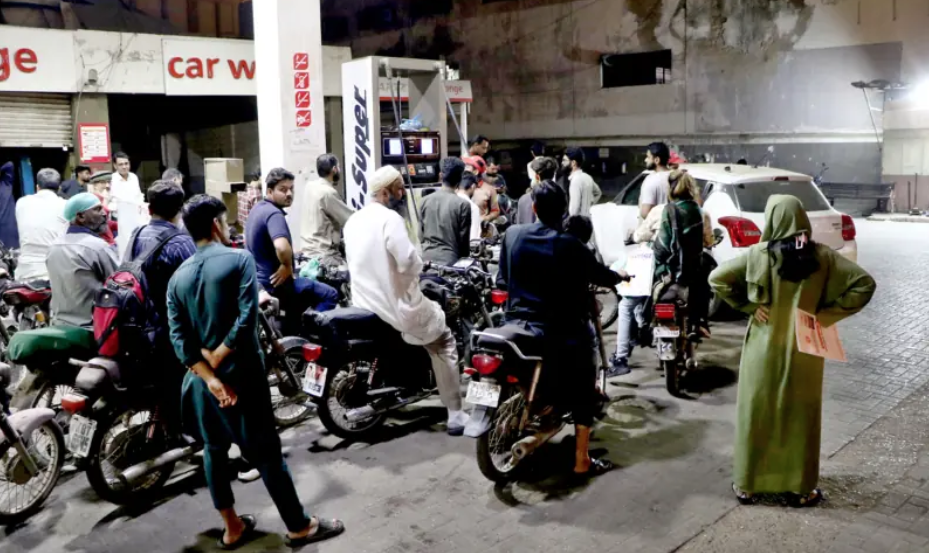
Opposition leaders on Saturday strongly criticised the government’s decision to increase petrol and diesel prices by Rs55 per litre, describing the move as an “inflation bomb” that would further burden citizens already struggling with rising living costs.
The price hike comes as Pakistan faces economic repercussions from the escalating tensions in the Middle East, particularly the conflict involving the Israel and Iran. The conflict has disrupted trade through the Strait of Hormuz, a crucial shipping route through which Pakistan imports a significant portion of its oil supplies.
Leader of the opposition in the Senate, Allama Raja Nasir Abbas, condemned the move and described it as a grave anti-people decision.
“When people are already struggling to make ends meet, such decisions are tantamount to rubbing salt into the people’s wounds,” he wrote in a post on the social media platform X (Twitter).
Abbas pointed out that the government was already collecting more than Rs100 per litre in petroleum levy and questioned whether the burden of the latest increase would fall on ordinary citizens rather than the ruling elite.
Under the revised pricing structure, the government increased the petroleum development levy (PDL) on petrol by Rs20 to approximately Rs105 per litre to prevent a larger increase in diesel prices. Meanwhile, the levy on high-speed diesel (HSD) was reduced from Rs77 to Rs57 per litre.
Following the adjustments, the ex-depot price of high-speed diesel was fixed at Rs335.86 per litre, up from Rs280.86 per litre — an increase of nearly 20 per cent. Similarly, the ex-depot price of petrol was raised to Rs321.17 per litre from Rs266.17 per litre, reflecting an increase of about 17 per cent.
Abbas urged the government to reduce its own expenditures instead of shifting the financial burden onto the public.
“The need of the hour is for the government to cut privileges, protocols and unnecessary expenditures and immediately provide relief to the people,” he said.
He also warned that if the Middle East conflict continues for a prolonged period, it could have serious implications for Pakistan’s food security. Abbas called for government support for the agricultural sector through subsidies on fertilisers, seeds and other agricultural inputs to prevent a potential food crisis.
The opposition alliance Tehreek-i-Tahafuz-i-Ayin-i-Pakistan (TTAP), of which Abbas serves as vice chairman, also expressed concern over the economic situation.
Meanwhile, the political committee of the Pakistan Tehreek-e-Insaf (PTI) also held a meeting to discuss the issue and issued a statement strongly condemning the fuel price hike.
The party termed the increase a “cruel decision” and accused the ruling coalition of burdening the public with inflation while continuing to enjoy privileges and lavish spending.
According to the PTI statement, the government should have protected citizens from global oil price fluctuations by reducing the petroleum levy rather than increasing fuel prices.
The party demanded that the government immediately reverse the price hikes and provide maximum possible relief to the public.
In a post from the party’s official account on X, PTI said the Rs55 per litre “petrol bomb” introduced by the government led by Prime Minister Shehbaz Sharif would push ordinary Pakistanis deeper into economic hardship.
PTI Central Information Secretary Sheikh Waqas Akram also criticised the decision, calling it the “worst petrol bomb in history”.
He warned that higher fuel prices would trigger further increases in transport costs and the prices of food and other essential commodities, leading to a new wave of inflation.
“Petrol is expensive, electricity is expensive, flour is expensive — where should the public go?” he asked.
PTI Member of the National Assembly Junaid Akbar also criticised the government, alleging that authorities had used global market conditions as an excuse to increase fuel prices while maintaining taxes exceeding Rs100 per litre on petrol.
Opposition leaders have called on the government to reconsider the decision and reduce the petroleum levy if it intends to provide genuine relief to the public.
-
By-Election Schedule Issued for 45 Vacant Seats Ac...
By-elections for 45 vacant seats across Sindh to be held on May 17, says Election Commissi...
-
Pakistan, Afghanistan, China Hold Talks in Urumqi ...
Pakistan, Afghanistan and China meet in Urumqi after weeks of tensions, discussing securit...
-
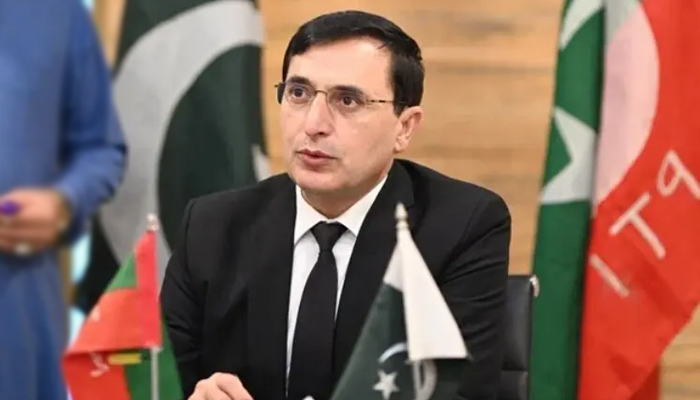
PTI Chairman Gohar Reaffirms ‘Pakistan First’ ...
PTI Chairman Barrister Gohar says Pakistan comes first, defends founder’s children, and ...
-
Punjab Assembly Receives Bill to Criminalize Force...
Punjab assembly introduces bill to protect minority rights, proposing 5-year jail and fine...
-
Torkham Border Reopens for Repatriation of Undocum...
Torkham border in Khyber reopens today for repatriation of undocumented Afghans; first bat...