TRADE & ECONOMY
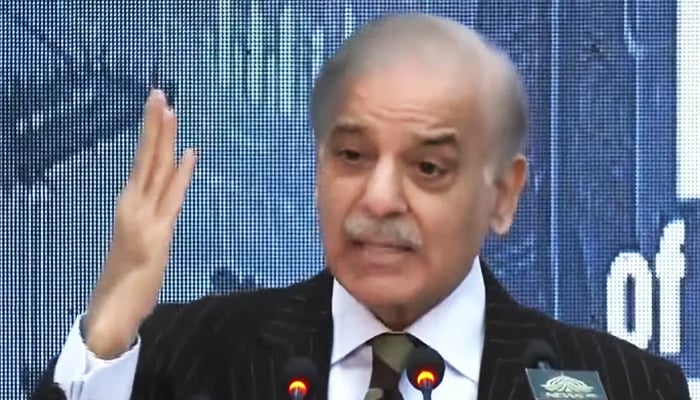
Prime Minister Shehbaz Sharif on Friday announced a reduction of Rs4.4 per unit in electricity tariffs for the industrial sector, along with other relief measures, in an effort to enhance productivity, competitiveness and exports.
The announcement was made during the prime minister’s address to leading exporters and business figures at a ceremony in Islamabad held to honour their contributions to the national economy.
“A Rs4.4 reduction is being made in the electricity unit rate for industries,” PM Shehbaz said, adding that he would have reduced the tariff further if circumstances allowed. “If it were in my control, I would reduce it by another Rs10. However, my hands are tied, as you all know well.”
The prime minister also announced a reduction in wheeling charges for industries, stating that the revised rate would be “less than Rs9”. He expressed hope that the move would enable industries to sell surplus power to neighbouring units and reduce overall costs.
To provide additional support to exporters, PM Shehbaz said the government, in coordination with Pakistani banks, had decided to reduce the export refinance rate from 7.5 per cent to 4.5 per cent.
At the outset of his address, the prime minister praised business leaders and exporters for their performance over the past year, calling their contribution to foreign exchange earnings vital for the country.
“The billions of rupees you have earned for Pakistan — the entire nation congratulates you,” he said.
Recalling the economic challenges faced in 2023, PM Shehbaz said Pakistan had been on the brink of default amid growing uncertainty. He referred to discussions with International Monetary Fund (IMF) Managing Director Kristalina Georgieva in Paris, where concerns were raised about Pakistan’s past record of implementation under IMF programmes.
“I gave her my word of honour that we would implement the agreement in letter and spirit,” the premier said, adding that this commitment ultimately helped save Pakistan from default.
Turning to the current situation, PM Shehbaz said Pakistan’s foreign exchange reserves had doubled in the third quarter, though he acknowledged that this included loans from friendly countries. He expressed gratitude to China, Saudi Arabia, the United Arab Emirates and Qatar for their support during difficult times, noting that such assistance came with obligations.
The prime minister said he could now state “without hesitation” that Pakistan’s economy had stabilised. He pointed to single-digit inflation and a policy rate of 10.5 per cent, recalling a period when interest rates exceeded 21 per cent and inflation was surging.
However, he cautioned that economic stability alone was insufficient. Highlighting rising poverty, unemployment and export challenges, PM Shehbaz stressed the need for sustainable, export-led growth.
“We have to grow our economy, and it has to be sustainable. There is no other way,” he said, while also emphasising the importance of supporting small and medium-sized enterprises (SMEs) through coordinated efforts between the government and private sector.
The prime minister expressed confidence in the business community’s ability to transform Pakistan’s economy in the coming years and announced blue passports for exporters honoured at the ceremony, declaring them “ambassadors at large”.
During his address, PM Shehbaz also spoke about the recent privatisation of Pakistan International Airlines (PIA), expressing optimism that the airline would regain its past stature.
“PIA was once among the top airlines in the world,” he said, adding that he had full faith in the consortium led by Arif Habib Corporation Limited, which acquired a 75 per cent stake in PIA for Rs135 billion in December, to restore the airline to its former glory.
-
Pakistan Bans Petroleum Exports, Holds Prices Desp...
Govt bans petroleum exports and aims to shield citizens from further price hikes, using em...
-
Pakistani Airlines Raise Fuel Surcharges Amid Gulf...
Fuel costs surge 34% after the Gulf war disrupts regional air routes, prompting Pakistan I...
-
IMF, Pakistan Fail to Reach Staff-Level Agreement ...
The IMF says no staff-level agreement yet with Pakistan on the $7B bailout review, though ...
-
Fauji Fertilizer Joins Consortium for PIA Privatiz...
Pakistan’s Privatization Committee approves Fauji Fertilizer Company as an additional co...

-
Pakistan Diverts Oil Imports via Red Sea Amid Stra...
Pakistan is now receiving oil via the Red Sea due to the Strait of Hormuz closure. A PNSC ...