POLITICS & POLICY MAKING
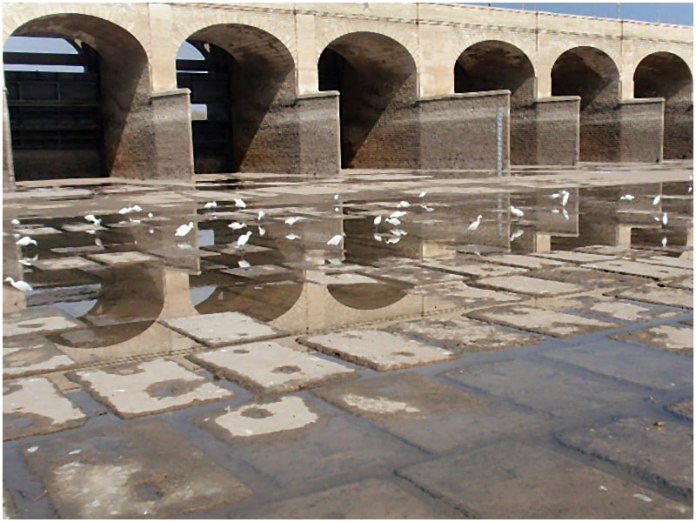
Sindh continues to face an alarming water shortage in its barrages and canals, with the situation worsening as the upstream flow at major barrages continues to decline. Yesterday, the Sindh Irrigation Department reported a total water shortage of 65 percent across the region, with 62 percent recorded at Sukkur Barrage and 43 percent at Kotri Barrage.
Water Shortages and Reduced Flows
The Sukkur Barrage upstream flow was recorded at 17,630 cusecs, while the downstream flow had plummeted to 6,100 cusecs. In contrast, Guddu Barrage saw an increase in upstream flow to 21,912 cusecs but a reduction at Kotri Barrage, which saw a drop to 4,590 cusecs. The ongoing water scarcity has left many areas across Sindh struggling to meet irrigation needs.
Meanwhile, WAPDA continues its efforts to store water in Tarbela Dam, Mangla Dam, and Chashma Lake, with more than 8.5 feet of water stored in Tarbela Dam and 42 feet in Mangla Dam. However, despite these efforts, the overall water situation remains critical.
Impact on Sindh's Irrigation Systems
The annual closure of four canals at Guddu Barrage has further exacerbated the water shortage, limiting the already diminished supply. In response, Sindh Irrigation Minister Jam Khan Shori has expressed deep concerns over the situation, asserting that Sindh will not engage in talks with the federation or Punjab regarding the controversial canals project. Minister Shori stated that Punjab must withdraw its decision on the canals, insisting that the issue should be resolved through the Council of Common Interests (CCI), as it had already been referred to the CCI in February 2024.
Sindh’s Stance on Controversial Canals
Minister Shori criticized Punjab Irrigation Minister Kazim Pirzada for his recent press conference, questioning his authority to invite Sindh Chief Minister for talks. Shori made it clear that the Sindh government had already brought the issue before the CCI, and Punjab’s failure to submit a response to the objections raised on the canals project shows that they are trying to bypass the process.
He went on to reiterate that the PPP and the people of Sindh have firmly rejected the controversial canals project, emphasizing that the Sindh government will not tolerate any decisions that harm the province's water rights. Shori also highlighted that former President Asif Ali Zardari never approved the controversial canals, dismissing claims made by Punjab ministers as false.
The Water Crisis and its Wider Implications
With water shortages becoming more severe, the Sindh government’s rejection of the controversial canals project underscores the growing tensions between Sindh and Punjab over water distribution. The crisis has further exposed the country’s ongoing struggle with water resources, as residents face acute shortages even for drinking water.
As Sindh continues to deal with the impacts of this water crisis, the focus now turns to resolving the controversial canals issue through dialogue and negotiation under the proper legal framework. Sindh’s firm stance against the project highlights the sensitivity of the issue, with Sindh’s political leadership making it clear that they will not accept the project under any circumstances.
-
By-Election Schedule Issued for 45 Vacant Seats Ac...
By-elections for 45 vacant seats across Sindh to be held on May 17, says Election Commissi...

-
Pakistan, Afghanistan, China Hold Talks in Urumqi ...
Pakistan, Afghanistan and China meet in Urumqi after weeks of tensions, discussing securit...

-
PTI Chairman Gohar Reaffirms ‘Pakistan First’ ...
PTI Chairman Barrister Gohar says Pakistan comes first, defends founder’s children, and ...

-
Punjab Assembly Receives Bill to Criminalize Force...
Punjab assembly introduces bill to protect minority rights, proposing 5-year jail and fine...
-
Torkham Border Reopens for Repatriation of Undocum...
Torkham border in Khyber reopens today for repatriation of undocumented Afghans; first bat...