WORLD NEWS
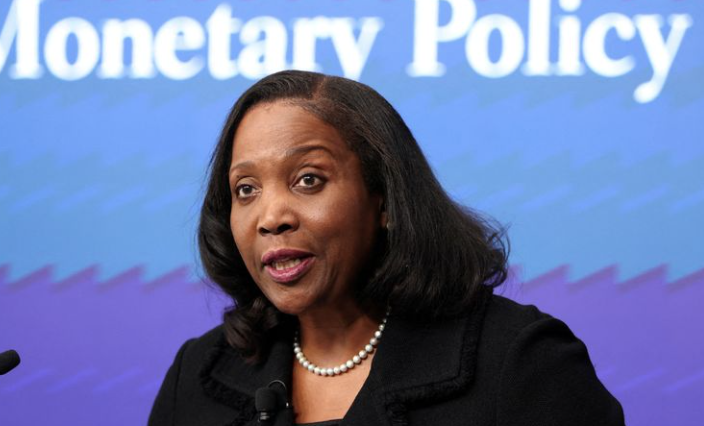
The U.S. Supreme Court is set to hear arguments on Wednesday regarding President Donald Trump’s unprecedented attempt to remove Federal Reserve Governor Lisa Cook, a case that could reshape the independence of the central bank.
Trump’s administration has asked the Court, which holds a 6-3 conservative majority, to overturn a lower court ruling that barred the president from firing Cook while her legal challenge proceeds. In October, the Supreme Court agreed to hear the case but left Cook in her position temporarily.
The dispute stems from the Federal Reserve Act, which requires governors to be removed only “for cause,” though the law does not clearly define what constitutes cause or outline removal procedures. Legal experts note that no president has previously attempted to dismiss a Fed official, making this the most significant challenge to central bank independence since its creation in 1913.
Background of the case
U.S. District Judge Jia Cobb ruled in September that Trump’s attempt to fire Cook without notice or a hearing likely violated her due process rights under the Fifth Amendment. Cobb also found that the mortgage fraud allegations cited by Trump, which Cook denies, likely did not meet the legal standard for removal, especially as the conduct occurred before her Fed appointment.
Cook, appointed in 2022 by former President Joe Biden, is the first Black woman to serve as a Fed governor. Her term runs through 2038, and she plays a key role in setting U.S. monetary policy alongside Fed Chair Jerome Powell and the seven-member board.
Political and policy stakes
Critics argue Trump’s move is a direct attempt to influence interest rate policy, as the president has repeatedly pressed the Fed to lower rates faster. Democratic lawmakers, including Rep. Maxine Waters, rallied outside the Supreme Court ahead of the hearing, warning that the attempt “is about power and control” over the central bank.
The case could have far-reaching implications for the Fed’s ability to operate independently of political pressures, a principle widely considered essential for controlling inflation and maintaining economic stability.
Court precedents and potential impact
While previous Supreme Court decisions have curtailed independence for certain federal agencies, the Court has signaled that the Fed might be treated differently due to its unique structure and historical tradition. Legal observers say the ruling could either reaffirm the Fed’s autonomy or give the president broader powers to remove top officials.
Cook and Powell are expected to attend Wednesday’s arguments, alongside former Fed Chair Ben Bernanke, as the Court considers a case that could define the limits of presidential authority over independent agencies.
-
Meta’s New AI Lab Delivers First High-Profile Mo...
Meta’s AI lab rolls out first internal models, promising advances in text, image & video...

-
Trump Rules Out Force in Greenland Bid, Calls US O...
Trump says the US doesn’t need force to acquire Greenland, claims no other nation can se...
-
US-Russia Envoys Hold Davos Talks as Ukraine Recon...
US and Russian envoys meet at WEF Davos amid Greenland tensions, delaying Ukraine’s $800...

-
Netanyahu Accepts Trump’s ‘Board of Peace’ I...
Israeli PM Netanyahu joins Trump’s “Board of Peace” for Gaza reconstruction, sparkin...

-
Pakistan Accepts Invitation to Join ‘Board of Pe...
Pakistan accepts US invitation to join President Trump’s ‘Board of Peace’, backing a...