WORLD NEWS
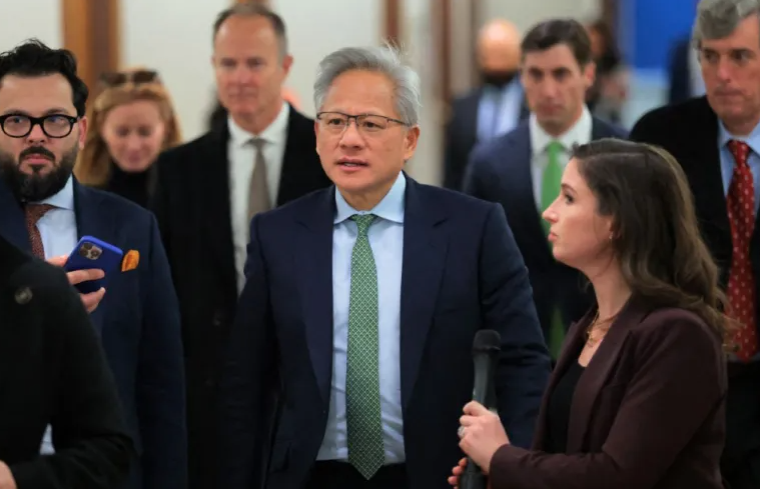
Former U.S. President Donald Trump has cleared the path for tech giant Nvidia to sell its advanced H200 AI chip to China. The move marks a significant easing of Washington's export controls on Chinese technology companies. The H200 chip, launched in 2023, will be sold to "approved customers" in China, with 25% of Nvidia's sales revenue from the chip going to the U.S. government.
Trump announced the decision on Monday, revealing that he had informed Chinese President Xi Jinping of the development. The decision applies to Nvidia and, in the future, other chipmakers like AMD and Intel, under similar terms. Trump emphasized that the arrangement would protect U.S. national security while benefiting American manufacturing, jobs, and taxpayers.
“This policy will support American jobs, strengthen U.S. manufacturing, and benefit American taxpayers,” Trump stated on his Truth Social platform.
Nvidia, headquartered in Santa Clara, California, responded positively to the decision, calling it a “thoughtful balance” that would support high-paying American jobs. Shares of the company surged more than 2% in after-hours trading following the announcement.
Shift in Policy from Biden Administration
Trump’s move marks a stark departure from the stance of the Biden administration, which had restricted U.S. chipmakers to selling downgraded versions of their products to China. Under Biden’s policy, companies like Nvidia were forced to design specific versions of their chips that complied with U.S. sanctions, limiting the capabilities of their products sold to the Chinese market.
In his post, Trump criticized the Biden administration’s approach, claiming it led to billions of dollars in sales of “downgraded products that nobody wanted.” This reversal in policy allows Nvidia to sell a far more powerful chip, the H200, which is six times more powerful than the previous-generation H20 chip, though not as advanced as Nvidia's latest-generation Blackwell chips, which will remain restricted for sale to China.
Despite the shift, the decision to allow the H200 chip's export was made under stringent national security conditions. The U.S. government insists that it will continue to monitor the impact of these sales closely to avoid compromising U.S. security interests.
Market Realities and Commercial Interests
Tilly Zhang, a tech expert at Gavekal Dragonomics, suggested that Trump’s decision was motivated by both market realities and pressure from Nvidia CEO Jensen Huang. She noted that the U.S. shift in policy is a response to growing competition in the AI sector, particularly from China. As blocking China’s tech progress becomes increasingly unrealistic, the focus is now shifting towards competing for market share.
Zhang noted that the move could spur faster innovation on both sides of the U.S.-China tech rivalry. She added that as China and the U.S. race to dominate the AI field, both countries would push each other towards faster development of new technologies.
“The priority is moving away from purely blocking or slowing China’s tech progress, more towards competing for market share and securing the commercial benefits of selling their own tech solutions,” Zhang told Al Jazeera.
Political Pushback from Democratic Lawmakers
The decision to ease export controls on AI chips to China has faced fierce criticism from Democratic lawmakers, who argue that it could undermine U.S. efforts to maintain its technological edge. Senator Elizabeth Warren (D-MA) accused Trump of “selling out U.S. security” by allowing Nvidia to export high-performance AI chips that could further advance China’s AI capabilities.
“Trump is letting Nvidia export cutting-edge AI chips that his own DOJ revealed are being illegally smuggled into China,” Warren posted on X (formerly Twitter), referring to ongoing investigations by the U.S. Department of Justice into illegal chip shipments to China.
Chris McGuire, a senior fellow at the Council on Foreign Relations, echoed similar concerns, warning that the decision would allow Chinese AI firms to close the gap with U.S. frontier AI models. “Loosening export controls on AI chips will allow Chinese AI firms to catch up and will enable Chinese cloud computing providers to build 'good enough' data centers globally,” McGuire told Al Jazeera. He added that this risks undermining the U.S. strategy to maintain dominance in global AI technologies.
The Future of AI Competition
The Trump administration’s decision reflects an evolving approach to the U.S.-China tech competition, where market forces are playing an increasing role alongside national security considerations. As AI becomes a central battleground in global competition, the loosening of export controls signals a shift toward market competition, even as concerns about China’s rise in the tech field continue to fuel policy debates in Washington.
While the sale of the H200 chip to China is a significant step, it remains to be seen how it will impact the broader tech rivalry between the U.S. and China, particularly in the areas of AI and cloud computing.
-
Berlusconi Backs Paramount-Skydance in Warner Bros...
MFE CEO Pier Silvio Berlusconi backs Paramount Skydance’s $108B hostile bid for Warner B...
-
US Seizes Venezuelan Oil Tanker, Heightening Tensi...
The US seizes a Venezuelan oil tanker off its coast, escalating tensions with Caracas. Mad...

-
Zelenskyy Holds Urgent Talks with 30 Allies Amid I...
Ukrainian President Zelenskyy meets leaders from 30 countries to secure favorable peace te...

-
Rwanda-Backed M23 Rebels Capture Uvira, Over 400 C...
More than 400 civilians have died as M23 rebels, backed by Rwanda, take control of Uvira i...

-
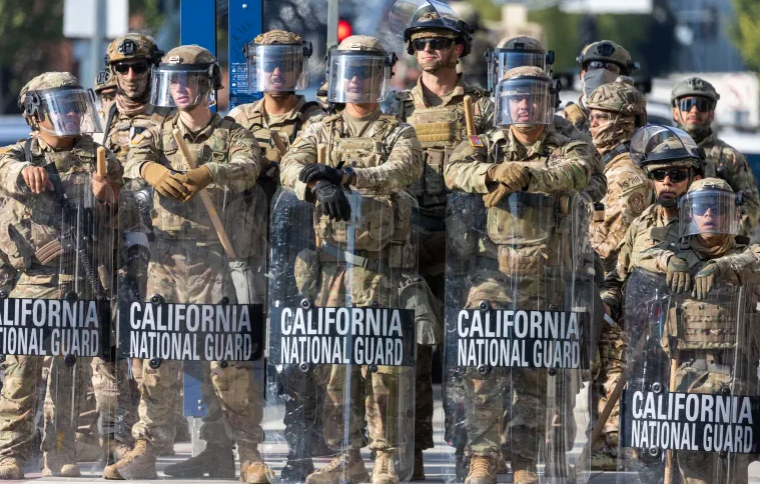
Judge Blocks Trump’s National Guard Move in LA, ...
A federal judge has blocked the Trump administration’s deployment of National Guard troo...