WORLD NEWS
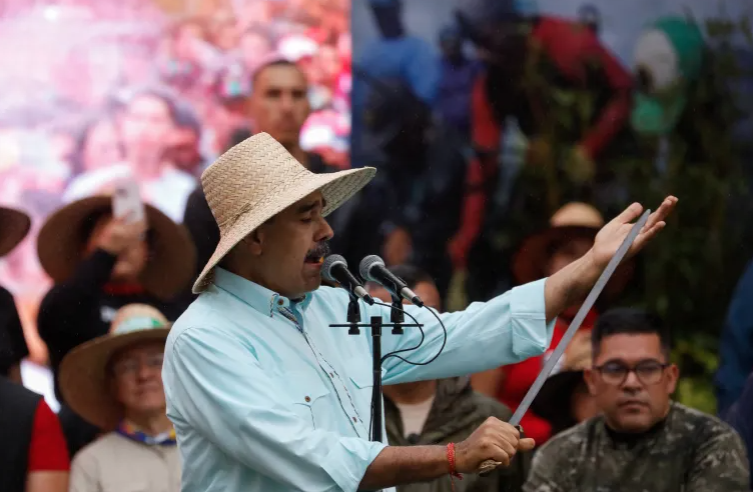
The United States has announced fresh sanctions targeting three nephews-by-marriage of Venezuelan President Nicolás Maduro, along with six Venezuela-flagged oil tankers and associated shipping firms, escalating pressure on Caracas amid deepening political tensions.
The move by the Trump administration comes just one day after US forces seized another tanker, the Skipper, off the Venezuelan coast, intensifying Washington’s long-running campaign to curb the Maduro government’s financial networks and oil revenue streams.
Who Was Targeted?
The latest sanctions, announced by the US Treasury Department, focus on:
- The “narco-nephews” — Franqui Flores, Carlos Flores, and Efraín Campo — relatives of First Lady Cilia Flores. Two were convicted of drug trafficking in the US in 2016 but later received clemency under President Biden in 2022.
- Carlos Erik Malpica Flores, former national treasurer and ex-PDVSA executive, reinstated on the sanctions list.
- Panamanian businessman Ramon Carretero Napolitano and six shipping companies accused of covertly transporting Venezuelan oil using deceptive maritime practices.
- Six vessels — White Crane, Kiara M, H Constance, Lattafa, Tamia, and Monique — designated as “blocked property”.
These sanctions add to existing designations already placed on President Maduro, his family, and multiple Venezuelan officials.
How the Sanctions Work
The measures freeze any assets the targeted individuals or companies hold in the United States and bar them from accessing the US financial system.
US citizens and companies are prohibited from conducting business with any sanctioned person or entity — including firms indirectly owned 50% or more by a listed individual. Violations carry severe penalties.
Why the Trump Administration Imposed the New Measures
The Trump administration argues that Maduro and his inner circle continue to profit from illicit activities, including drug trafficking, while suppressing democratic freedoms.
Treasury Secretary Scott Bessent said the sanctions represent a reversal of Biden-era diplomatic engagement and return to a “maximum pressure” strategy intended to dismantle the regime’s financial networks.
Critics argue the sanctions serve a domestic political purpose, allowing Trump to claim he is undoing Biden’s policies and taking a harder stance against Maduro.
Are US Oil Companies Affected?
Despite the escalating sanctions, American oil giant Chevron continues to operate in Venezuela — the only US company still doing so.
Chevron holds a special license granted by President Biden in 2022 and extended by the Trump administration, enabling it to produce around 150,000 barrels per day, roughly one-fifth of Venezuela’s official output.
The company seeks to recover billions owed by PDVSA due to past seizures and unpaid debts.
Existing US Sanctions on Venezuela
The United States has imposed multiple layers of sanctions since 2017, including:
- Asset freezes and travel bans on officials
- Financial restrictions barring Venezuela from US markets
- Sectoral sanctions on PDVSA and its oil exports
- Terrorism-related designations targeting Venezuelan groups accused of drug trafficking
- Maritime sanctions on vessels linked to oil smuggling
In 2019, Washington froze PDVSA assets in the US and sharply limited international companies from engaging with Venezuela’s oil sector.
How Sanctions Have Affected Venezuela
Venezuela has suffered one of the worst economic collapses in modern history.
Oil production plunged from 3.6 million barrels/day in the 1990s to under 1 million barrels/day today, devastating government revenue.
Hyperinflation peaked above 1,000,000% in 2018, and the country defaulted on over $92 billion in debt.
Although sanctions briefly eased under the 2023 Barbados Agreement, they were reimposed in 2024 after Maduro blocked opposition leader María Corina Machado from contesting elections.
Ironically, sanctions have also helped Maduro consolidate power by empowering shadow networks that profit from evading restrictions.
How Venezuela Evades Sanctions
Venezuela often relies on a “shadow fleet” of aging tankers operating with:
- Switched-off transponders
- Fake tracking data
- Suspicious flag changes
- Shell companies in tax havens
- Mid-sea ship‑to‑ship transfers
- Rebranding Venezuelan oil as Brazilian crude
- Cryptocurrency transactions to bypass US-controlled banks
The Skipper, seized this week, was reportedly part of this covert smuggling network.
As Washington intensifies sanctions, analysts expect Caracas to further expand these shadow operations, deepening the geopolitical and economic standoff.
-
Nvidia May Expand H200 AI Chip Production to Meet ...
Nvidia is considering boosting production of its H200 AI chips as Chinese demand soars, fo...
-
Germany Hosts US-Ukrainian Talks Ahead of Berlin S...
US and Ukrainian delegations meet in Germany this weekend for ceasefire talks ahead of a B...
-
US Ends Temporary Protected Status for Ethiopian N...
The US has terminated TPS for ~5,000 Ethiopian nationals, giving them 60 days to leave or ...
-
Thailand Rejects Ceasefire, Fighting Continues Alo...
Thailand’s PM Anutin says military will continue operations along the disputed Cambodia ...
-
Ukraine Claims Victory in Kupiansk as Russian Troo...
Ukrainian forces reclaim key northern districts of Kupiansk, reportedly surrounding Russia...