POLITICS & POLICY MAKING
.jpg)
Detailed Report
-
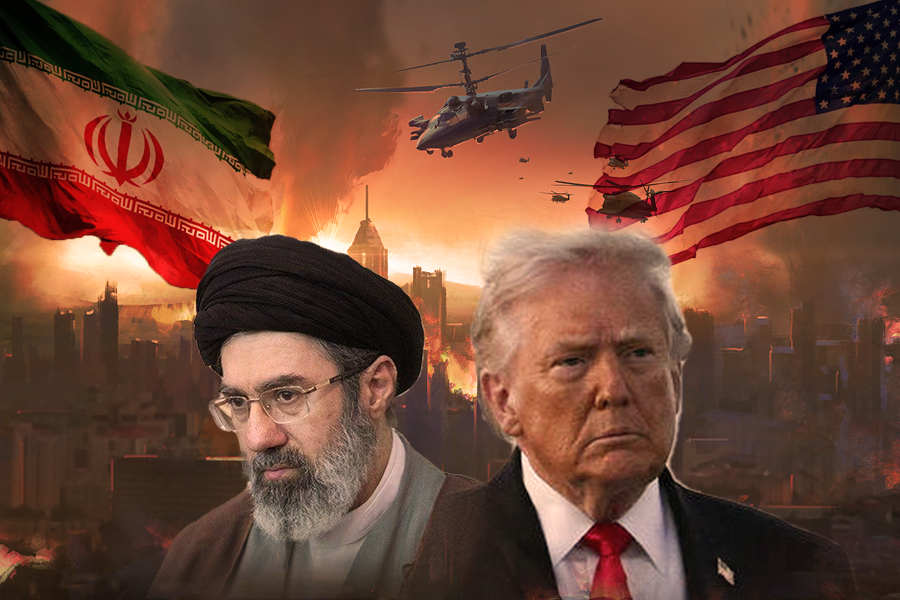
Qatar Rejects $12 Billion Payoff Allegations: The State of Qatar has forcefully denied explosive international media reports claiming it offered a $12 billion financial incentive to Iran to secure a permanent end to the U.S.-Israeli war. Foreign Ministry spokesperson Majed Al Ansari issued an official statement on social media, branding the allegations as "utterly baseless." Al Ansari stated that the rumors are being deliberately manufactured and weaponized by specific external factions intent on derailing the highly sensitive diplomatic framework and undermining ongoing regional stabilization efforts.
-
The Trans-Regional Diplomatic Tightrope: The high-stakes financial denial surfaced just as Iran's foreign minister and chief negotiator landed in Doha for intensive face-to-face consultations with Qatar’s Prime Minister. Despite the active presence of a localized ceasefire established in early April, the geopolitical atmosphere has turned toxic. U.S. Secretary of State Marco Rubio, speaking to reporters from Jaipur, India, tempered expectations of a rapid breakthrough by warning that ironed-out agreements will realistically "take a few days" to solidify, effectively extinguishing speculative hopes of a same-day treaty signature.
-
Kinetic Escalation Over the Shipping Lane: Compounding the diplomatic gridlock is a fresh round of military friction in and around the Persian Gulf. U.S. Central Command confirmed it executed localized "defensive" air strikes designed to safeguard deployment forces from emerging Iranian theater threats, targeting coastal missile launch platforms and destroying fast-attack vessels caught attempting to emplace naval mines. Reaffirming Washington's uncompromising military posture regarding global trade security, Rubio explicitly warned that the strategic Strait of Hormuz—which dictates one-fifth of global energy flows—will be reopened "one way or the other."
The Stealth Drone Intersection: In a parallel escalation, Iranian state defense media announced that its newly deployed domestic air defense systems successfully tracked and shot down an un-flagged "hostile" stealth drone violating its airspace. While Tehran officials refrained from identifying the asset's direct point of origin, the high-tech downing underscores the incredibly fragile state of the current ceasefire while the final aspects of the maritime and nuclear treaty terms are hammered out.
-
The Scope of the Active Framework: Despite the localized military exchanges, Rubio emphasized that Washington is still determined to give diplomacy every viable chance to succeed before shifting policy toward dealing with Tehran in "another way." According to U.S. officials, the actual framework currently resting on the negotiation table is structurally sound. The final terms focus tightly on two critical regional parameters: a legally binding blueprint for the immediate, unhindered reopening of the Strait of Hormuz to global shipping traffic, and a highly critical, time-limited verification architecture addressing Iran's enriched uranium stockpiles and wider nuclear programs.
-
Oil Rebounds as Fresh U.S. Strikes in Southern Ira...
Global oil prices rebounded on Tuesday, with Brent crude climbing over 2% past $98 a barre...
-
Ceasefire Shattered: U.S., Israeli Jets Strike Ira...
U.S. and Israeli fighter jets launched joint air strikes against Iranian vessels near Lara...
.jpg)
-
Fragile Ceasefire Imperiled: U.S. Launches 'Self-D...
The U.S. military has conducted "self-defence" strikes against missile sites and mine-layi...
-
Secret Naqvi-PTI Meeting Triggers Internal Rift Ov...
A low-profile meeting between senior PTI leaders and Interior Minister Mohsin Naqvi has sp...

-
The Final Signature Eludes: President Trump Warns ...
The final signatures on a potential U.S.–Iran peace accord remain elusive as negotiation...