POLITICS & POLICY MAKING
.jpg)
Detailed Report
-
The Accusation of Diplomatic Betrayal: Geopolitical friction between Washington and Tehran reached a critical flashpoint on Saturday as Mohsen Rezaei, a senior adviser to Iran's Supreme Leader Mojtaba Khamenei, publicly accused U.S. President Donald Trump of "betraying diplomacy for the third time." In a sharply worded statement published on the social media platform X, Rezaei argued that the United States' insistence on maintaining a restrictive naval blockade on Iranian ports, combined with "excessive demands" during indirect peace talks in Doha, proves that the White House is not serious about a peaceful resolution and is actively pursuing alternative, hostile objectives.
-
The Pentagon's Ultimatums from Singapore: Speaking simultaneously from Singapore at the Shangri-La Dialogue—Asia’s premier defense forum—U.S. Defense Secretary Pete Hegseth delivered an uncompromising counter-warning. Hegseth flatly declared that the United States military apparatus is fully prepared to restart active airstrikes against Iranian soil if the current diplomatic track collapses. Dismissing concerns that the Middle Eastern theater has overextended Western resources, the Pentagon chief asserted that the U.S. is aggressively super-charging its defense industrial base to double, triple, and quadruple its global munitions stockpiles, ensuring that all military operations plans remain completely funded.
The White House Sovereign Standard: Following a tense two-hour Situation Room briefing, a senior administration official confirmed to reporters that President Trump will exclusively authorize an Iran agreement that strictly satisfies American national security redlines. The official emphasized the White House’s unalterable baseline directive: "Iran can never, under any circumstances, possess a nuclear weapon."
-
Critical Mine Threats in the Choke Point: Compounding the diplomatic gridlock, the U.S. Navy Central Command issued an urgent maritime advisory on Friday, raising the regional threat level in the strategic Strait of Hormuz north of Oman's Musandam Peninsula to "CRITICAL." The Joint Maritime Information Centre documented ongoing, illicit naval mine-laying operations by Iranian forces designed to forcibly control the strategic waterway. All international merchant shipping fleets have been ordered to completely avoid the standard Traffic Separation Scheme, coordinate passages directly with the U.S. Naval Guidance wing, and remain alert to a standing order that any vessel caught assisting mine-laying operations will be immediately targeted and destroyed by U.S. naval assets in self-defense.
-
Dar Meets Rubio in D.C., Drawing a Clear Diplomati...
Pakistan’s Deputy PM and Foreign Minister Ishaq Dar has firmly rejected U.S. President D...
.jpg)
-
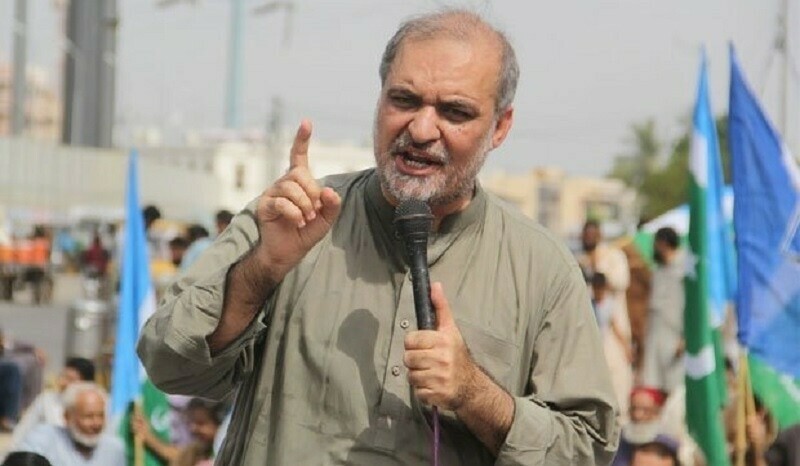
Hafiz Naeem Takes Fuel Levies to Constitutional Co...
Jamaat-e-Islami Chief Hafiz Naeem ur Rehman has demanded a massive Rs 122 per liter cut in...
-
Pre-Poll Rigging Alleged: PTI's Asad Qaiser Blocke...
PTI's Asad Qaiser and PML-N's Saad Rafique both missed their flights to Skardu after Punja...

-
No Nation Can Dominate': U.S. Defense Secretary Pe...
Speaking at a security summit in Singapore, U.S. Defense Secretary Pete Hegseth declared t...

-
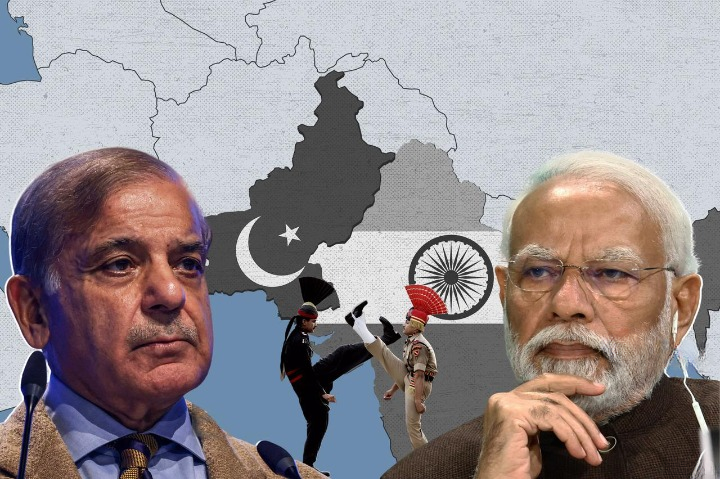
Modi’s Decade-Long Campaign to Isolate Pakistan ...
An extensive Al Jazeera report reveals that Indian PM Narendra Modi's decade-long campaign...