POLITICS & POLICY MAKING
.jpg)
Detailed Report
-
The Absolute Policy Reinforcement: Deputy Prime Minister and Foreign Minister Ishaq Dar has categorically declared that Pakistan will not modify its historic, principled stance on Israel, shutting down speculation regarding a potential regional alignment shift. Addressing an international press corps at the Pakistani Embassy in Washington, Dar asserted that any consideration of diplomatic normalization remains completely impossible until an independent, viable, and sovereign Palestinian state is permanently established. The high-level statement follows an explicit public appeal by U.S. President Donald Trump urging an array of Muslim-majority nations—including Pakistan, Saudi Arabia, Turkiye, and Qatar—to join the Abraham Accords framework.
-
The Rubio Dialogue Clean Bill: Dar's firm diplomatic clarification arrived immediately after a crucial bilateral meeting with the newly appointed U.S. Secretary of State, Marco Rubio. While Trump has been aggressively public about expanding the 2020 normalization accords as part of a grand Middle East peace strategy, Dar revealed to reporters that the contentious issue was not raised during his formal sit-down with Rubio. Instead, the Foreign Minister emphasized that Pakistan's solidarity with Palestine and Gaza is firmly anchored in international law, making any structural policy changes contingent upon Israel vacating occupied lands.
The Abraham Accords Friction: Originally brokered during the first Trump administration in 2020, the Abraham Accords successfully formalized direct diplomatic channels between Tel Aviv and several Arab nations, including the UAE and Bahrain. However, the diplomatic framework continues to generate intense political friction and widespread public opposition across South Asia and the broader Muslim world, primarily due to its omission of a concrete, legally binding resolution to the Palestinian self-determination question.
-
The U.S.-Iran Facilitator Role: Despite their opposing views on Mediterranean borders, Secretary of State Marco Rubio explicitly acknowledged and commended Pakistan's active role in maintaining regional stability. Rubio thanked Islamabad for its sophisticated backdoor diplomacy, which has proven essential in supporting channels for dialogue. Dar confirmed that under Prime Minister Shehbaz Sharif's administration, Pakistan has quietly played a critical, facilitative role in encouraging the fragile ceasefire understandings currently being negotiated between Washington and Iran in Qatar, cementing Islamabad’s status as a necessary balancing force in the Persian Gulf corridor.
-
'Betraying Diplomacy': Tehran Lashes Out at U.S. B...
Iran has accused President Trump of sabotaging peace talks through an ongoing naval blocka...
.jpg)
-
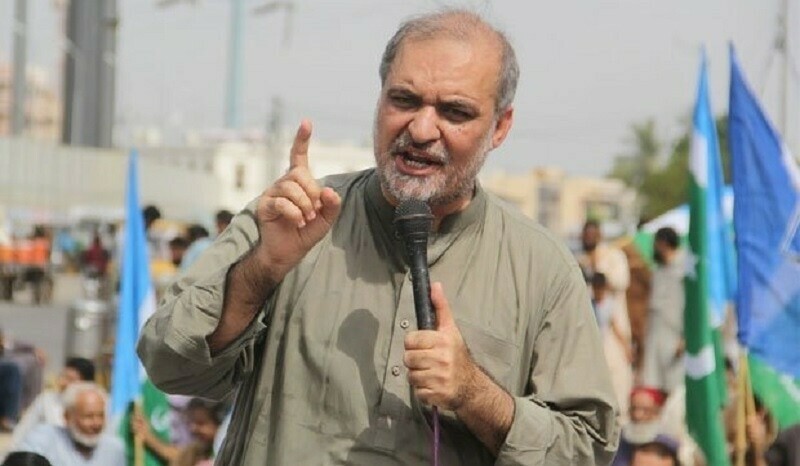
Hafiz Naeem Takes Fuel Levies to Constitutional Co...
Jamaat-e-Islami Chief Hafiz Naeem ur Rehman has demanded a massive Rs 122 per liter cut in...
-
Pre-Poll Rigging Alleged: PTI's Asad Qaiser Blocke...
PTI's Asad Qaiser and PML-N's Saad Rafique both missed their flights to Skardu after Punja...
-
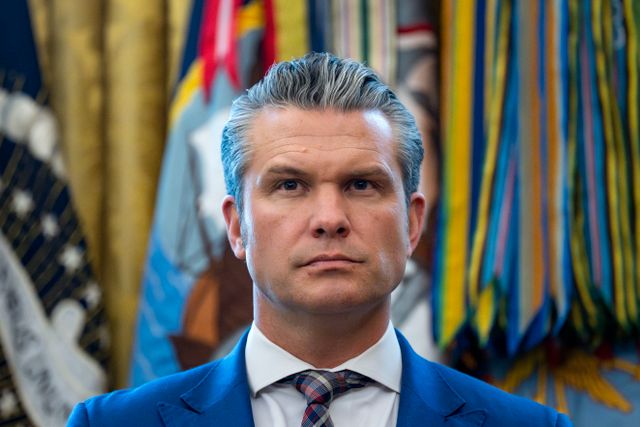
No Nation Can Dominate': U.S. Defense Secretary Pe...
Speaking at a security summit in Singapore, U.S. Defense Secretary Pete Hegseth declared t...
-
Modi’s Decade-Long Campaign to Isolate Pakistan ...
An extensive Al Jazeera report reveals that Indian PM Narendra Modi's decade-long campaign...