LEGAL
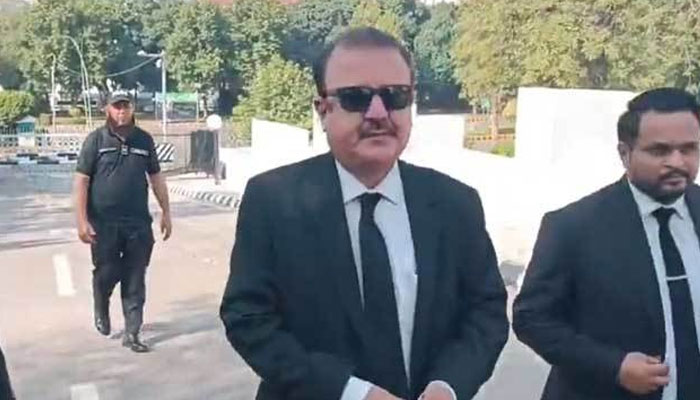
The Islamabad High Court (IHC) on Tuesday ruled that a petition questioning the legitimacy of Justice Tariq Mehmood Jahangiri’s LLB degree was maintainable. The court issued notices to the concerned parties, directing them to submit their responses within three days.
The petition was filed by lawyer Mian Daud, challenging the law degree of IHC judge Justice Jahangiri and seeking judicial clarification on whether he lawfully holds his position. The matter had been under review since July 2023, when the court reserved its decision on the maintainability of the petition.
The case centers around allegations stemming from a letter that circulated on social media last year, purportedly from the University of Karachi (KU), regarding the authenticity of Justice Jahangiri’s LLB degree. The letter alleged that there were discrepancies in his academic record, including the use of multiple identities and enrolment numbers.
During the hearing, a two-member IHC bench comprising Chief Justice Sardar Muhammad Sarfraz Dogar and Justice Muhammad Azam Khan heard arguments from various lawyers. Ahmed Hassan Shah, representing the District Bar Association, suggested the matter be referred to the Islamabad Bar Council (IBC), which is responsible for issuing lawyer licenses, or the Supreme Judicial Council (SJC), which deals with judicial misconduct cases.
However, CJ Dogar clarified that the case did not relate to misconduct, but rather the eligibility of the judge to hold office. This distinction led to a prolonged discussion on whether Article 209 (concerning judicial accountability) or Article 199 (relating to high court jurisdiction) applied to the case.
Aleem Abbasi, representing the IBC, acknowledged that Justice Jahangiri held multiple licenses but stressed that the issue of his qualification required the intervention of a competent authority.
Barrister Zafarullah Khan, an amicus curiae, raised concerns about the maintainability of the petition under Article 199, but CJ Dogar noted that the Supreme Court had already directed the IHC to proceed with the matter. The Chief Justice also pointed out that a writ of quo warranto could be issued to challenge a judge’s eligibility to hold office.
KU Inquiry Report Highlights Discrepancies in Justice Jahangiri’s Degree
The University of Karachi’s inquiry report, which was referenced during the hearing, revealed that Justice Jahangiri had obtained an LLB degree in 1991 under enrolment number 5968. However, records indicated that another student, Imtiaz Ahmed, was enrolled under the same number in 1987. Additionally, the LLB Part-I transcript for “Tariq Jahangiri” showed conflicting enrolment numbers.
The report also indicated that Justice Jahangiri enrolled under a second number, 7124, violating university rules, which permit only one enrolment number for the entire degree program. Although the university did not label the degree as "bogus," it declared it invalid due to the conflicting identities and enrolment records.
Furthermore, the KU inquiry suggested that Justice Jahangiri used false identities, including Mohammad Naeemuddin and Imtiaz Ahmed, to appear in examinations. As a result, the university canceled the degree and imposed a three-year ban on the candidate from reappearing in examinations, starting in 1988.
In response, Abbasi argued that the Sindh High Court had suspended the KU notification that canceled Justice Jahangiri’s degree. However, CJ Dogar pointed out that the degree had not been reinstated.
Legal Trajectory of the Case
The case against Justice Jahangiri’s degree has been ongoing since September 16, 2023, when the IHC first heard the petition and issued an interim order restricting the judge from performing judicial duties until the maintainability of the plea was decided. This interim order sparked a debate within the legal community about whether the IHC had the authority to suspend a sitting judge without prior notice.
On September 29, the Supreme Court intervened, setting aside the IHC’s interim order. A five-member constitutional bench, led by Justice Aminuddin Khan, ruled that the IHC could not bar a judge from performing judicial functions while hearing a quo warranto petition. The SC clarified that its ruling addressed only the legality of the interim order and not the merits of the allegations. The court also directed the IHC to proceed with the matter according to the law.
-
SC to Hear Imaan Zainab Mazari-Hazir's Plea on Dec...
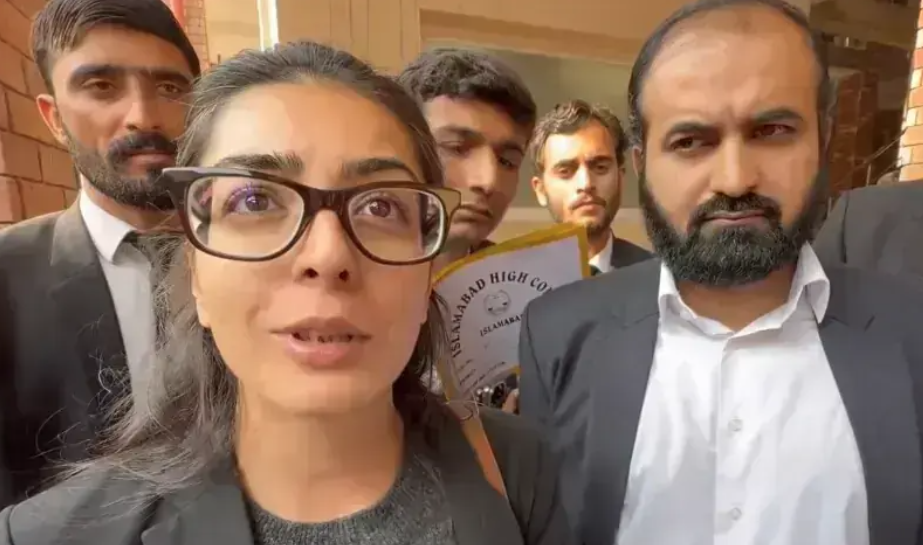
SC will hear Imaan Zainab Mazari-Hazir's plea on Dec 11 seeking a stay in the trial of her...
-
Sindh Launches Full-Scale Anti-Robbery Operation, ...
Sindh government launches major operation against Kachha dacoits; 11 killed in Shikarpur d...

-
Pakistan Transport Alliance Strikes Over Traffic O...
Pakistan Transport Alliance protests Traffic Ordinance 2025, presenting a 12-point charter...

-
Punjab Police Launches High Alert, Immediate Sweep...
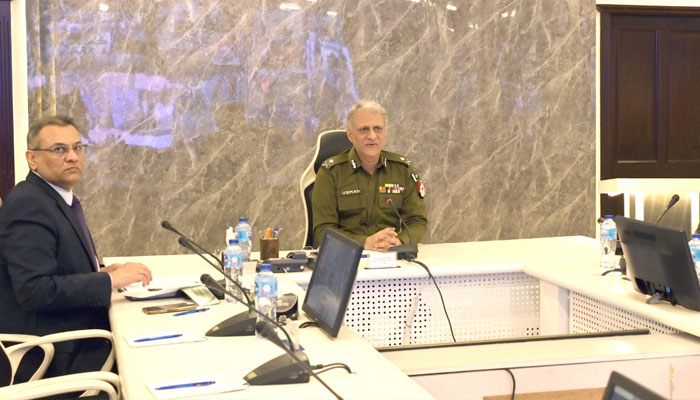
IG Punjab Dr. Usman Anwar announces high alert in Lahore, Rawalpindi, Multan; sweep operat...
-
FIR Filed Under Terrorism Charges After Sindh Cult...
A Sindh Culture Day rally in Karachi turned violent as police and participants clashed nea...