LEGAL
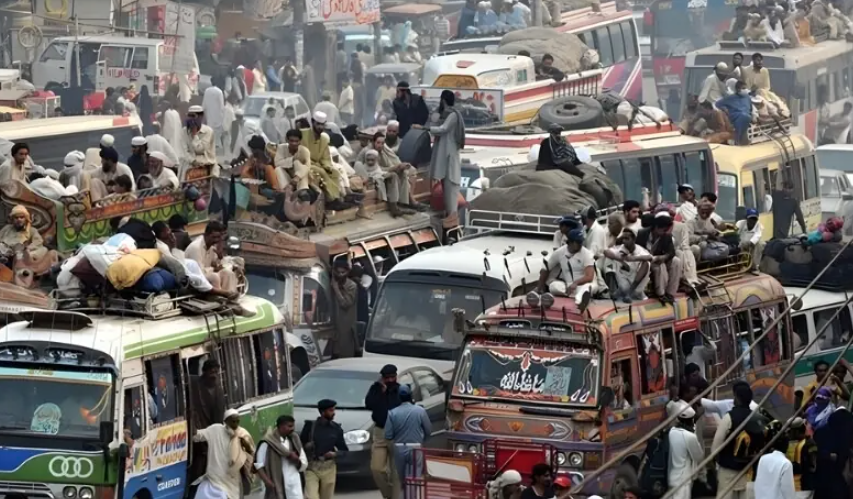
Officials of the PTA held a press conference in Lahore, where they reiterated their demand for the immediate withdrawal of the Traffic Ordinance 2025. The transporters have expressed their opposition to several provisions within the ordinance and seek changes that they believe will significantly improve the working conditions and business environment for transporters across the country.
Key Demands of the 12-Point Charter
The 12-point charter presented by the Pakistan Transport Alliance includes several critical demands aimed at making the transport industry more efficient and reducing what they consider unnecessary burdens imposed on the sector. Some of the key demands are as follows:
1. Establishment of stands for Mazda vehicles across the country to regulate the operations of small commercial vehicles.
2. No unnecessary challans for vehicles that have complete documentation and are in compliance with all traffic laws.
3. Easier access to driving licenses, with a streamlined process to reduce bureaucratic hurdles.
4. Granting transport the status of an industry to receive proper recognition and benefits.
5. Issuance of new route permits to facilitate smoother and expanded operations.
6. Suspension of challans until route permits are issued, and no fines should be imposed in the interim.
7. Elimination of unnecessary intervention from checking forces at various checkpoints across the country.
8. Reduction in toll taxes and the removal of unnecessary toll plazas that are seen as an economic burden.
9. Improvement of the vehicle passing system to ensure timely approvals and safety checks.
10. Timely registration of cases when transporters are victims of kidnapping or goods are stolen.
11. Better coordination with law enforcement to ensure the safety of the transport community.
12. Proper recognition and welfare measures for transporters and their workers.
Protest and Strike Continues Nationwide
Haji Sher Ali, the President of the Pakistan Transport Alliance, made it clear that the strike will continue until the Traffic Ordinance 2025 is fully withdrawn. He further announced that drivers across the country have submitted their vehicle keys as a sign of protest, and transport operations will remain halted.
"We will not move the wheel until our demands are met," said Haji Sher Ali during the press conference. The transporters are also unhappy with the government's approach, claiming that they have been subjected to unnecessary pressure and interventions.
Riaz Tajik, the Chairman of the PTA, was also vocal in his criticism of the government’s response. He stated that he had clearly informed the Punjab Transport Minister Bilal Akbar Khan that the strike would not be called off. He further expressed frustration over what he described as the government's attempt to placate the transport community with “lollipops”—promises that lack concrete action.
“The government has lost billions of rupees due to the ongoing strike,” Riaz Tajik claimed, indicating the significant impact of the protest on the economy and daily operations.
Government’s Response
The controversy around the Traffic Ordinance 2025 has created divisions within the transport sector. On Monday, Punjab Transport Minister Bilal Akbar Khan announced that the government had decided to stop the implementation of the ordinance after negotiations with some transport organizations. This led to a split within the PTA, with some organizations agreeing to call off the strike, while others, including the Pakistan Transport Alliance, chose to continue the protest until a formal notification of the ordinance's suspension was issued.
However, Punjab Chief Minister Maryam Nawaz and Senior Provincial Minister Marriyum Aurangzeb rejected the claims of the ordinance's suspension as rumors, further escalating tensions between the transporters and the provincial government.
Current Situation and Impact
As of now, transporters across the country are refusing to operate their vehicles in protest against the ordinance, significantly disrupting public and commercial transportation. The strike has affected goods transport, inter-city travel, and daily commuting, causing inconvenience for millions of people across Pakistan.
The government faces mounting pressure to find a resolution, but with the transport sector united in its demands, it remains to be seen how the authorities will address the situation and whether any compromises can be reached.
Conclusion
The ongoing strike by the Pakistan Transport Alliance highlights the dissatisfaction within the transport sector regarding the Traffic Ordinance 2025 and the broader issues faced by transporters in Pakistan. As discussions continue, both the transporters and the government will need to work toward a resolution that addresses the industry's concerns while ensuring road safety and regulation.
-
Accused in US Visa Fraud Case Placed on Three-Day ...
Sheikh Syed Saifuddin, accused of arranging US visas for a fake Sufi conference, appeared ...

-
Pakistan Airports Authority Denies Reports of Airs...
The Pakistan Airports Authority has dismissed reports of airspace closure as misleading, c...
-
US Marines Open Fire as Protesters Storm US Consul...
US Marines opened fire as protesters stormed the US Consulate in Karachi following the rep...
-
Islamabad High Court Fixes March 10 Hearing on Imr...
The Islamabad High Court has set March 10 to hear Imran Khan’s plea for medical treatmen...
-
CAA Closes Selected Air Routes in Karachi, Lahore ...
Pakistan’s Civil Aviation Authority has issued a NOTAM announcing temporary closure of s...