POLITICS & POLICY MAKING
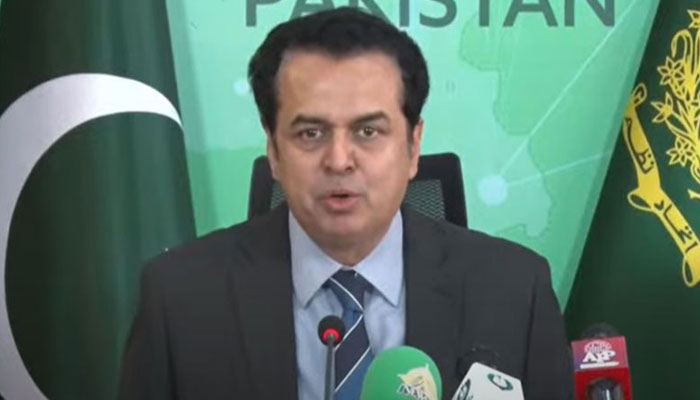
Defence Minister Khawaja Asif on Tuesday termed the 18th Constitutional Amendment a “sham”, saying that while powers were devolved to provinces, they were never transferred to the grassroots level, a failure he said was evident in tragedies such as the Gul Plaza fire in Karachi.
Addressing the National Assembly, Khawaja Asif expressed deep regret over the Gul Plaza incident, saying that mere expressions of sorrow were insufficient when lives continued to be lost due to systemic failures. He also referred to recent fatalities caused by dumper accidents in Karachi, underscoring what he described as administrative collapse.
“The 18th Amendment has only shifted authority to provincial governments. There was consensus that powers should go further down to local governments,” Asif said, adding that incidents like the Karachi fire highlighted the urgent need for devolution to the tehsil and ward levels.
He lamented that despite repeated commitments, local government systems remained weak. “Until power is transferred to the people, this House will remain meaningless,” he said, pointing out what he termed the irony that even military rulers such as Ayub Khan, Zia-ul-Haq and Pervez Musharraf introduced empowered local governments, while elected governments failed to hold timely local body elections.
The defence minister stressed that strong leadership emerges from local governments, citing China’s political system as an example where leadership rises through an institutional process. “The fire incident is a symbol of the destruction of our system,” he remarked, adding that strengthening local governments was essential for national stability.
He also criticised the absence of a uniform education system, saying that a single curriculum from Gwadar to Gilgit was needed to build a cohesive nation that recognises both provincial and federal identities.
Warning of further administrative breakdown, Asif said that if power centralisation continued, “one day the fire brigade of the Ministry of Defence will have to be sent to extinguish fires.” He urged immediate decisions to ensure Pakistan’s long-term stability.
PTI negotiations
Commenting on talks with the Pakistan Tehreek-e-Insaf (PTI), Khawaja Asif said the government was serious about negotiations but doubted PTI’s sincerity. He accused the party of sending mixed signals and speaking in “multiple languages,” questioning which stance should be trusted.
He further said that those speaking against Pakistan from outside the country should first “control their language,” alleging that abusive rhetoric was part of an organised strategy. “PTI wants to keep space to retreat and escalate simultaneously,” he added.
Opposition leadership
Asif also questioned why the largest opposition party had failed to nominate its own leader of the opposition, while welcoming Mehmood Khan Achakzai as the opposition leader, describing him as a respected colleague despite political differences.
He praised Prime Minister Shehbaz Sharif and PML-N leader Nawaz Sharif, saying they allowed dissent within the party and served as a role model in Pakistan’s political culture.
MQM-PPP clash over Gul Plaza
Meanwhile, MQM-Pakistan and PPP lawmakers clashed in the National Assembly over responsibility for the Gul Plaza tragedy.
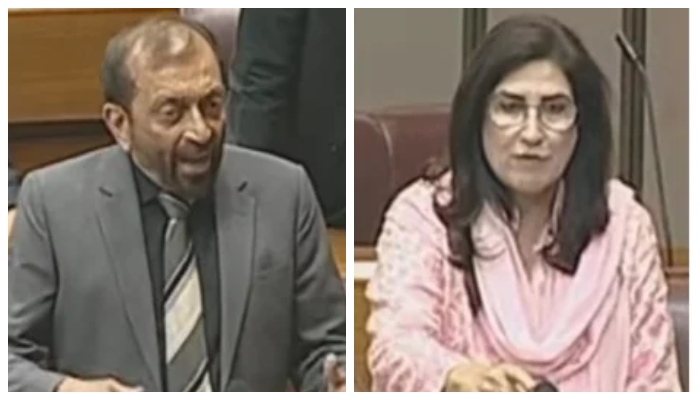
MQM leader Farooq Sattar said the fire had “ignited the hearts of every citizen of Karachi” and called for the creation of new administrative units and stronger local governments, stressing that such reforms did not amount to dividing the country.
Responding, PPP’s Shehla Raza said the issue should not be politicised, reminding the House which governments were in power during 2002–03 when commercial expansions were approved. She added that the presence of chief ministers at accident sites was less important than the timely arrival of rescue agencies.
PPP leader Abdul Qadir Patel accused MQM of evading responsibility, saying, “You built the building, chained the doors and didn’t allow anyone to help. Why is the tragedy not named after the municipality?”
The debate reflected growing political tensions over governance failures in Karachi, as calls for accountability and systemic reform intensified following the deadly blaze.
-
PTI Chairman Gohar Calls for Peace, Warns Against ...
PTI Chairman Barrister Gohar urges peace and transparency, says government bias worsens is...
-
Imran Khan’s Sisters Shift Sit-In to Protest Ral...
Imran Khan’s sisters abandon Adiala sit-in, lead PTI protest rally in Islamabad after be...
-
Pakistan Extends Airspace Ban for Indian Aircraft ...
Pakistan extends its airspace ban on all India-registered and operated aircraft, including...
-
Salman Akram Raja Blames Karachi Tragedy on Corrup...
PTI Secretary General Salman Akram Raja calls Karachi tragedy a result of corruption and n...
-
Senate Panel Approves Bill to Tackle Objectionable...
Senate committee approves bill to remove objectionable content from social media, citing i...