POLITICS & POLICY MAKING
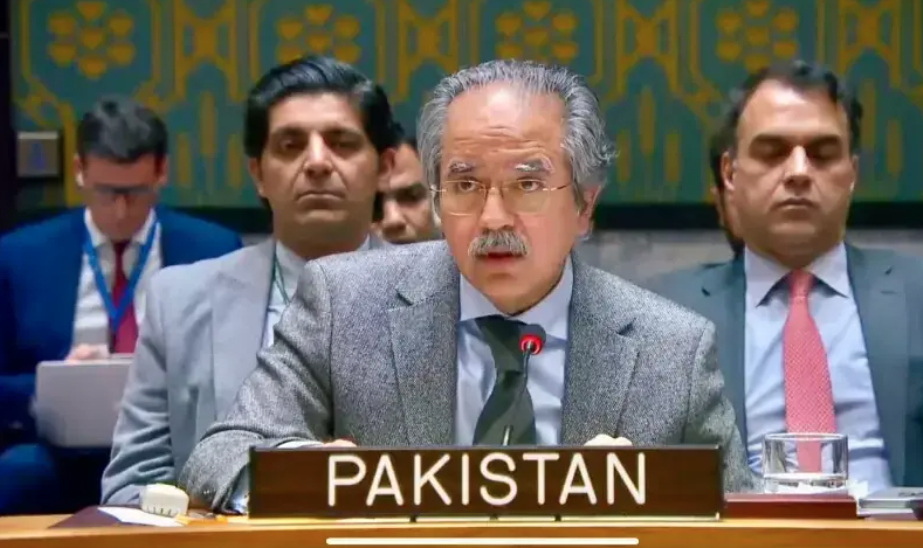
Pakistan has told the United Nations Security Council that it hopes for an early normalisation of the situation in Iran, cautioning that the UN Charter and international law strictly prohibit external interference in the internal affairs of sovereign states.
Speaking at an emergency meeting of the 15-member Security Council on Thursday, Pakistan’s Permanent Representative to the UN, Ambassador Asim Ahmad, stressed that the UN Charter forbids the threat or use of force against a state’s territorial integrity or political independence.
“The UN Charter prohibits the threat or use of force against other states’ territorial integrity or political independence, or interference in matters essentially within the domestic jurisdiction of states,” Ambassador Ahmad said.
The meeting was convened by the United States to discuss the situation in Iran, where protests have erupted over economic hardship. US Ambassador Mike Waltz criticised Iranian authorities’ actions against protesters and expressed President Donald Trump’s support for the demonstrators.
Ambassador Ahmad said Pakistan has been closely monitoring developments in Iran and the wider region, warning that emerging threats to peace and stability remain a serious concern. He described Iran as a “brotherly country,” highlighting the deep historical, cultural, religious and friendly ties between the peoples of Pakistan and Iran.
“A stable and peaceful Iran is in the interest of Pakistan, the region and beyond,” he said, expressing confidence in the wisdom and resilience of the Iranian people and leadership.
Reaffirming Pakistan’s commitment to international law, the envoy stressed that any external interference in the internal affairs of states is inconsistent with the UN Charter. He urged all parties to resolve disputes through peaceful means, warning that continued hostilities, unilateral actions and the use of force would only deepen crises and cause unnecessary suffering.
“We sincerely hope that the situation in Iran will soon return to calm and normalcy, free from any internal turmoil or external pressure,” Ambassador Ahmad said, calling for renewed dialogue based on mutual respect and understanding.
Opening the debate, UN Assistant Secretary-General Martha Pobee urged restraint, describing the situation in Iran as fluid and deeply concerning. While noting that protests continue at a reportedly smaller scale, she expressed alarm over public statements suggesting possible military strikes.
“This external dimension adds volatility to an already combustible situation,” Pobee warned.
UN Secretary-General António Guterres also called for maximum restraint, stressing that all concerns regarding Iran, including nuclear issues and protests, should be addressed through diplomacy and dialogue.
The protests in Iran began on December 28 after shopkeepers in Tehran demonstrated against the collapse of the national currency, soaring inflation and worsening living conditions.
During the meeting, sharp divisions emerged among Security Council members. Russia’s Ambassador Vassily Nebenzia accused the United States of escalating tensions and attempting to justify interference in Iran’s internal affairs, while China’s Ambassador Sun Lei warned that military action would push the region toward disaster and violate international law.
Iran’s Deputy Permanent Representative Gholamhossein Darzi rejected US allegations, accusing Washington of spreading disinformation and laying the groundwork for political destabilisation and military intervention under a humanitarian pretext.
-
No Atmosphere for Talks Without Principles, Says P...
PTI Secretary General Salman Akram Raja says there is no environment for dialogue, insisti...
-
Ayaz Sadiq Vows No Criticism of Army, Judiciary Wi...
NA Speaker Ayaz Sadiq says he will not allow any criticism of the Pakistan Army or judicia...
-
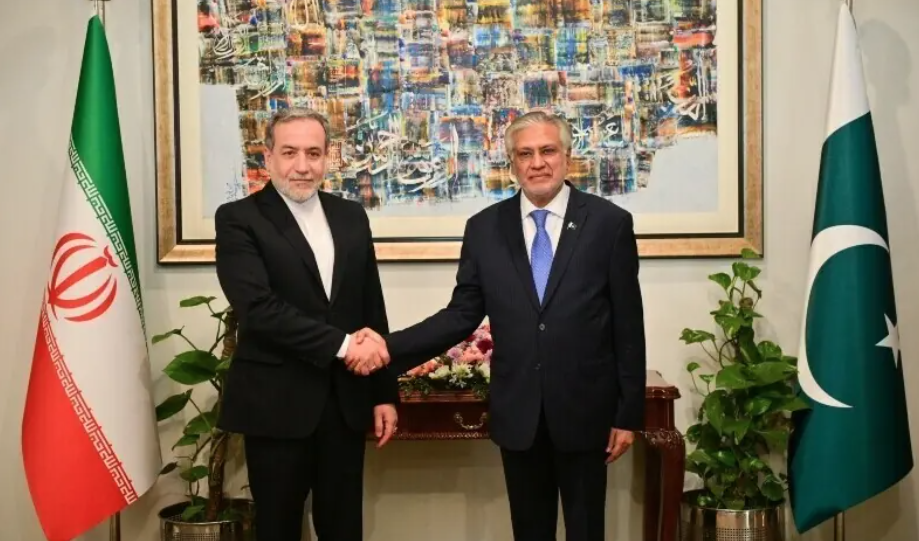
Ishaq Dar Expresses Hope for Peace, Stability in I...
Deputy PM Ishaq Dar speaks with Iran’s FM Abbas Araghchi, expressing hope for peace and ...
-
Balochistan CM Says Bank Robbery Foiled, 14 Terror...
Balochistan CM Sarfaraz Bugti says a bank robbery in Kharan was foiled, 14 terrorists kill...
-
Shah Mahmood Qureshi Refuses to Join Fawad Chaudhr...
PTI Vice-Chairman Shah Mahmood Qureshi rejects Fawad Chaudhry’s National Dialogue Commit...