POLITICS & POLICY MAKING
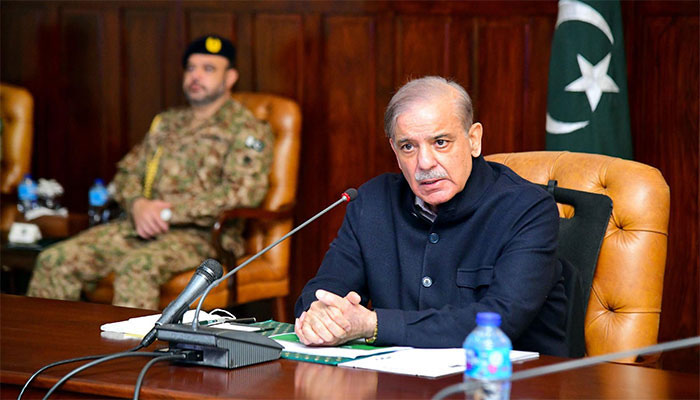
Prime Minister Shehbaz Sharif on Wednesday took notice of recent regulatory changes introduced by the National Electric Power Regulatory Authority (Nepra) affecting solar consumers and directed the Power Division to file a review appeal against the decision.
Nepra earlier this week revised the terms and conditions for all existing and future net-metered solar consumers — commonly known as prosumers — replacing the long-standing net-metering regime with a net-billing system. The move is aimed at managing the rapid growth of solar energy penetration and protecting the financially strained, state-owned power distribution network.
According to a statement issued by the Prime Minister’s Office (PMO), the premier took “immediate notice” of the matter and instructed the Power Division to ensure “every possible safeguard of the existing consumer contracts” through a formal review petition before the regulator.
PM Shehbaz observed that the “burden of 466,000 users benefitting from solar should not be put on 37.6 million domestic consumers who were getting electricity directly from the national grid.”
He also directed the Power Division to formulate a comprehensive strategy to address the issue. The instructions were issued during a high-level meeting attended by Deputy Prime Minister Ishaq Dar, Power Minister Awais Leghari, Economic Affairs Minister Ahad Cheema, Information Minister Attaullah Tarar, Minister of State for Finance Bilal Azhar Kiyani and the prime minister’s adviser Muhammad Ali.
Political Backlash
The regulatory change has sparked criticism across party lines in the Senate, including from ruling ally Pakistan Peoples Party (PPP) and opposition Pakistan Tehreek-i-Insaf (PTI).
Defending the move in the Senate a day earlier, Power Minister Awais Leghari said Nepra acted within its constitutional and legal mandate to adjust regulations in the broader public interest.
“Changing regulations according to the law and the Constitution is a regulator’s job,” he stated, adding that he would not step back from the decision. He clarified that the revision was a regulatory action rather than a policy shift.
From Net-Metering to Net-Billing
Under the new Prosumer Regulations 2025, existing registered prosumers will be shifted immediately from net-metering to net-billing. Exported electricity units will now be credited for one month only, instead of the current three-month adjustment window. However, other contractual terms will remain intact until the expiry of their seven-year agreements.
Under net-billing, electricity generated by solar consumers is purchased by distribution companies (Discos) at the National Average Energy Purchase Price (NAEPP), currently around Rs10 per unit. Consumers, meanwhile, will be billed separately for electricity drawn from the grid at rates ranging between Rs37 and Rs55 per unit, depending on their slab — excluding taxes and surcharges.
For new prosumers, contracts will be limited to five years, and exported units will be accepted at approximately Rs11 per unit, significantly lower than the Rs26 per unit rate under existing agreements.
Additionally, consumers will not be permitted to install solar capacity beyond their originally sanctioned load, effectively reducing potential expansion by around 50 per cent.
Under the revised system, surplus electricity exported to the grid will be calculated separately from consumption, eliminating the previous unit-for-unit adjustment mechanism that allowed prosumers to offset grid usage against their solar exports.
Concerns and Justifications
Stakeholders and energy policy experts have cautioned that the new framework risks reversing over a decade of citizen-driven renewable energy growth.
Both the government and the regulator have attributed rising grid challenges and capacity payments to higher-than-approved solar installations and unregistered solar systems. However, critics argue that the new regulations do not directly address these issues.
Nepra maintains that the updated regulations introduce clearer procedures, stricter technical requirements and a revised billing methodology aimed at integrating distributed generation more effectively into the national grid while ensuring system stability and financial sustainability.
The coming days are expected to determine whether the government’s review appeal leads to any adjustments in the regulatory framework, as tensions continue between promoting renewable energy adoption and protecting the conventional power infrastructure.
-
Sindh Home Minister Warns Kachha Robbers Amid “O...
Sindh Home Minister Zia Lanjar warns Kachha robbers: “Lay down arms or face death.” 78...
-
Balochistan CM Sarfraz Bugti: No One Allowed to Ta...
Balochistan CM Sarfraz Bugti warns against terrorism, says only the state has the right to...
-
Khawaja Asif Rebukes Achakzai, NA Adopts Resolutio...
Defense Minister Khawaja Asif condemns Achakzai’s “force of four districts” remark, ...
-
Khawaja Asif Signals Action Against Terrorists in ...
Defense Minister Khawaja Asif warns terrorism from Afghanistan will be addressed before Ra...
-
PTI Condemns Alleged Abduction, Torture of Lawyer ...
PTI has condemned the alleged abduction and torture of Supreme Court lawyer Ali Zaman and ...