TRADE & ECONOMY
The State Bank of Pakistan (SBP) on Monday maintained its key policy rate at 10.5 per cent following a meeting of its Monetary Policy Committee (MPC), in a move that surprised many market participants who had anticipated a rate cut.
Brokerage firm Topline Securities noted that most of its surveyed participants were expecting a reduction in interest rates. However, the central bank opted to hold the rate steady, citing broadly unchanged inflation and external account conditions alongside improved economic growth prospects.
According to the Monetary Policy Statement, headline inflation stood at 5.6 per cent in December 2025, while core inflation remained elevated at around 7.4 per cent. The MPC observed that inflation trends remained within the target range but core inflation continued to show stickiness.
The external current account recorded a deficit of $244 million in December 2025, bringing the total deficit for the first half of FY2026 to $1.2 billion. Weak export performance, particularly a sharp decline in food exports such as rice, contributed to the shortfall. However, resilience in high-value-added textile exports, along with sustained growth in workers’ remittances and ICT services, helped contain the deficit.
The committee noted encouraging signs in economic activity, with provisional real GDP growth reported at 3.7 per cent year-on-year in the first quarter of FY2026, driven by the industry and agriculture sectors. Key indicators such as auto sales, cement dispatches, petroleum sales (excluding furnace oil), fertiliser off-take, and machinery imports showed notable growth, reflecting strengthening domestic demand.
Large-scale manufacturing (LSM) posted year-on-year growth of 8 per cent in October and 10.4 per cent in November 2025, raising cumulative growth to 6 per cent during July–November FY2026. The MPC also highlighted positive prospects for the wheat crop, which could further support economic momentum and spill over into the services sector.
Based on these developments, the SBP revised its GDP growth projection for FY2026 upward to a range of 3.75 to 4.75 per cent, with expectations of stronger momentum in FY2027 supported by earlier rate reductions.
The MPC also pointed to improvements in consumer and business confidence, easing inflation expectations, and a rise in foreign exchange reserves, which reached $16.1 billion as of January 16 — surpassing the end-December target. The reserves are expected to exceed $18 billion by June 2026, supported by remittances and official inflows, though global trade fragmentation and geopolitical risks remain concerns.
On the fiscal side, the committee noted that FBR tax revenues grew by just 9.5 per cent, significantly below last year’s pace and the annual target, resulting in a shortfall of Rs329 billion. While controlled expenditures, particularly lower interest payments, supported fiscal balance targets, achieving the primary surplus goal remains challenging.
Broad money growth reached 16.3 per cent by early January, driven by increased private sector credit and government borrowing. Private credit expanded by Rs578 billion during FY2026, led by textiles, trade, chemicals, and consumer financing. To support further credit growth, the SBP reduced the average cash reserve requirement from 6 per cent to 5 per cent.
The MPC also noted that the IMF had slightly upgraded Pakistan’s growth outlook for FY2026, while cautioning about risks linked to global tariff uncertainties and volatile commodity prices.
Concluding its statement, the committee emphasised the importance of maintaining a prudent monetary stance to stabilise inflation within the medium-term target range of 5 to 7 per cent. It also called for coordinated fiscal discipline and structural reforms to boost productivity, exports, and sustainable economic growth.
Market analysts had widely expected a 50- to 100-basis-point rate cut, especially after government bond yields fell to single digits for the first time in four years last week. Business leaders had also been calling for steeper rate reductions to revive investment and restore confidence in the economy.
-
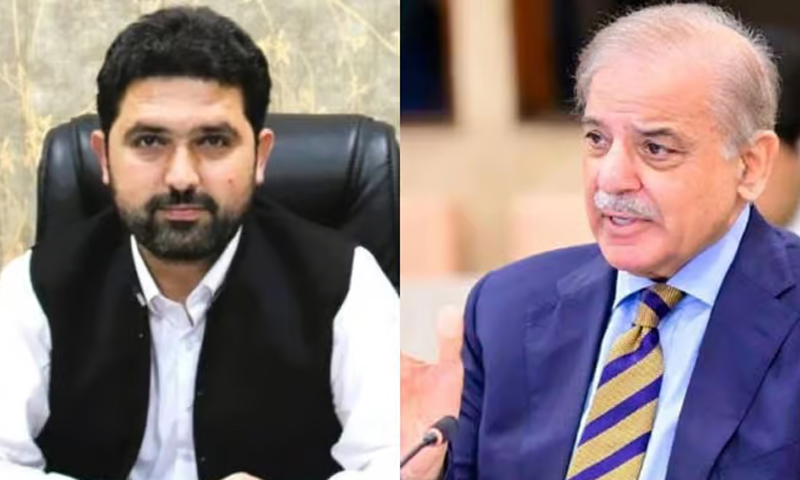
KP Chief Minister Urges PM to Release Federal Fund...
KP CM writes to PM over non-payment of constitutionally mandated federal funds, citing sev...
-
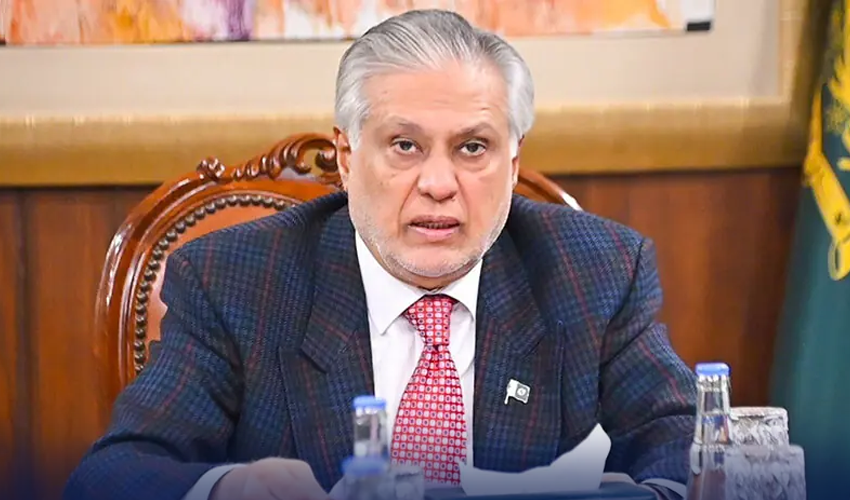
FM Ishaq Dar Inaugurates Pakistan Pavilion at WEF,...
Deputy PM Ishaq Dar inaugurates Pakistan Pavilion at WEF, lauds startups’ role in econom...
-
PM Shehbaz Meets IMF Chief at Davos, Highlights Ec...
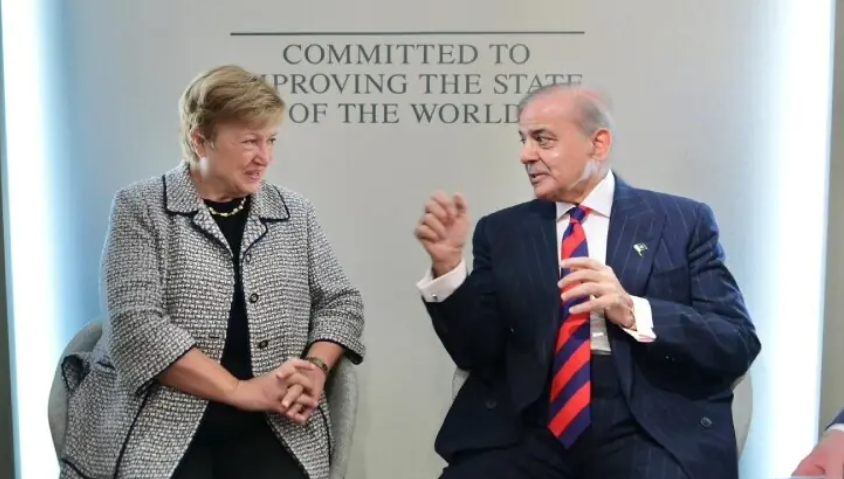
PM Shehbaz meets IMF Managing Director Kristalina Georgieva at WEF Davos, briefs her on Pa...
-
UK Pledges $400 Million to Boost Pakistan’s Geol...
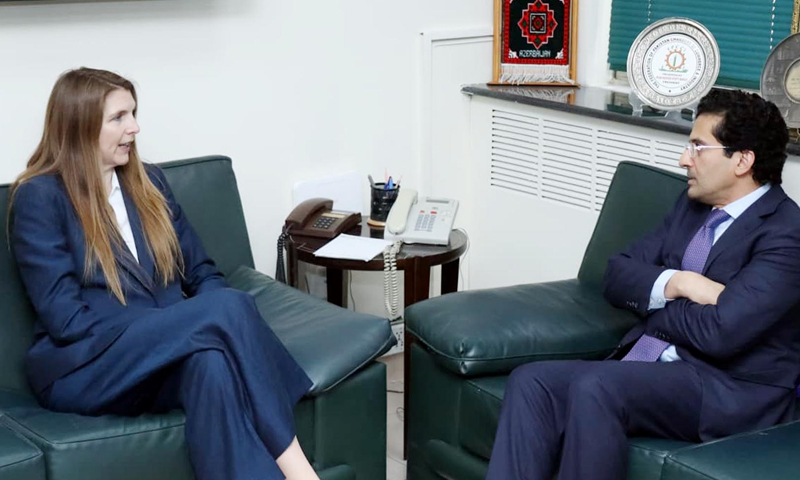
Britain offers $400M to enhance Pakistan’s Geological Survey, strengthen energy & minera...
-
PM Shehbaz to Lead Pakistan Delegation to WEF Annu...
PM Shehbaz Sharif to attend World Economic Forum summit in Davos from Jan 20–22, where h...