WORLD NEWS
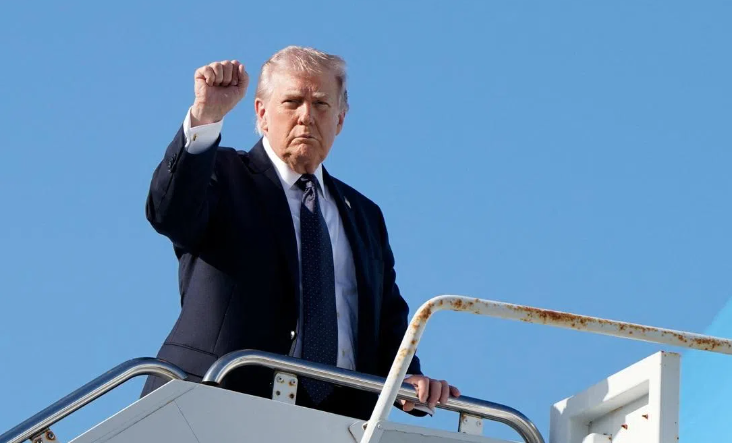
U.S. President Donald Trump pressed forward with military strikes on Iran over the weekend despite private warnings from senior aides that escalation could be difficult to control and politically risky ahead of November’s midterm elections, according to two senior White House officials and a Republican close to the administration.
The weekend operations, which included high-profile attacks killing Supreme Leader Ali Khamenei and striking hundreds of targets, have been widely praised by foreign policy hawks in Washington who have long sought to challenge the Tehran regime. However, some White House officials expressed concern that the aggressive military action could jeopardize Republican chances of holding Congress, particularly as many voters remain focused on domestic issues such as the cost of living.
According to senior aides, Trump repeatedly sought briefings on how the strikes could project strength domestically. Top advisers cautioned that U.S. intelligence offered no guarantee that escalation could be contained and warned that the administration risked tying its political fortunes to an unpredictable conflict. Ultimately, Trump sided with those who argued decisive action would reinforce his image as a strong leader, even if long-term political and military risks were significant.
Public Opinion and Political Fallout
Early polling indicates limited public approval of the strikes, with only one in four Americans expressing support. About half of respondents, including roughly one in four Republicans, believe Trump is too willing to use military force. The poll was conducted before the U.S. military reported the first American casualties of the operation, which include three service members killed in ongoing combat.
White House press secretary Karoline Leavitt defended the operation, describing it as a “decision that presidents of both parties have contemplated for more than fifty years, but none had the courage to execute,” and emphasized that the current priority is ensuring its success alongside the Pentagon and other agencies.
Despite these statements, White House aides had previously encouraged Trump to focus on domestic issues in the lead-up to the midterms. The juxtaposition of a highly successful State of the Union address emphasizing affordability and domestic priorities with sudden military escalation has created a challenging political environment.
“Making midterm voters comfortable with that juxtaposition will be one of the most important things that the White House needs to undertake in the next few weeks,” said Republican strategist Rob Godfrey.
Risks for Republicans
White House officials and Trump advisers are particularly concerned about competitive House districts, where even modest voter skepticism could have decisive consequences. Vulnerable Republican representatives may be forced to address war-powers resolutions or foreign policy questions while trying to maintain focus on domestic issues such as the cost of living.
Analysts noted that foreign policy victories rarely sway voters, while missteps or protracted conflicts usually do. Trump’s recent capture of Venezuelan leader Nicolas Maduro resulted in minimal political fallout, but polling suggests that the public is wary of prolonged military engagements that risk American lives.
Interviews with Trump supporters reveal mixed sentiments. While some express unease about foreign interventions, many are willing to support decisive action in the Iran conflict. “No one wants to be involved in a war, but Iran just killed thousands of their own people, so I’m fine with what Trump did,” said BJ Moore, an 83-year-old voter from Atlanta.
As the conflict continues, the White House faces the dual challenge of managing military operations abroad while navigating domestic political risks in a highly polarized electorate ahead of the midterm elections.
-
UAE Denies Use of Airspace for Attacks on Iran, De...
UAE will not allow its airspace to be used against Iran, says Minister Reem Al-Hashemi. Mi...
-
China Calls for Immediate Halt to Military Operati...
China urges an immediate stop to military action in Iran, stressing the need for peace, ju...
-
EU Governments Push Back on Ukraine’s Fast-Track...
Ukraine seeks 2027 EU membership as part of a peace deal with Russia, but EU countries inc...
-
India Cuts LNG Supplies as Qatar Halts Production ...
Indian companies reduce natural gas supplies by 10–30% after QatarEnergy suspends LNG pr...
-
Trump Administration Faces Scrutiny Over Justifica...
US strikes on Iran have drawn criticism as evidence for an “imminent threat” remains u...