TRADE & ECONOMY
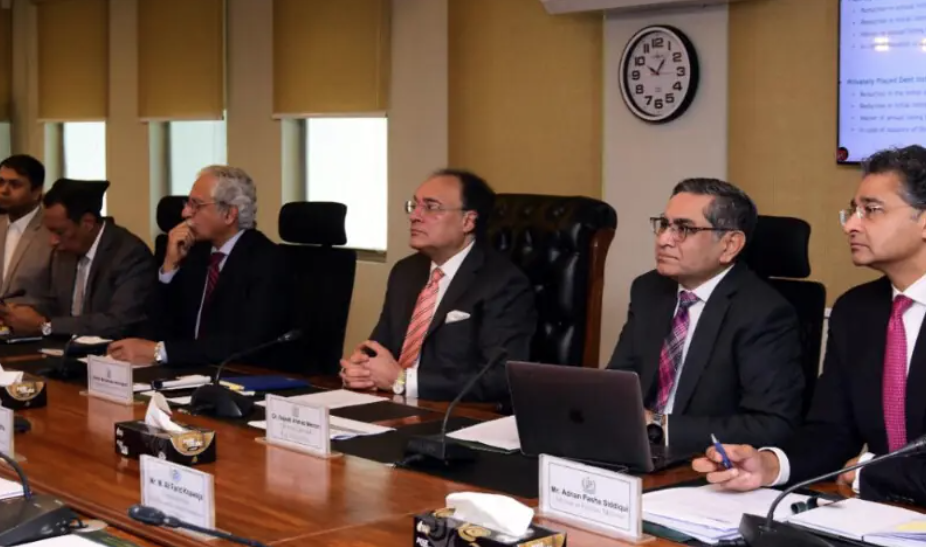
Finance Minister Muhammad Aurangzeb on Wednesday emphasised the need for Pakistan to gradually transition toward a more balanced financial system, where capital markets play a stronger role alongside the banking sector in meeting the country’s financing needs.
The remarks were made while chairing a meeting of the Capital Market Development Council (CMDC), convened to review progress on reforms aimed at strengthening Pakistan’s capital markets and expanding their role in supporting economic growth.
According to a press release issued by the Ministry of Finance Pakistan, the meeting focused particularly on the development of the corporate debt market and improving the capital market’s capacity to provide long-term financing to businesses.
Need for Balanced Financial System
In his opening remarks, the finance minister highlighted that a strong and efficient capital market was essential for sustainable economic development. He said such markets enable corporations to access long-term funding while offering diversified investment opportunities for both institutional and retail investors.
Aurangzeb stressed that Pakistan’s financial system currently relies heavily on bank lending, and developing capital markets would help diversify financing sources.
“The country must gradually move towards a more balanced financial system where capital markets complement the banking sector in meeting the financing needs of the economy,” he said.
Focus on Corporate Bond Market
The finance minister noted that the development of a vibrant corporate bond market could play a critical role in mobilising long-term domestic savings and supporting private sector investment.
He also called for practical and time-bound reforms to address bottlenecks across the entire capital market value chain, including issuance processes, regulatory procedures, market infrastructure and liquidity in the secondary market.
Aurangzeb emphasised the need to create an enabling environment in which companies can efficiently raise capital through market-based instruments while investors benefit from greater transparency, liquidity and confidence.
Strengthening Awareness and Regulatory Reforms
The minister directed the Securities and Exchange Commission of Pakistan (SECP) to strengthen outreach and communication regarding recently introduced regulatory reforms designed to facilitate corporate bond issuance and improve market access.
These reforms include simplified documentation requirements, reduced regulatory fees and the digitisation of the bond issuance process.
Aurangzeb also stressed the importance of learning from international and regional best practices in capital market development and adapting them to Pakistan’s financial system.
Improving Market Infrastructure and Liquidity
Participants at the meeting highlighted the need to improve market infrastructure and trading activity, particularly by introducing effective market-making mechanisms and enhancing liquidity in the secondary market for corporate debt instruments.
Officials noted that stronger participation by banks and brokerage houses could significantly improve market liquidity and encourage broader investor participation.
Representatives from key financial institutions—including the Pakistan Stock Exchange, the State Bank of Pakistan, the Central Depository Company, the National Clearing Company of Pakistan Limited, the Pakistan Banks Association, and the Pakistan Business Council—briefed the meeting on recent initiatives aimed at facilitating corporate bond issuance and improving market operations.
Tax Reforms and Policy Measures
The meeting also reviewed the tax framework affecting capital market participants. The Finance Ministry’s Tax Policy Office has initiated consultations to examine tax-related issues impacting both investors and issuers.
Officials are exploring ways to rationalise the tax structure and introduce incentives that could encourage greater participation in the capital market.
Reform Agenda and Working Groups
The CMDC also discussed a broader reform agenda aimed at strengthening coordination among regulators, market infrastructure institutions and private sector stakeholders.
As part of these efforts, specialised working groups will be established to focus on key reform areas, including tax and fiscal policy, debt issuance frameworks, market infrastructure development and investor protection.
Aurangzeb reiterated the government’s commitment to building a deeper and more efficient capital market, describing it as a key pillar for mobilising investment, strengthening financial stability and promoting private sector-led economic growth.
He urged all stakeholders to work closely together to ensure the timely implementation of reforms that would unlock the full potential of Pakistan’s capital markets.
-
Fauji Fertilizer Joins Consortium for PIA Privatiz...
Pakistan’s Privatization Committee approves Fauji Fertilizer Company as an additional co...

-
Pakistan Diverts Oil Imports via Red Sea Amid Stra...
Pakistan is now receiving oil via the Red Sea due to the Strait of Hormuz closure. A PNSC ...

-
Four Petrol-Laden Ships Arrive at Port Qasim After...
Four ships carrying around 250 million litres of petrol have arrived at Port Qasim followi...

-
KSE-100 Plunges 11,016 Points Amid Geopolitical Te...
Pakistan’s KSE-100 index falls 11,016 points (6.99%), dragged down by soaring oil prices...

-
SBP Keeps Policy Rate Unchanged at 10.5% Amid Glob...
Pakistan’s central bank keeps the policy rate at 10.5% as global fuel prices surge due t...