LEGAL
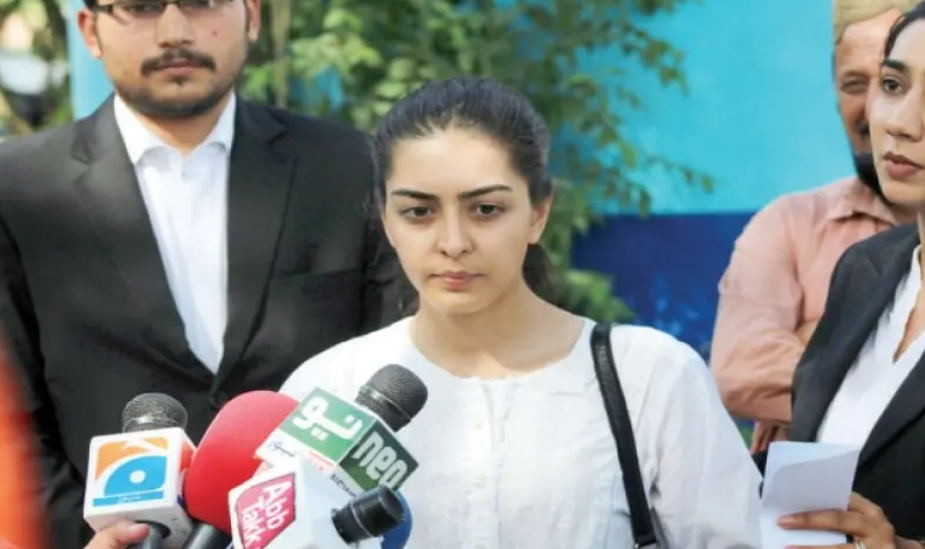
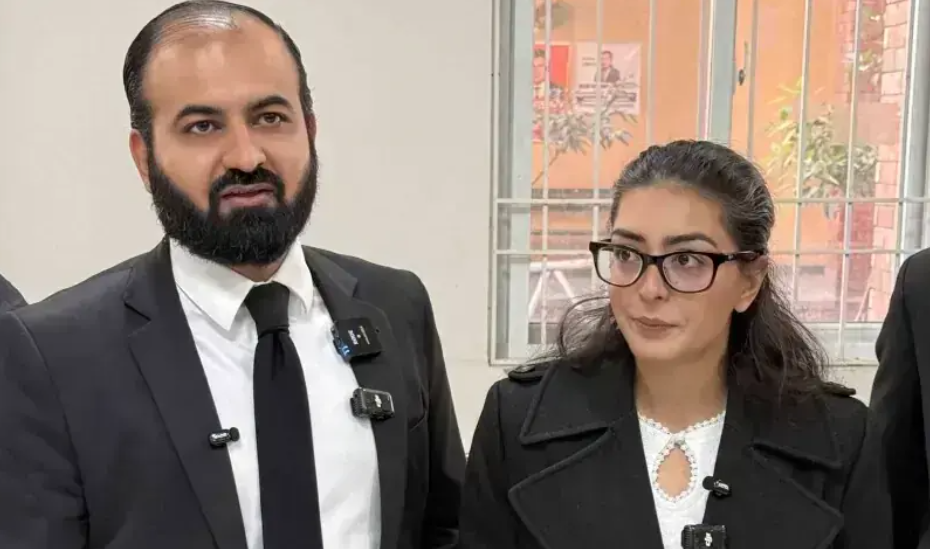
An Islamabad district and sessions court on Thursday dismissed an application filed by lawyer and rights activist Imaan Zainab Mazari-Hazir, seeking her acquittal in a case related to controversial social media posts. The court also rejected a plea filed by Mazari and her husband, Hadi Ali Chattha, challenging the appointment of a state-appointed defence counsel in the National Cybercrime Investigation Agency (NCCIA) case.
Judge Muhammad Afzal Majoka, who presided over the proceedings, announced the dismissal after reserving his verdict earlier in the day.
Challenge to State-Appointed Counsel Dismissed
Mazari and Chattha argued that the state-appointed counsel did not meet the legal criteria, stressing that under relevant rules, the defence lawyer should have at least five years of criminal law experience. Their legal team, including senior lawyer Sher Afzal Marwat, IBA President Naeem Ali Gujjar, and Islamabad Bar Council member Raja Aleem Abbasi, argued that an accused must have confidence in the counsel appointed to represent them.
Abbasi told the court that the accused had “explicitly expressed a lack of confidence” in the counsel, while Mazari had previously accused the lawyer of being “forcibly appointed.” On November 29, she had a heated exchange with the counsel, calling him a “tout.”
Despite these objections, the court refused to remove the state-appointed counsel.
Acquittal Plea Rejected
Mazari’s acquittal application — submitted during the November 29 hearing — was also rejected. A similar application previously filed by Chattha had already been dismissed. Both face charges under the Prevention of Electronic Crimes Act (PECA) for allegedly inciting linguistic divisions and creating the impression that the armed forces were involved in terrorism inside Pakistan.
Witness Cross-Examination Dispute
During the hearing, Abbasi urged the court to recall prosecution witnesses to allow the defence an opportunity for “proper cross-examination,” arguing that it was necessary to ensure fairness. Gujjar also complained about heavy police presence during previous hearings and requested the case be treated “as a routine matter.”
Judge Majoka, however, declined to recall the witnesses.
Section 342 Proceedings
The judge also questioned the defence about the questionnaire prepared under Section 342 of the Criminal Procedure Code (CrPC), which the prosecution had been ordered to provide by December 4. Chattha informed the court they had not received it. The judge instructed that a typed copy be handed over by 10am.
The next hearing of the case is scheduled for tomorrow.
Mazari Moves Supreme Court for Urgent Relief
In a parallel development, Mazari filed an urgent application before the Supreme Court (SC), seeking an early hearing of the joint appeal she and Chattha filed against the Islamabad High Court’s refusal to grant interim relief. The IHC, on December 1, issued notices but declined to stay the trial.
The appeal has been filed under Article 185(3) of the Constitution.
Mazari’s application argues that the trial is at a “concluding stage,” and that the ongoing proceedings are in violation of Section 353 of the CrPC, which requires evidence to be recorded in the presence of the accused. It further states that denial of interim relief could lead to “irreparable loss,” including the possibility of a criminal conviction resulting from an “unfair trial.”
The plea emphasises that under the Supreme Court (Practice and Procedure) Act 2023, urgent applications should be fixed within 14 days, adding that the liberty of the petitioners is at stake.
The NCCIA had registered the case against Mazari and Chattha on August 12, invoking various sections of PECA.
-
CAA Closes Selected Air Routes in Karachi, Lahore ...
Pakistan’s Civil Aviation Authority has issued a NOTAM announcing temporary closure of s...

-
Plea in IHC Seeks Imran Khan’s Transfer to Shifa...
A petition in the Islamabad High Court seeks immediate transfer of PTI founder Imran Khan ...
-
IHC Restores Bail of Journalist Sohrab Barkat in N...
The Islamabad High Court has restored the bail of journalist Sohrab Barkat in the last cas...
-
IHC Dissolves Bench Hearing Imaan Mazari, Hadi Cha...
The Islamabad High Court has dissolved the bench hearing appeals of Imaan Zainab Mazari-Ha...
-
Karachi on High Alert Amid Rising Pakistan-Afghani...
Karachi police issue high alert advisory amid rising Pak-Afghan border tensions. Citizens ...