LEGAL
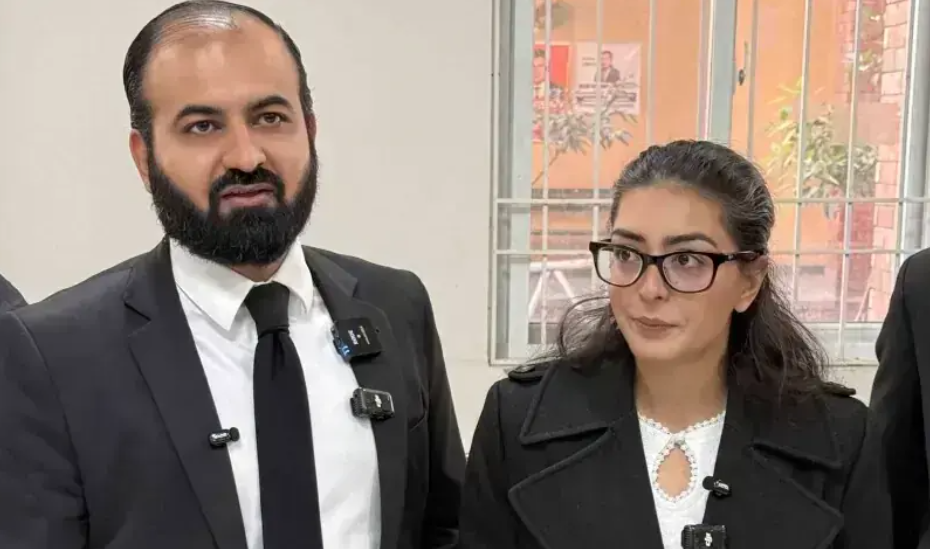
The Islamabad High Court (IHC) on Monday dissolved the bench hearing the appeals of human rights lawyer Imaan Zainab Mazari-Hazir and her husband Hadi Ali Chattha against their conviction in a controversial tweets case. The matter has been referred to Chief Justice Sardar Sarfaraz Dogar for the constitution of a new bench.
The couple was sentenced in January by a sessions court to a combined 17 years in prison on multiple charges, a day after their arrest in Islamabad in connection with a separate case.
Justice Muhammad Asif issued the latest order while hearing an application filed by the appellants seeking early hearing of their appeals and suspension of their sentences.
During the proceedings, counsel for the appellants, Riasat Ali Azad, argued that although the matter had been taken up on February 19, no effective date was fixed for hearing, resulting in prolonged incarceration of his clients.
The court was informed that previous proceedings involving the same appellants had been entertained by a bench headed by Justice Mohammed Azam Khan.
In its written order, the court observed that “in the interest of judicial consistency, continuity, and effective adjudication,” the present appeal may also be placed before the same bench. Consequently, the office was directed to place the case file before the chief justice for appropriate orders regarding reassignment.
The development follows the February 27 hearing when the government requested that the appeal be transferred to Justice Azam Khan’s court, citing that a related matter had previously been heard there. The assistant attorney general maintained that it would be appropriate for the same bench to hear connected cases.
However, the appellants’ counsel opposed the transfer, arguing that no similar case was pending before any other court and emphasizing that the current appeal had been heard by Justice Muhammad Asif since its inception.
Under Section 9 of the Prevention of Electronic Crimes Act (Peca), both Imaan and Hadi were sentenced to five years of rigorous imprisonment and fined Rs5 million each, with an additional year in default of payment.
For Section 10, they were each handed 10 years’ rigorous imprisonment and fined Rs30 million, with two additional years in default. Under Section 26-A, they received two years’ rigorous imprisonment and a fine of Rs1 million each, along with six months’ additional jail time in case of non-payment. All sentences are to run concurrently.
On February 7, the couple challenged the trial court’s judgment, contending that it was delivered in blatant violation of established legal principles and mandatory procedural requirements.
The reassignment of the appeals to a new bench marks a significant procedural development in the high-profile case, which has drawn attention from legal and human rights circles across the country.
-
CAA Closes Selected Air Routes in Karachi, Lahore ...
Pakistan’s Civil Aviation Authority has issued a NOTAM announcing temporary closure of s...

-
Plea in IHC Seeks Imran Khan’s Transfer to Shifa...
A petition in the Islamabad High Court seeks immediate transfer of PTI founder Imran Khan ...

-
IHC Restores Bail of Journalist Sohrab Barkat in N...
The Islamabad High Court has restored the bail of journalist Sohrab Barkat in the last cas...
-
Karachi on High Alert Amid Rising Pakistan-Afghani...
Karachi police issue high alert advisory amid rising Pak-Afghan border tensions. Citizens ...

-
Pakistan International Airlines Suspends Gulf Flig...
Pakistan International Airlines has suspended flights to the UAE, Bahrain, Doha and Kuwait...