LEGAL

Islamabad High Court (IHC) Judge Justice Tariq Mehmood Jahangiri appeared before the court on Monday to present arguments in his defence against challenges to the legitimacy of his law degree and his appointment as a judge. He also raised strong objections to the composition of the division bench hearing the case.
The controversy stems from a letter that began circulating on social media last year, purportedly issued by the controller of examinations at the University of Karachi (KU), questioning the authenticity of Justice Jahangiri’s law degree. Following the circulation of the letter, a complaint alleging a fake degree was submitted to the Supreme Judicial Council (SJC) in July last year. Separately, lawyer Mian Dawood filed a petition in the IHC earlier this year challenging Justice Jahangiri’s appointment.
The matter was heard by a two-member bench comprising IHC Chief Justice Sardar Muhammad Sarfraz Dogar and Justice Muhammad Azam Khan in a packed courtroom. The same bench had previously declared the petition maintainable on December 9, after reserving its verdict in July last year. It had also barred Justice Jahangiri from performing judicial duties in September, an order that was later set aside by the Supreme Court.
During Monday’s hearing, Justice Jahangiri raised a preliminary objection, arguing that the division bench was not competent to hear the case because a separate petition challenging the appointment of its members—particularly Chief Justice Dogar—was pending.
“We have filed a petition against you. You cannot hear this case,” Justice Jahangiri told the bench.
Defending the authenticity of his law degree, Justice Jahangiri said the case was based on a 34-year-old educational record and stressed that the University of Karachi had never declared his degree fake. He also offered to take an oath on the Holy Quran affirming the degree’s authenticity.
The judge further criticised what he described as undue haste in the proceedings, objecting to the issuance of a three-day notice to respond to a decades-old matter. At the previous hearing, the court had granted him three days to address the facts revealed so far, with the notice being served at his chamber due to time constraints.
Justice Jahangiri also took exception to the earlier IHC order that barred him from judicial work, calling it unprecedented in the judicial history of Pakistan and India. “Not even a patwari was stopped from work the way I was,” he remarked.
Seeking more time, Justice Jahangiri requested an adjournment to engage a lawyer and obtain the complete case record, saying he had not been given sufficient time to prepare. On the other hand, petitioner Mian Dawood urged the court to conduct daily hearings.
After hearing both sides, the bench adjourned the proceedings until December 18, directing the KU registrar to appear in person along with the relevant degree record. Justice Jahangiri was also granted time until then to appoint legal counsel. Chief Justice Dogar assured him that he would receive justice.
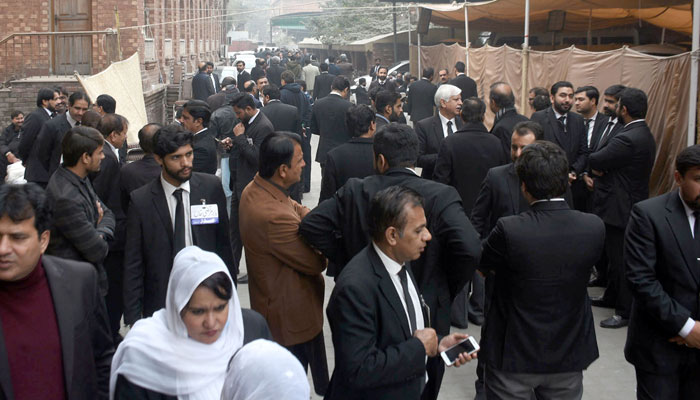
Throughout the hearing, the chief justice repeatedly asked lawyers present in large numbers to take their seats, emphasising that the court wanted to hear Justice Jahangiri’s arguments.
The dispute has followed a prolonged legal path since September 16, when the IHC division bench first issued an interim order restraining Justice Jahangiri from performing judicial functions without prior notice. The move sparked debate within legal circles over whether a high court could suspend a sitting judge through an interim order.
On September 29, the Supreme Court intervened, setting aside the restraining order. A five-member constitutional bench, headed by Justice Aminuddin Khan, ruled that a high court could not bar a judge from performing judicial duties while hearing a quo warranto petition. The apex court clarified that its ruling addressed only the legality of the interim order and not the merits of the allegations, later directing the IHC to decide all preliminary objections and proceed in accordance with the law.
-
Fugitive in Dr. Warda Murder Case Killed in Police...
Shamrez, accused in Dr. Warda murder case, killed in police encounter; four others, includ...
-
SHC Issues Arrest Warrants for DG CAA Over Pension...
Sindh High Court issues bailable arrest warrants against DG Civil Aviation Authority for f...
-
Shaukat Aziz Siddiqui Steps Down as NIRC Chairman...
Chairman National Industrial Relations Commission and former IHC judge Justice (retd) Shau...
-
Lahore Court Grants Pre-Arrest Bail to Rajab Butt,...
A Lahore court has granted interim pre-arrest bail to YouTuber Rajab Butt and TikToker Nad...

-
Asma Jahangir Group Leads in Punjab Bar Council El...
Unofficial results from Punjab show Asma Jahangir Group winning 8 out of 11 Pakistan Bar C...