POLITICS & POLICY MAKING
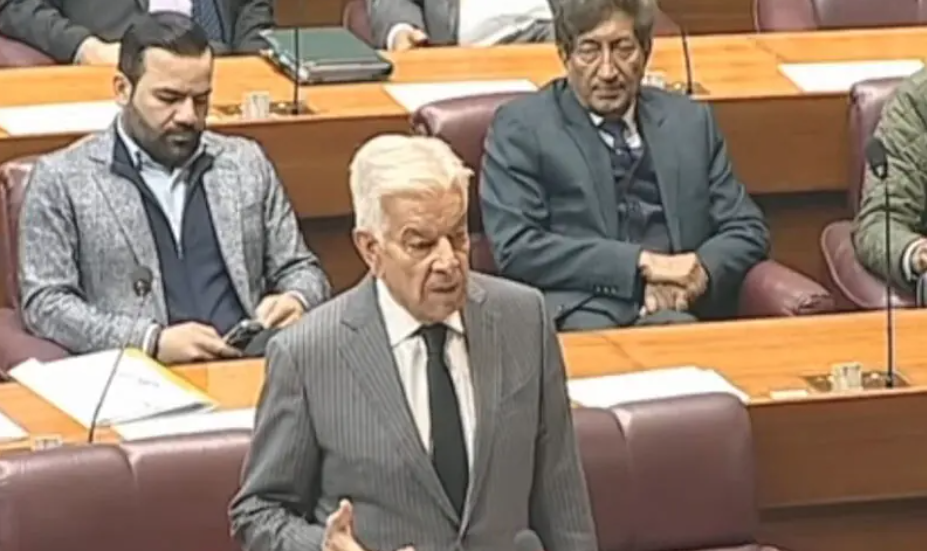
Defence Minister Khawaja Asif on Monday delivered a comprehensive briefing to the National Assembly on the security situation in Balochistan, following a large-scale coordinated terrorist attack over the weekend.
Addressing the House, Asif said the state’s bottom line was clear: “Nobody in Pakistan will be allowed to rationalise violence.” He emphasised that attempts to label terrorism as a freedom movement or human rights struggle were a cover to legitimise criminal activities.
The minister said more than 150 terrorists were killed in retaliatory action, while 17 security personnel and 33 civilians lost their lives in the attacks in Gwadar and surrounding areas. He highlighted that militant networks, particularly the Balochistan Liberation Army (BLA), had transformed into criminal enterprises, exploiting smuggling and other illegal activities to fund operations.
Asif alleged that Afghan soil and elements supported by India were being used to destabilise Balochistan. He said smuggling, particularly of oil, had become a major source of revenue for criminal networks that now controlled the movement, turning grievances into profit-making schemes.
He criticised the political and bureaucratic patronage that enabled smuggling and hindered development, noting that the narrative of deprivation and missing persons had been hijacked by terrorists to mask criminal acts. He also stressed that managing Balochistan, Pakistan’s largest province by area, was a monumental task due to its sparse population and difficult terrain.
Asif stressed that the government would not hold talks with these criminal elements. “The response to them will be made with the full force of the state,” he said, urging the nation to unite in solidarity with security forces and law enforcement personnel combating terrorism.
He concluded by emphasising that combating terrorism required collective action from the state and the people, warning that passing resolutions or making speeches alone was insufficient.
-
Senate Committee Criticizes FBR Over Tax Policies;...
Commerce Minister Jam Kamal says Pakistan’s hands tied by IMF demands; Senate panel slam...
-
‘Terrorists Must Be Called Terrorists,’ Rana S...
PM’s Adviser Rana Sanaullah told the Senate that terrorists should be called terrorists ...
-
Sindh CM Murad Ali Shah Vows Action Against Highwa...
Sindh CM Murad Ali Shah condemned Jamaat-e-Islami’s Karachi sit-in, calling for strict a...
-
PM Shehbaz, KP CM Afridi Stress Centre-Province Co...
PM Shehbaz Sharif met KP CM Sohail Afridi for the first time, stressing Centre–province ...
-
TTAP Blames Balochistan Attacks on ‘Security Fai...
The opposition alliance TTAP has condemned last week’s deadly attacks in Balochistan, ca...