POLITICS & POLICY MAKING
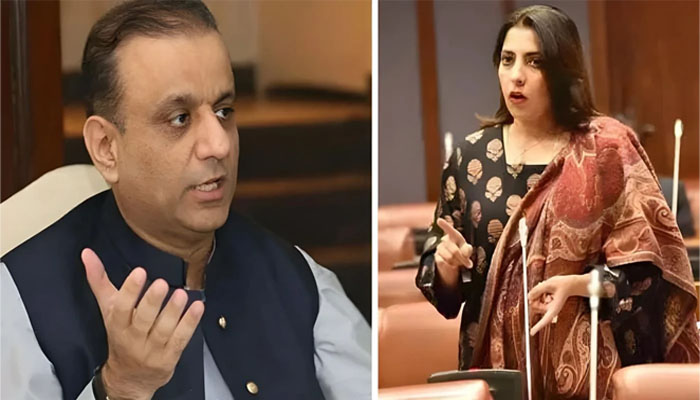
Senator Palwasha Khan of the Pakistan Peoples Party (PPP) has filed a privilege motion against Federal Minister for Communications Abdul Aleem Khan following a heated exchange during a meeting of the Senate Standing Committee on Communications.
Addressing a press conference alongside PPP leader Sahar Kamran, Senator Palwasha Khan said that the conduct displayed by the federal minister during the committee meeting was unacceptable and undermined parliamentary norms. She demanded that Prime Minister Shehbaz Sharif exercise greater discipline over his cabinet members, drawing a comparison with Indian Chief Minister Nitish Kumar’s strict approach towards ministerial conduct.
Palwasha Khan said that as an elected public representative, she had merely sought clarification on a legitimate issue during the committee meeting. “We had asked a question in the committee. Whatever happened there will be raised at every available forum,” she said.
She added that ministers are accountable to parliament and must answer questions respectfully. “The issue was not the question but the answer. We asked whether a road built with taxpayers’ money was meant for the public or for a private housing society,” she stated.
Referring to the exchange of harsh words, Palwasha Khan remarked that such behaviour reflected cowardice, alleging that women lawmakers are often targeted first. She confirmed that a formal privilege motion has now been submitted, adding that the matter would be taken up in the Senate and decided by President Asif Ali Zardari in his constitutional capacity.
It is pertinent to note that during a recent meeting of the Standing Committee on Communications, a bitter verbal clash took place between Federal Minister Abdul Aleem Khan and Senator Palwasha Khan, which escalated to the exchange of phrases such as “shut up” from both sides.
At the intervention of committee chairman Pervaiz Rashid, Abdul Aleem Khan later offered a conditional apology to the PPP senator, though the matter has continued to escalate politically.
-
PTI Rejects Prime Minister Shehbaz Sharif’s Offe...
PTI calls Shehbaz Sharif’s invitation for dialogue “duplicity,” rejects precondition...
-
PTI Senators Raise Concerns Over Political Committ...
PTI parliamentary party in the Senate expresses reservations over limited Senate represent...

-
UN Warns Bushra Bibi’s Detention Poses Risk to P...
UN Special Rapporteur raises concerns over the detention conditions of former PM Imran Kha...
-
UAE President Sheikh Mohamed bin Zayed to Make Off...
Sheikh Mohamed bin Zayed Al Nahyan will visit Pakistan for the first official trip as UAE ...
-
Fazlur Rehman Says Establishment Not Enemy, Critic...
JUI-F chief Maulana Fazlur Rehman says the establishment and bureaucracy are not enemies, ...